
"Feminist Justice": A wide campaign to advocate for the rights of Sudanese women amid confllict
The 'Feminist Justice' campaign was launched in response to the harsh reality women live in camps and under bombardment. Activists affirm justice begins with recognizing their daily suffering and supporting their genuine participation in decisions.
Mirvat Abdel Qader
Sudan — The "No to the Oppression of Women in Sudan" initiative announced the launch of a "Feminist Justice" campaign with broad participation from Sudanese feminist organizations and initiatives. Those leading it affirmed that the real challenge lies in the ability to connect discourse with the harsh reality that women live today.
The "Feminist Justice" campaign was launched under the slogan "Women's bodies are not a battlefield, and their rights are not negotiable," aiming to shed light on the situation of women and girls in conflict zones, monitor and document violations, break the silence imposed on victims, and raise awareness of women's legal, civil, political, economic, social, and cultural rights.
Participating in the campaign are: The Assembly of Demand Bodies (TAM), the Political and Civil Feminist Groups (MANSAM), the Group for the Defense of Rights and Freedoms, the Democratic Front of Sudanese Lawyers, Journalists for Human Rights (JAHR), the Defenders Alliance, the Sudanese Women Plastic Artists Association, the Women's Initiative to Stop the War, the Nuba Women's Association for Education and Development (NUWIDA), in addition to the Kandakat Omdurman Bloc.
The participating feminist groups affirmed that the campaign has received significant media attention since its launch and announcement, and they anticipate its success and the achievement of its goals. They stressed that "there is no real peace without justice for women, and no justice without accountability."
The campaign believes that what women are subjected to is not a side effect of war but rather a result of the absence of justice and the complicity of silence, and that doing justice to them is not a postponed option but an urgent necessity.
A feminist coalition leads the campaign
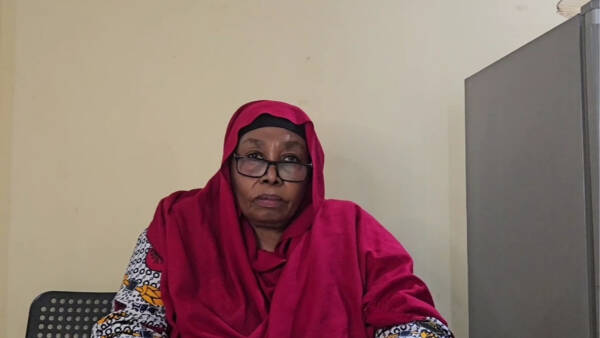
Saadiya Isa Ismail, Secretary-General of the "Usratuna" Association for Persons with Disabilities and a coordinating member of "Matin" and "No to the Oppression of Women," stated that as activists working in the field of women's rights, they are giving great attention to this campaign.
She mentioned that preparations for the campaign began a month ago, with the participation of many organizations and initiatives in documenting violations. She added that the campaign aims to advocate for feminist justice issues through media and legal means, in addition to supporting various other issues of concern to women, and returning to the path of the revolution and the slogan "Freedom, Peace, and Justice."
She affirmed that the campaign will continue for six months, implemented in two phases, each lasting three months, with the goal of promoting justice, freedom, and equality among all members of Sudanese society. This commitment stems from the participating women's firm belief in human rights and the importance of achieving equality without any discrimination, as one of the fundamental pillars for building just and sustainable societies.
She stressed that the campaign includes women and girls with disabilities, noting the great challenges they face in the fragile and crisis-ridden situation since the outbreak of conflict. The majority of them are either displaced or refugees, or living in conflict zones without any protection, in extremely difficult humanitarian conditions, lacking health care, shelter, education, and food security, suffering from hunger and poor living conditions.
A comprehensive feminist approach to address the roots of discrimination
Saadiya Isa Ismail pointed out that the campaign adopts a clear approach to dealing with different conflict contexts, aiming to reach a comprehensive vision that addresses the roots of the problems from which women and girls, including women with disabilities, have suffered. She affirmed that feminist justice represents an approach to remove all forms of discrimination, and it is the fundamental guarantor for women to enjoy their full rights, taking into account particular differences such as the situations of women and girls with disabilities and elderly women, and ensuring the provision of appropriate facilities for them, including Braille, sign language, and various accessibility means, thus enhancing the principles of equality, equity, and equal opportunities.
She indicated that the campaign calls for reviewing and reforming laws, ensuring women's presence at negotiation tables as participants and decision-makers, which enhances their active participation and economic empowerment, and creating opportunities that allow them to live with dignity. She also called for supporting women's participation and implementing the 2025 resolution on women's empowerment and participation in peace and security issues, translating it into practical steps on the ground.
Saadiya Isa Ismail stressed the importance of recognizing the role of women participating in conflict contexts, including fighters and those working in local organizations within conflict zones, explaining that the campaign stipulated that women should have genuine participation, especially in protection.
The campaign from a media perspective
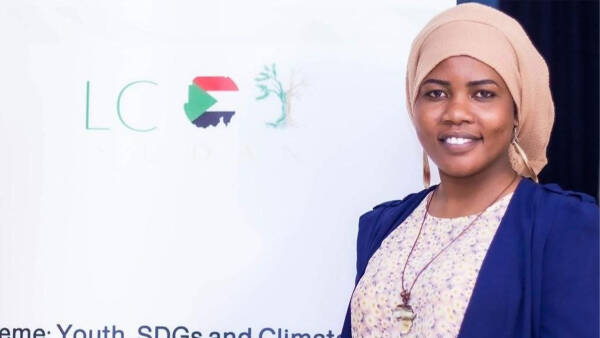
Journalist specializing in women's issues and cross-border issues, Inam Al-Nour, said that talking about genuine feminist justice cannot be done in isolation from the reality that women live today. Their place is not in halls or official statements, but in the camps, in cramped shelter rooms, and in cities still being bombed.
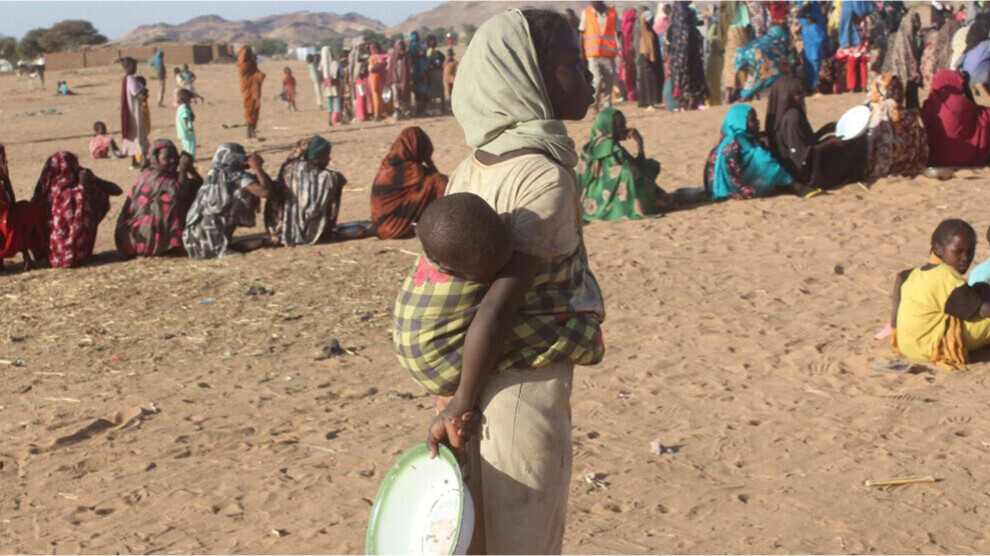
She added that women were not on the margins of this catastrophe; they were right at its heart. In the camps, there are women who have lost almost everything, yet they rise every morning to stand in lines for water and food, bearing the responsibility of supporting entire families in conditions unfit for life.
There are women who did not leave, not because they did not want to survive, but because survival itself was not an available option. They remained under bombardment, cooking to the sound of gunfire, sleeping with the possibility of death, and waking up because life, despite everything, did not stop.
Regarding the importance of the campaign for Sudanese women, Inam Al-Nour explained that its primary goal is to move women's issues from the margins to the center of attention, warning that strong language used in discourse might become mere words while women's lives continue in a fragile, unchanging reality.
She affirmed that feminist justice cannot be achieved by slogans alone; it begins with recognizing women's lives in camps, in displacement situations, and under bombardment. This is the starting point for any serious talk about justice. Unless discourse is built on this reality, words will remain larger than the truth that women live daily.
Regarding the statement through which the campaign's launch was announced, Inam Al-Nour explained that its importance lies in placing women's issues back at the heart of the discussion about justice in Sudan, pointing out that the real challenge is not issuing statements or using strong language, but the ability to connect this discourse with the harsh reality that women live today.