
Violence crimes against women in Gaza increase under the cover of war
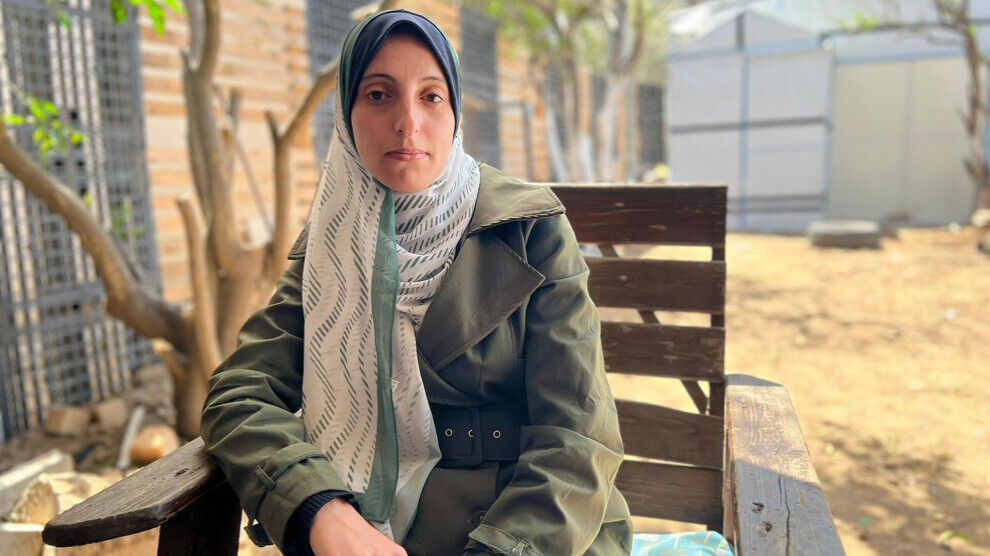
Wafaa Jadalhaq said war, displacement, and lack of safe places have fueled violence against women—murder, sexual assault, exploitation—as protection systems collapse and prisons empty.
Rafif Aslim
Gaza — On March 25 last year, the body of a female citizen was found buried inside her tent after she was killed by her brother, following an official complaint filed by the mother against the perpetrator, her son. This incident is part of a wave of escalating violence against women since the outbreak of the war in October 2023, amid an absence of media coverage and legal prosecution.
In this context, lawyer Wafaa Jadalhaq from the Women's Affairs Center reported that the Gaza Strip during the war witnessed many manifestations of gender-based violence, in addition to military violence such as displacement and moving to an unknown environment unfamiliar to women, which affected their physical and mental health and created a fertile environment for men to practice various forms of violence.
She explains that, returning to the incident of the girl killed in her tent according to official statements, problems began between her and the perpetrator due to previous disputes not addressed in the investigations. Subsequently, her brother struck her on the head with a sharp object, causing her to fall to the ground, then buried her on the seventh day of Ramadan. After ten days, the mother could not bear living above her daughter's body, not to mention the nightmares that haunted her, which prompted the mother to go to the nearest police station and file a report against her son.
She adds that the perpetrator was first arrested and held in an appropriate place, then taken to the crime scene, and the body was exhumed. The body is now undergoing forensic examinations, which have proven that the cause of death was not the girl being struck with a sharp object but being buried alive. What happened at that moment was internal bleeding that caused her to lose consciousness; she should have been taken to the nearest hospital, not buried. Forensic investigations are still ongoing.
She pointed out that "in the midst of military escalation, displacement, and the presence of militias affiliated with Israeli forces, there were dozens of similar crimes against other girls, but they were not announced, especially given the absence of a specific place where victims could seek refuge, give their statements, and request protection from the relevant authorities." She noted that the Gaza Strip today has been granted some time to announce those crimes and pursue their perpetrators, whether through security agencies or feminist and human rights centers that have begun providing a safe space for women.
Increasing cases of sexual assault and harassment
According to Wafaa Jadalhaq, violence crimes are not limited to women only; there are crimes committed against minors, including rape and murder, extending to young women and women. She attributes the primary cause of the violence to the lack of privacy, whether from their own family men or strangers while performing daily tasks or even sitting safely in tents, because a tent is just a piece of cloth that anyone can cross, and there is no safety inside it, whereas previously they could close the door and take shelter behind it while seeking protection.
She adds that sexual assaults such as harassment and rape are the most recorded incidents reported by victims and documented by human rights and feminist centers, followed by sexual exploitation. Many service providers exploit women's need for a service and thus blackmail them sexually. Here comes the role of institutions, which must create an integrated protection system to prevent such assaults against both women and girls, and ensure their right to access what they deserve without any pressure.
Hate speech against women and girls
According to Wafaa Jadalhaq, one of the reasons contributing to the rise in crime and violence against women, especially after the war, is that all convicts, criminals, and drug addicts were released from prisons and went to live in society with ordinary people, but this time they believe no one will hold them accountable for what they do. Consequently, the people of Gaza have heard of various forms of crimes—who would have thought that someone could bury a body and live on top of it?
She points out that the hate speech that spread after the girl's killing regarding her clothing or how she should look is unacceptable and does not justify the perpetrator committing crimes whatsoever, nor does it justify linking the killing of women to honor crimes, as it is the first pretext that men in the Arab world resort to as a certificate of innocence.
She affirms that both the Israeli forces and Hamas play a major role in the increase of these crimes against women. The escalation of military operations and the lack of safe shelters for women during the war have compounded their suffering, in addition to the release of criminals from prisons, placing women in a vicious circle from which they do not know how to save themselves.