
Women of Rojava… From Managing Institutions to Shaping the Features of a New Constitution
By strengthening mother-tongue education and leading health centers professionally, women in Rojava demonstrate that participation in decision-making is essential for building a democratic constitutional system based on justice.
Asmaa Mohammed
Qamishlo — The participation of women in Rojava within the sectors of education and health is no longer limited to administrative presence; it has evolved into a practical model of participatory governance, reflecting women’s ability to lead institutions and consolidate the foundations of a democratic system that guarantees their genuine role in decision-making.
Amid the profound transformations witnessed in Rojava in recent years, women have not merely been partners in social mobilization; they have become a fundamental pillar in rebuilding social institutions on new principles based on participation, justice, and equality.
From the heart of a revolution that reshaped political and social concepts, women’s presence in the fields of education and health has emerged as a practical embodiment of participatory governance—not as a theoretical slogan but as a daily practice rooted in reality. Through women’s leadership in the sectors of education and healthcare, the outlines of a realistic constitutional model are being formed, one that calls for the institutional recognition of women’s rights and guarantees their participation in decision-making in any future Syrian constitution, based on fifteen years of accumulated institutional and field experience.
From Protecting Language to Shaping Awareness
With the launch of the Rojava Revolution, women’s role extended beyond political and social activism to include the protection of cultural identity and preservation of the mother tongue. The region witnessed a linguistic transformation accompanying the political changes, particularly through introducing the Kurdish language into school curricula and guaranteeing children the right to learn in their mother tongue after decades of marginalization and exclusion.
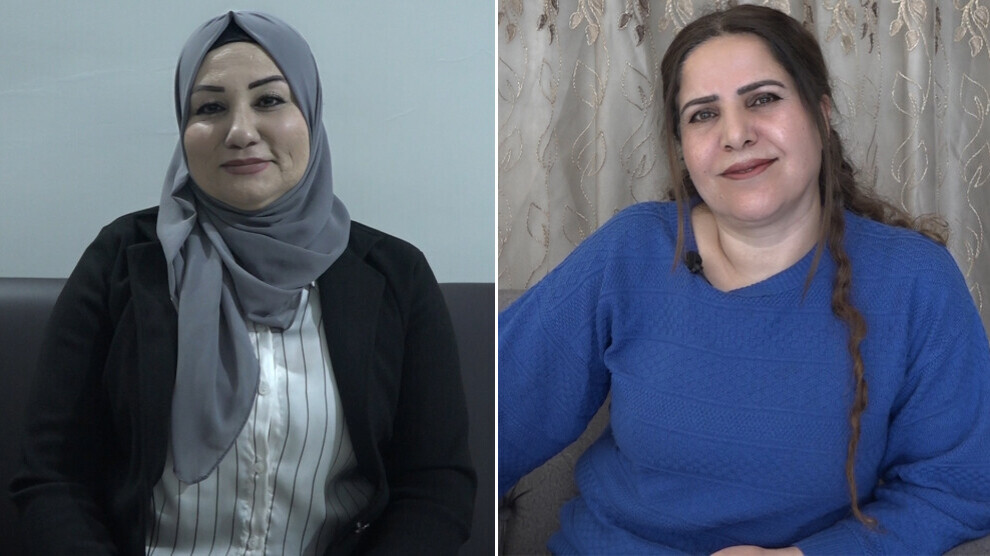
Hassina Ali, a member of the Education Committee in Qamishlo, stated that women played a central role in consolidating this transformation. She emphasized that female teachers carried the responsibility of continuing education in the mother tongue despite challenges. Women were not limited to teaching; they also participated in preparing curricula, training teachers, and establishing language learning centers. These efforts contributed to raising a generation aware of its cultural identity and historical heritage.
She noted that the system of co-chairmanship granted women an actual role in educational decision-making, which positively influenced educational policies and management mechanisms within institutions. According to her, women’s presence in decision-making positions was not symbolic but a real and influential factor in developing and sustaining the educational process.
She stressed that marginalizing women in the education sector means excluding half of society from contributing to the formation of future generations. She argued that any new Syrian constitution must recognize women’s rights and preserve the Kurdish-language curricula taught for fifteen years as an established educational experience that cannot be ignored or undermined.
She added that through their continuous work in schools and training centers, women sought not only to transfer knowledge but also to instill values of democracy and equality among students, emphasizing that women have been—and continue to be—essential partners in shaping a pluralistic and balanced society.
She also pointed out that women’s presence in education introduced a human dimension and a heightened sense of responsibility toward younger generations. It contributed to shaping independent personalities capable of critical thinking and active civic participation. Women’s contributions to curriculum development and teaching methods have reinforced the concept of equal citizenship among students and helped build a more balanced social foundation.
Hassina Ali concluded by stressing that any project aimed at building a modern democratic state cannot succeed without recognizing women’s role in education and in shaping collective awareness. Preserving women’s achievements in this field, she said, is a fundamental guarantee for sustaining justice and equality and for strengthening the foundations of a free society based on genuine partnership among all its components.
Women’s Leadership in the Health Sector
In the health sector, women’s administrative leadership has emerged as a living example of women’s ability to combine professional competence with human sensitivity in institutional work.
Maysa Matar, the administrative manager of the Dialysis Center in Qamishlo, affirmed that women have demonstrated clear success in managing healthcare centers, particularly in fields requiring high sensitivity and direct human interaction with patients. She added that women’s presence in administration has positively affected standards of cleanliness, organization, and coordination between medical staff and patients.
“Patients feel more comfortable in an environment managed with a spirit that combines firmness with compassion,” she said.
She explained that society in the region did not reject women assuming administrative positions. On the contrary, the experience received broad encouragement and support, reflecting a gradual change in societal perceptions regarding women’s leadership roles. She noted that although some women faced challenges, these obstacles did not prevent them from proving their competence but rather motivated them to demonstrate their abilities and achieve success.
She emphasized that building a truly participatory democratic society cannot be achieved without meaningful and influential representation of women in decision-making positions—not merely symbolic representation, but real participation in policy-making, planning, and determining crucial decisions. She explained that women’s involvement in administration enhances transparency in institutional work and reinforces balance in the distribution of responsibilities, which positively affects the quality of services provided to society.
She also stressed that the healthcare experience in Rojava has demonstrated through tangible results that women are capable of leading institutions efficiently, developing work mechanisms, and creating solutions to daily challenges facing the medical sector. Women’s leadership, she noted, has shown a clear ability to combine administrative discipline with human compassion—an essential element in a sector directly linked to people’s lives and dignity.
Maysa Matar concluded by emphasizing that what has been achieved in the health sector proves that women are not merely supportive partners but leading forces capable of innovation and development across various fields. Strengthening this role and ensuring its continuity, she said, is a fundamental step toward building a fair democratic society based on equal partnership among all its members.