
"Women's Market" in Kassala… Removal Decision Threatens Women's Livelihoods and the City's Memory
The "Women's Market" in Kassala faces an unknown fate after a demolition decision, threatening dozens of women's livelihoods and a market tied to mothers' struggles and heritage.
MERVAT ABDEL QADER
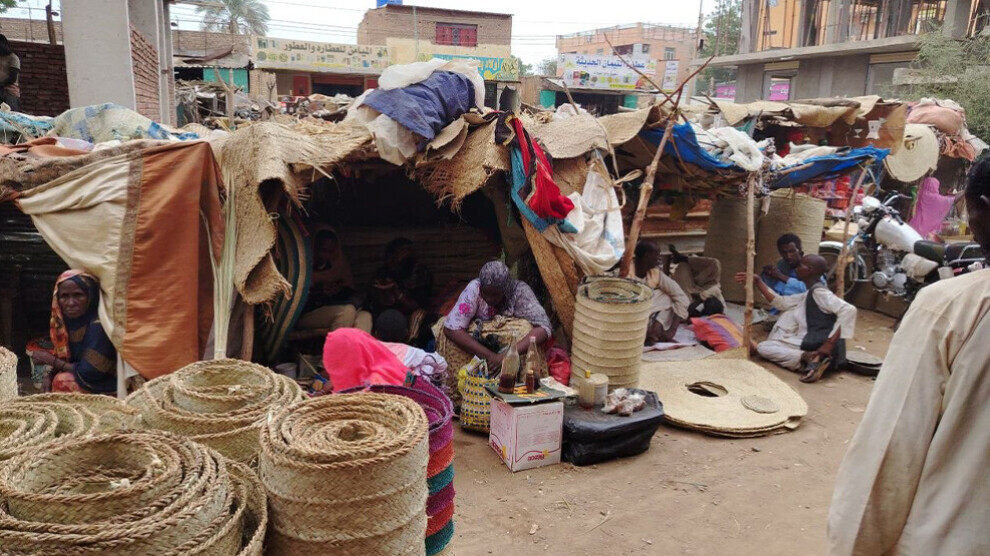
Sudan – In the heart of Kassala city, the capital of Kassala State in eastern Sudan, the voice of women still rises from among the dilapidated stalls, not for buying and selling this time, but as a cry for survival.
There, in the "Women's Market," one of Sudan's oldest and warmest markets, the city these days is living under the weight of a harsh decision issued by the Kassala locality to demolish the market, a decision that did not demolish only wood and cloth, but demolished an entire lifetime of struggle.
This market is not just a place; it is a true lifeline for hundreds of families, a warm embrace for women who knew the meaning of loss early, widows and mothers carrying orphaned children on their backs, who found nothing but this small patch of land to write in it the story of their resilience.
"Souk Al-Siksik" – A Memory of Palm Fronds and Mud
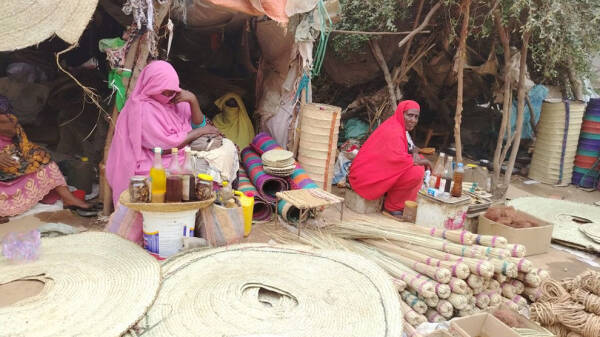
The people of Kassala know it as "Souk Al-Siksik." It is located in the beating heart of the city, near the Grand Market and the public transport station, so it was always a destination for passersby and visitors, not only for shopping, but to breathe in the scent of heritage.
In every corner of it there is a story: palm frond crafts woven by tired fingers, handmade bags and furnishings carrying the colors of the countryside, traditional accessories, pottery carrying the warmth of clay, local perfumes and incense filling the place, spices, herbs, popular foods, and women's supplies.
This market carries the memory of the entire city. It burned at the beginning of the millennium, and the fire devoured the dreams of the sellers, but with their own hands they rebuilt it from the ashes, and for long years they continued to dream only that the locality would grant them an official paper proving that this place belongs to them, that this labor has a title.
The locality said that the removal decision comes within a plan to organize markets, beautify the city center, and facilitate traffic, words that seem logical on paper, but on the ground they mean displacement.
Last January, bulldozers came and removed the eastern side of the market, amid painful news speaking of the sale of the land to undisclosed parties, which increased the women's wound and their sense of injustice.
They had no choice but the street. On 13 September, dozens of female vendors, elderly, sick, and disabled, came out and closed a main road in Kassala. It was not a political protest, but a distress call, demanding a halt to the removal or at least the provision of an alternative at prices that take into account their financial conditions.
According to sources, the locality offered them to move to the "Al-Ameriya" market, but those who went returned disappointed. There are no customers there and no movement, and the new place lacks the life they created here over decades. The alternative land is also surrounded by old disputes over its ownership.
The Legislative Council of Kassala State had sensed this danger early, so in 2019 it halted procedures for allocating commercial plots inside the market through direct sale, and also halted the allocation of the site to the "Sanayat Al-Ghad" organization until further notice, but the decision has returned today anew.
Voices from Among the Rubble… Stories of Struggle Threatened with Loss
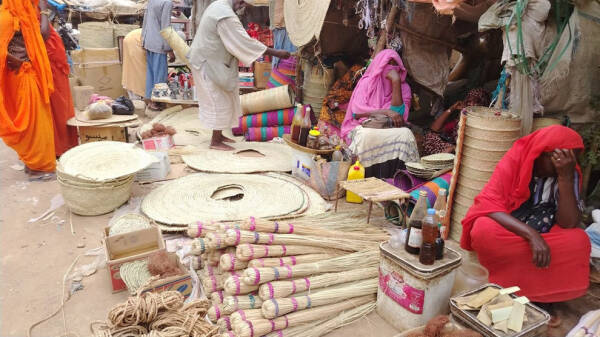
Our agency met with a number of women who work in the market, and each one of them has a heart-breaking story. It spoke with them about their work and how they received the removal decision that came down upon them like a "thunderbolt."
Amna Qureish, 80 years old, sits with eyes worn out by time, speaking while trembling: "I have been in this market since 1971. This market is a historical landmark. They took it from us without asking us."
Amna Qureish, who sells brooms (palm frond mats), talh, perfumes, and foodstuffs, says with pride mixed with sadness: "I raised my children from this market, and until now I still live from it."
Talh is an aromatic wood extracted from acacia trees spread in Sudan. It is characterized by its pungent and pleasant smell when burned, and it is the main ingredient in the "Sudanese smoke bath" (a traditional cosmetic ritual for women).
This elderly woman remains sitting for long hours under the scorching sun, hungry and thirsty until evening, in order to secure her family's sustenance. Then she describes the moment of removal: "Suddenly the authority came and broke our shops and wasted our goods without warning."
Amna is not alone, as the market includes about 160 women, and she asks in tears: "I do not know how I will live without work?"
The Grandmothers' Legacy Burns Twice
As for Kaltoum Mohammed Al-Nour, who spent 45 years in the market, she speaks of a legacy greater than just trade: "We have been in this market for 45 years. We entered it to raise orphans. We are widowed women who want to live with dignity."
She confirms that the market is the legacy of the grandmothers, known locally as "Al-Haboubat." Their goods come from the Kassala countryside and they sell them by the sweat of their brow, adding: "Every tribe in Kassala is present in this market. We are the ones who dug the wells and drank water with the people of this city."
The removal was not the first pain for Kaltoum Mohammed Al-Nour. Her three stalls had burned before and she lost a lot of money, but she rebuilt and continued. Today the removal came to complete the pain: "They broke the stalls over our heads and we fled with our goods. For a year now we have been hearing every day that the site will be sold. Removal means they have rejected us from life entirely."
Kaltoum is the sole provider for six daughters, and she suffers from diabetes, blood pressure, and weak eyesight. She accuses the locality of compensating certain women and leaving others to face their fate alone.
For her part, Huda Mohammed, who has worked in the market for five years, tells her story in a faint voice. She is the sole provider for her large family. When she heard of the removal decision, she carried her tired body and went to court to defend her small stall, but she returned disappointed.
She adds: "We had no place to go. We can no longer work or eat. We cried because we lost our only source of livelihood."
Today, the file of the "Women's Market" places the local authorities before a real humanitarian test. The issue is not merely organizing markets and public appearance, but a delicate balance between the law and the right of thousands of struggling women to a dignified life, women who ask for nothing but a small place to feed their children amid the harsh economic conditions the country is witnessing.