
Women’s Entrepreneurship in Yemen: Ongoing Resilience Amid Crises
Women’s entrepreneurship in Yemen is no longer merely an economic choice; it has become an existential necessity amid the continuing Yemeni crisis.
Rahma Shanathour
Yemen — Crises reshape the fabric of society. While wars and conflicts bring devastating consequences—death, displacement, impoverishment, and child marriage—they also, on the economic level, loosen society’s grip on women’s participation in work, as poverty becomes a specter haunting every detail of daily life.
This necessity for women to continue working represents a female response to the loss of income sources for thousands of families, the suspension of salaries, and the absence of job opportunities. Instead of sitting idle and waiting for aid or external support, women found themselves facing poverty daily.
Women are now required to devise self-made solutions—not only to survive, but to protect their families from collapse. Amid currency depreciation, rising production costs, declining purchasing power, and invisible social constraints, women business owners and entrepreneurs stand on a delicate frontline between perseverance and breakdown.
Some women have managed to endure and transform necessity into viable businesses; others have been forced to stop under the weight of losses and exhaustion, albeit after long struggles. Meanwhile, many continue to start anew each day from scratch, repeatedly attempting to rebuild what has been destroyed.
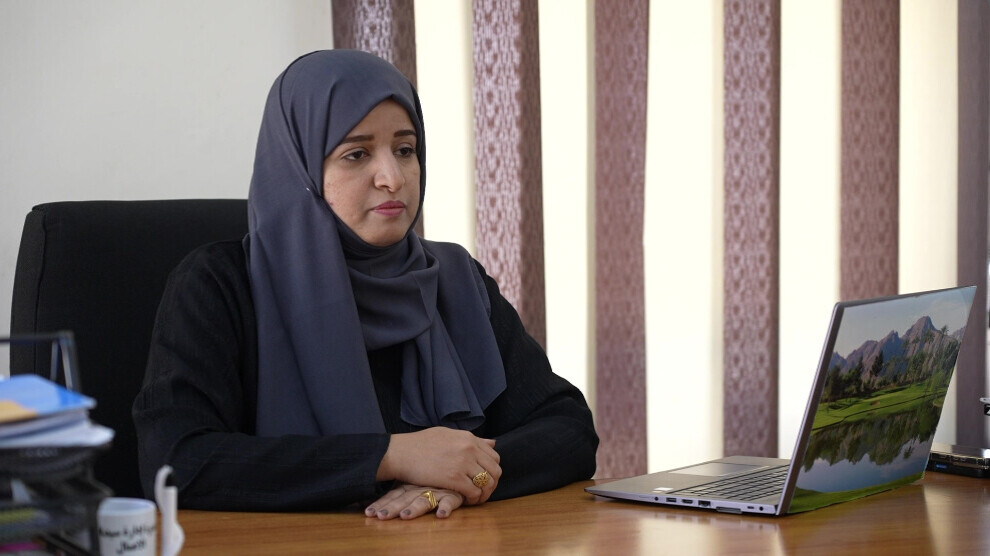
Arwa Al-Omari, Director of the Businesswomen’s Department at the Taiz Chamber of Commerce, says that women’s entrepreneurship in Yemen has witnessed remarkable shifts since the outbreak of the war. Harsh conditions have pushed many women to think outside the box, especially after losing the family breadwinner, the suspension of salaries, or the loss of income sources.
She explains that a large number of women rushed to establish their own businesses—not for luxury, but for survival and life itself—seeking economic empowerment to support their families. “The number of women entrepreneurs in Taiz did not exceed 120 until 2015. In the years that followed, the numbers increased significantly, prompting the Chamber of Commerce in 2019 to establish dedicated sections for women entrepreneurs and productive families.”
From Home to Market
Most of these projects began inside homes as small, simple initiatives generating limited yet critical income for survival. These included preparing snacks, producing accessories, leather bags, handicrafts, and other daily activities that initially relied on available resources and personal skills.
Al-Omari notes that many of these projects did not remain confined to the home. Gradually, they moved into the public sphere, opening small shops or workshops—an indication of women’s ability to transform necessity-driven projects into genuine growth opportunities, despite an unsupportive economic environment.
Compounded Challenges
The path of women’s entrepreneurship in Taiz has not been paved with opportunities. The city, still suffering from a suffocating siege and near-total collapse of infrastructure, imposes compounded challenges on women. In addition to currency instability and soaring living costs, women entrepreneurs face ongoing crises in basic services.
Among these challenges, Al-Omari points to the absence of public electricity, which forces small businesses to rely on costly commercial power, significantly reducing profit margins—especially for home-based projects. Women also suffer from water shortages and high rental costs, particularly when transitioning from home-based work to the market, where rent becomes a heavy burden on emerging enterprises.
Legal Barriers and Informal Fees
Another major challenge lies in the legal complexities surrounding business licensing, where informal fees often far exceed official legal costs. This places women in a dilemma: either operate without a license or bear additional financial burdens.
Al-Omari explains that these legal obstacles constitute one of the greatest barriers to the growth and sustainability of women-led businesses.
2025… A Year of Digital Transformation
Despite all these challenges, she describes 2025 as relatively less severe compared to previous years. Some women-led projects experienced notable growth, driven by the rapid shift toward digital marketing. “Many women turned to creating their own pages on social media platforms, learning digital marketing skills, and paying attention to digital security, which contributed—albeit gradually—to raising levels of digital and legal awareness.”
She believes this shift was not merely technical, but a transformation in women’s awareness of technology as a tool for protection and expansion, particularly in an unstable environment.
Psychological Impact
Alongside economic challenges, Al-Omari does not overlook the psychological dimension. She stresses that women in Taiz suffer from immense psychological pressure—both as entrepreneurs and as members of a trauma-laden society. She points to the death of Iftihan Al-Mashhari as an incident that caused a deep psychological rupture among women inside and outside Taiz, intensifying feelings of fragility and insecurity.
A Window of Hope
Yet the picture is not without a glimmer of hope. According to Al-Omari, 2026 holds new opportunities, particularly with the launch of the Local Economic Council, which is expected to serve as a genuine platform for representing women-led projects and entrepreneurs within the governorate’s Economic Development Plan for 2024–2026.
She adds that the Businesswomen’s Department at the Chamber of Commerce includes among its priorities for this year building effective partnerships, implementing specialized training programs, and opening a Business Clinic within the next two months to provide psychological, administrative, and legal support to women entrepreneurs. This aims to enhance the sustainability of their projects and empower them to confront complex challenges.
Despite the many challenges and daily hardships, women in Yemen continue to walk a fine line between resilience and breaking point. They strive to transform necessity-driven projects into opportunities for growth and sustainability. However, real transformation will only be achieved when efforts are combined among women, society, and the state to create a safe economic and social environment—one that enables women-led enterprises to move beyond mere survival toward a path of sustainable growth, capable of turning daily hardships into genuine opportunities for empowerment and prosperity.
In this context, women’s entrepreneurship in Yemen remains more than just an economic activity; it is a story of resilience, determination, and daily creativity, voiced by women themselves, revealing a renewed sense of hope despite all the harsh circumstances.