
Women of Van Criticize Government Policies Amid the Worsening Economic Crisis in Turkey
Women of Van in northern Kurdistan agreed the worsening economic crisis threatens their livelihood, sharply criticizing government policies they blame for living deterioration, exploitation, and systematic corruption across state institutions.
MAMIHAN HALBIN ZIDAN
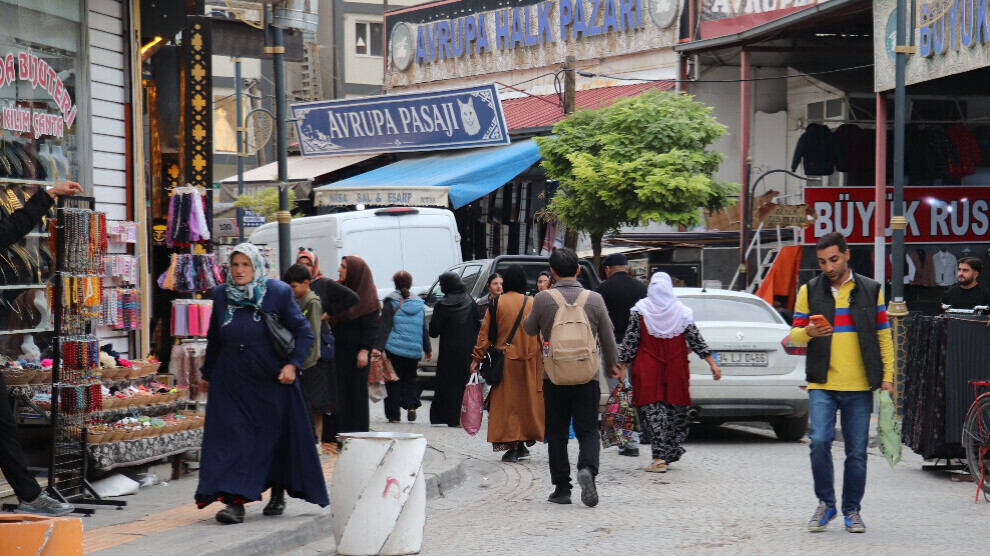
VAN_The economic crisis, whose effects have become clear in Turkey and northern Kurdistan, is exacerbating the deterioration of living conditions. Obtaining basic foodstuffs has become difficult, attending any occasion outside the home has become a luxury, while meeting the simplest needs has become extremely difficult.
According to the data of the Confederation of Turkish Trade Unions (Türk-İş) for last September, the hunger threshold, which represents the monthly food expenditure for a family of four, rose to 37,801 Turkish liras, and the poverty line, which includes food and other basic expenses, reached 123,130 liras, while the average monthly living cost for a working individual is estimated at 48,885 liras. In contrast, the net minimum wage for 2026 remained at 28,075 Turkish liras, a level below the hunger threshold, which reflects the extent of the worsening suffering of workers.
“No One Gets a Reward for Their Work”
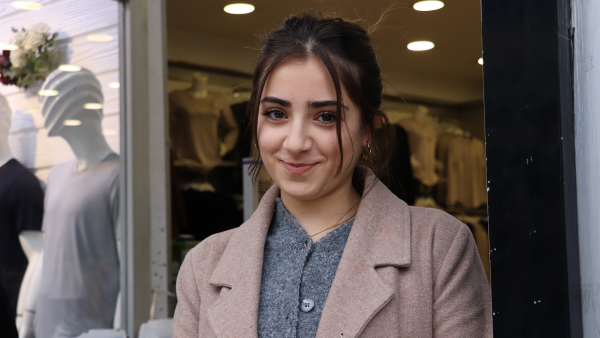
In this context, Elaida Kotlu, a worker in one of the shops, drew attention to the sharp rise in prices, saying: "Everything has become expensive, and people can no longer afford their needs. Everyone must enjoy equal rights, and the government must help those in need. I work in the shop and see this reality daily. Customers come and most often content themselves with looking at the goods and then leave."
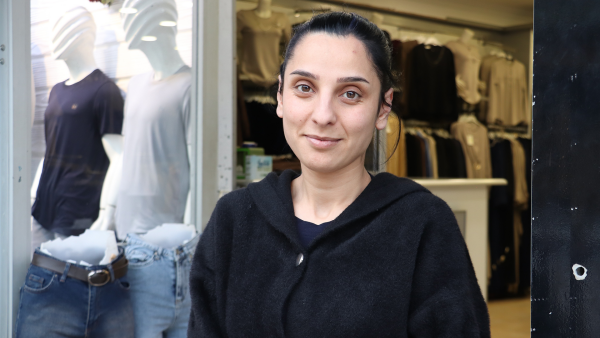
Fatima Sayin expressed her deep concern about the deteriorating living conditions of minimum-wage workers, confirming their complete inability to manage the basic requirements of life. "The minimum wage is no longer enough for anyone, which has pushed everyone to rely on multiple credit cards to survive under these harsh conditions. As a woman, I find it extremely difficult to meet my needs. Women seek to work to achieve their financial independence, but current wages do not even cover basic expenses. I personally work in a shop and do not receive a salary equal to my effort, a reality suffered by all workers today who have been deprived of fair compensation for their work."
"We Have No Guarantee"
Fatima Sayin expressed her deep concern about the deteriorating living conditions of minimum-wage workers, confirming their complete inability to manage the basic requirements of life. "The minimum wage is no longer enough for anyone, which has pushed everyone to rely on multiple credit cards to survive under these harsh conditions. As a woman, I find it extremely difficult to meet my needs. Women seek to work to achieve their financial independence, but current wages do not even cover basic expenses. I personally work in a shop and do not receive a salary equal to my effort, a reality suffered by all workers today who have been deprived of fair compensation for their work."
"We Have No Guarantee"
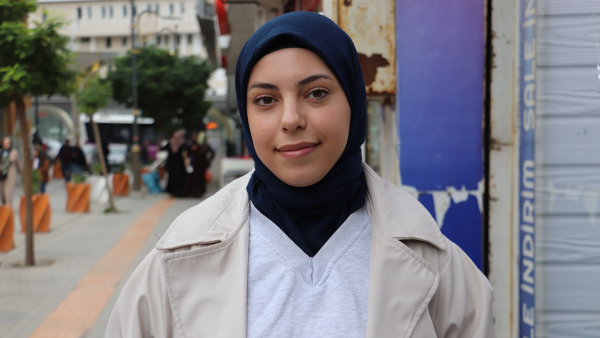
For her part, worker Smanur Bayaztash spoke about the worsening economic crisis and the absence of job security, pointing to the fears that pursue her daily during her long commute to and from work. "We are three individuals working from home to secure our livelihood, and yet we still live in a stifling financial hardship, as living under these conditions has become extremely difficult."
She described her professional and personal reality, saying: "I work for a daily wage that runs out as soon as I receive it and does not allow me to meet my personal needs, which forces me to always search for the cheapest available goods and give up most of my desires. The economy casts its shadow on everyone equally, but wages are not distributed with the same fairness. If the government provided real support to citizens, people would feel some relief, and everyone has the right to receive fair and equal wages for their work."
"We Do Extra Work"
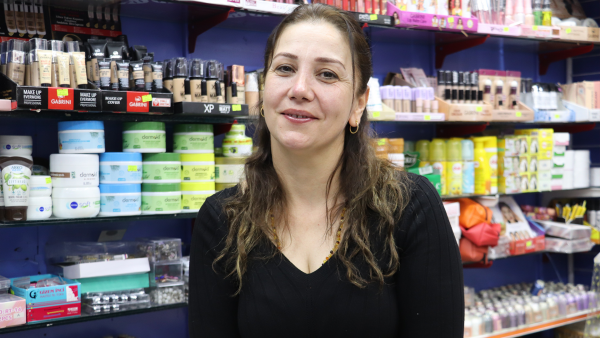
From the small business sector, Hanifa Kozel, who runs a cosmetics and lingerie shop, confirmed that the stifling economic crisis has placed small traders in direct confrontation with the risk of bankruptcy, amid the stagnation of buying and selling movement and the rising value of rents and bills. "There are only two female sellers left in the entire market. The situation has become catastrophic for all of us, as high rents and bills devour everything we earn, to the point that entire days pass without us being able to sell a single piece."
Regarding the search for alternative sources of income, she explained: "These have become our last days in the market after we became unable to secure our daily bread, which pushed me to look for additional work to cover expenses. There is another colleague who works in sewing here; she is forced to care for a patient in the morning and then comes to the shop to practice her profession in the afternoon."
Hanifa Kozel confirmed that the roots of the economic problems lie in the policies of the ruling party, pointing to a large economic disparity between those close to the government and those not close to it. "They have destroyed people with their theft; their pockets are full while the people's pockets are empty. Whoever stands with them is rich, while whoever does not stand with them is in a pitiable state. As a woman, the economic situation affects me in all its aspects. We have been financially destroyed. Our house and our shop are rented, and we cannot support our children. We have to be with the government. Why should I side with them? Why should I greet them just to stay alive? Under these circumstances, we do not ask for much, for every person has the freedom to choose their political party and beliefs, but when we look at reality, we find no freedom in Turkey. As women, we are not free. If we cannot control our economy, we will be completely destroyed."
Hanifa Kozel conveyed a painful testimony from two young female customers who recently visited her shop. She said they told her while reviewing their purchases: "We are forced to work in this place, as we have no other choice to survive." She added that they were the same age as her children. "I could not control myself, so I sat down and cried. The situation is extremely sad, and it is clear that women and children are the groups most affected by this crisis."
Regarding the daily clash with consumers because of inflation, she explained: "Sometimes customers ask us with disapproval why prices have risen so sharply, and they enter into continuous arguments with us. But we are not the party responsible for this escalating high cost, and blame should not be directed at us."
"If They Did Not Steal, There Would Be Enough Money"
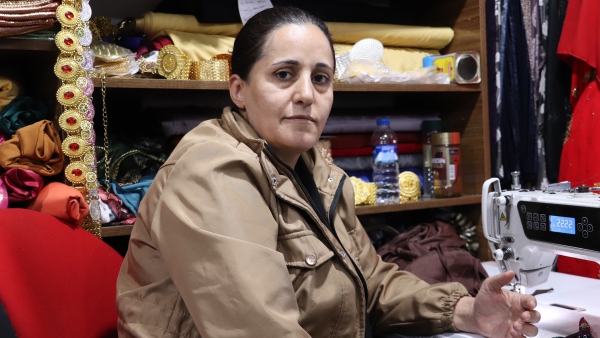
Seamstress Kulsoum Oja confirmed that the returns of her hard work throughout the day evaporate immediately in the markets because of the exorbitant high prices of food and transportation. "We work from morning until evening, but what we earn we leave in the market. Everything has become so expensive that citizens are unable to buy meat and have replaced it with bones." She noted that the crisis lies in the theft of public treasury funds and pumping them into the pockets of officials. "If these unprecedented thefts stopped, the country's money would suffice for everyone, and people would receive fair compensation for their continuous daily work."
She stressed that improving living conditions is contingent upon changing the regime and the ruling mentality, pointing to a gross social injustice and a wide class gap separating a very wealthy class and a majority that owns nothing. "Corruption has permeated various state institutions, from religious affairs to the education and healthcare sectors, making life impossible even for families in which three individuals work. House rents in Van city start at 25,000 Turkish liras, so how can a family supporting a student manage its affairs?"
She added, describing the impact of the crisis on buying and selling movement: "I see customers coming with torn or poor-quality fabrics, and others who surrender and leave because they are unable to buy. If this systematic exploitation of the country's wealth stopped, money would be abundant and enough for everyone."