
Wage Crisis for Women Workers in Tunisia…Activists Sound the Alarm
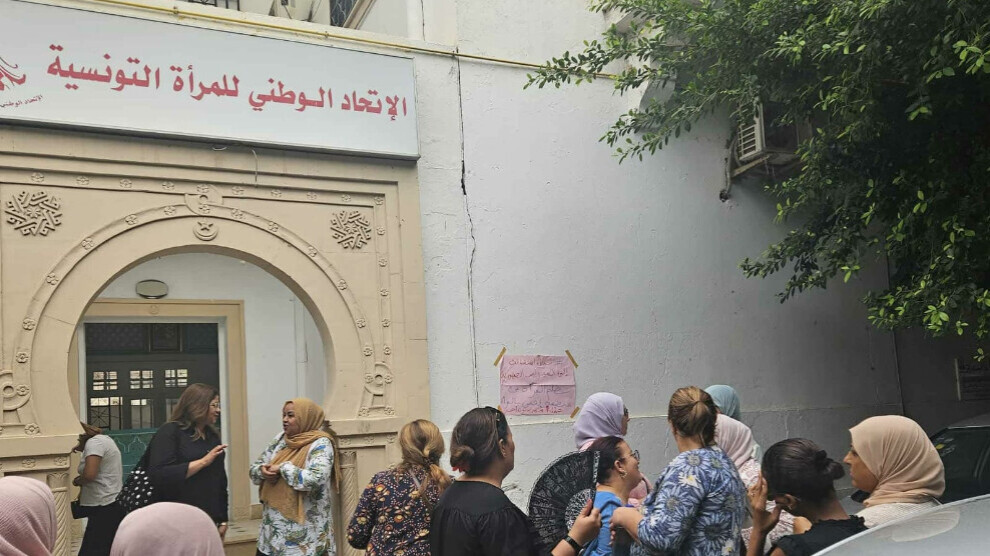
A wafe crisis extending over 19months has placed women workers of the National Union of Tunisian Women before escalating living and psychological challenges,and has reopened the question of the fate of one of the country’s oldest women’s organizations.
IKHLAS AL-HAMROUNI
Tunis_While the National Union of Tunisian Women continues to fulfill its historic mission of defending and supporting women's rights, its women workers are experiencing an unprecedented crisis due to the delay in salary payments for approximately nineteen months—a situation that raises questions about the future of one of Tunisia's oldest women's organizations.
Between a legacy of struggle dating back to independence and deteriorating socio-economic conditions, voices of activists from Kasserine governorate are rising to demand the rescue of the institution and the protection of workers' rights, affirming that the crisis is no longer merely financial, but has become a matter of dignity and social justice.

In this context, human rights activist Rania Nasri affirmed that the National Union of Tunisian Women, since its founding, has been one of the most important institutions defending women's rights, contributing to the empowerment and support of women in various fields. However, she explained that "the roots of the current crisis date back to the post-revolution period, when debts accumulated and the organization became unable to meet its financial obligations, which directly affected the conditions of workers and the continuity of the Union's activities."
She added that the Union was not merely a workplace, but a social space embracing women of various categories—workers, housewives, divorced women, abused women, elderly women, and those with limited income—through training, qualification, and social support programs. However, according to her, the accumulation of debts led to salary delays for many months, prompting the workers initially to remain silent in anticipation of temporary solutions, before it became clear that the crisis was deeper and more complex.
She added: "Workers knocked on the doors of official authorities, foremost among them the Ministry of Family, Women, Children and the Elderly and the Ministry of Social Affairs, demanding urgent solutions, but these efforts have not yet yielded tangible results."
She affirmed that for the workers, salary is not merely compensation for work, but the only means to secure their families' needs—from paying water, electricity, and rent bills, to providing food, treatment, and school expenses. She noted that the absence of salaries has forced many to borrow and take on additional burdens, including transportation costs to workplaces from their own resources, amid declining social rights and rising living costs.
According to Rania Nasri's testimony, the repercussions of the crisis were not limited to the economic side but "extended to the psychological and family life of the workers, as pressures within families increased, cases of family breakdown rose, and some women became threatened with eviction from their homes or exposure to violence and humiliation due to their inability to meet their financial obligations."
She explained that the National Union of Tunisian Women has remained for decades a refuge for divorced women, abused women, and those in need, considering that the continued suspension of salary payments threatens the stability of these groups and deprives them of their sole source of livelihood. She emphasized that an employee who performs her work daily despite the hardship of commuting and difficult conditions, yet does not receive her salary, gradually loses confidence and motivation—which negatively affects her professional performance and psychological state.
Rania Nasri called for urgent intervention to protect workers' rights, affirming that dialogue and peaceful protest remain the best way to overcome the crisis. She concluded her testimony by emphasizing that the Union's employees "are not merely numbers in financial files; they are women with dignity and human rights that deserve justice."
The Union's Historical and Social Value
For her part, human rights activist Amal Al-Faleh believes that discussing the current crisis cannot be separated from the long history of the National Union of Tunisian Women, established in 1956, which over decades has provided social and developmental services that made it one of the most prominent national organizations supporting women and the family.
She said: "The Union played a pioneering role in awareness-raising, particularly regarding reproductive health and family health. It was also among the first organizations to encourage girls' education and combat early school dropout, especially in poor and low-income communities."
She added that Union members used to initiate solidarity initiatives for students from needy families, collecting and refurbishing school bags and supplies so that children could attend school in better conditions. She affirmed that the Union was also among the first structures to confront the phenomenon of child marriage through awareness campaigns and field work.
She noted that "workers and members made great efforts to maintain the continuity of this institution, but to no avail," expressing her regret over the continuation of the wage crisis and considering that no organization can continue to fulfill its mission if its workers are deprived of their most basic rights.
She affirmed that the Union has gone through difficult stages and multiple crises throughout its history, but always managed to overcome them. She expressed hope that it would also be able to overcome the current crisis, despite the economic situation characterized by rising prices and living costs, which compounds the suffering of workers and their families amid daily obligations—rent, bills, back-to-school expenses, and basic costs.
She said: "This file must be addressed seriously, given the Union's historical and social value. I propose launching awareness campaigns to introduce its role and services, alongside seeking new funding sources to ensure the institution's continuity and enable workers to recover their full salaries and rights."
The testimonies of Rania Nasri and Amal Al-Faleh converge on a single message: that the wage crisis is no longer merely an administrative or financial issue, but has become a matter affecting women's rights and dignity, threatening the continuity of an institution that has played a pivotal role for decades in supporting Tunisian women, the family, and society.
Between a wait lasting nearly nineteen months, the workers remain clinging to hope that the crisis will find its way to resolution, securing their rights and preserving an institution that represents one of the most prominent gains of the women's movement in Tunisia.