
"Together" Cooperative... Women of Riha choose the path of solidarity to rise together
From the idea of solidarity to a project for economic empowerment, seven women from Riha in northern Kurdistan launch the "Together" experience, seeking to provide job opportunities and enhance women's independence.
ARJIN DELIK ÜNCEL
RIHA_A famous African story recounts that an anthropologist invited the children of a tribe to race toward a basket of fruit under a distant tree, promising whoever arrived first all the fruits. But the children chose to hold each other's hands and arrive together to share them. It is a story that embodies the philosophy of "Ubuntu," based on solidarity, participation, and linking the happiness of the individual to the happiness of the group.
From this philosophy, seven women from the city of Riha in northern Kurdistan drew inspiration to establish the "Together" (Hevra) cooperative, to embody the values of cooperation and economic empowerment.
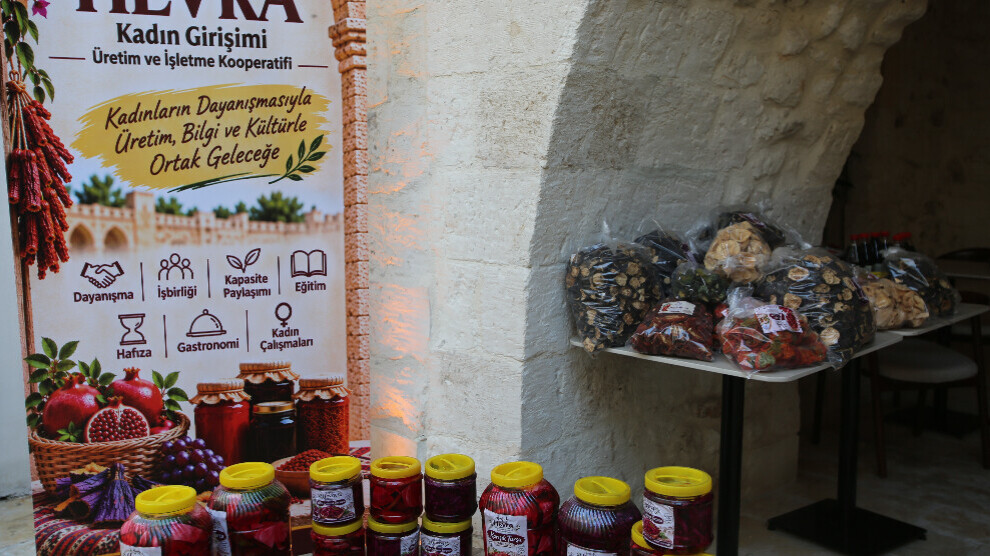
In the Ayyubiyah district of the city of Riha, the women turned a historic palace into a headquarters for the "Together Cooperative for Women's Initiatives, Production, and Employment," with the aim of providing local and natural products at affordable prices, and creating job opportunities for women, especially those whose circumstances prevent them from working outside the home.
The cooperative opened on November 14, and brings together women from diverse specializations and backgrounds, including nutritionists, sociologists, psychologists, and specialists in social services, alongside women who work from their homes.
The members produce traditional varieties including tomato paste, vegetables, dried fruits, pickles, and pomegranate and grape molasses, and market them at the cooperative's headquarters, sharing tasks and expertise, in an embodiment of their slogan "We in the Together association represent the philosophy of Ubuntu."
The goals of "Together" are not limited to production and providing income, but extend to expanding women's solidarity networks, and giving women who cannot work outside the home opportunities to participate and produce. Although the initiative alone will not stop the migration of workers in the agricultural sector, its founders hope it will become a model for similar projects that open broader horizons for work and economic independence.
Hundreds of thousands migrate annually in search of work
The area of the Harran plain extends to about two million dunams and 10 thousand (201 thousand hectares), while the area of the Suruç plain reaches about 950 thousand and 970 dunams (95 thousand and 97 hectares). Despite what the two plains represent, with a total area approaching 3 million dunams, as a vast agricultural basin for production and irrigation, between 350 thousand and 400 thousand families are forced annually to leave the region, heading to different Turkish provinces in search of work in seasonal agriculture.
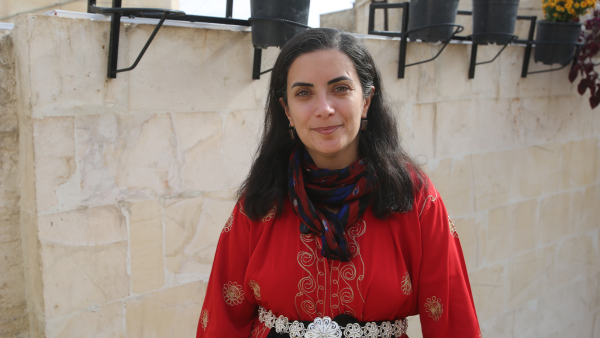
Faced with this phenomenon and the social and humanitarian repercussions it leaves, Aisha Eriş Örenk, one of the founders of the "Together" cooperative, believes that the initiative can present an alternative model that gives women job opportunities in their regions, and limits their being forced to migrate in search of a livelihood.
Exploitation of women's labor and deprivation of children from education
Aisha Eriş Örenk describes Riha as one of the cities witnessing the most migration of seasonal agricultural workers, pointing out that women workers in this sector live in conditions that do not preserve their human dignity, while girls and children bear the consequences of this migration, through deprivation of education and the exploitation of girls under the cover of early marriage.
She bases her talk on an experience extending about 12 years in the field of humanitarian aid and her experience as a psychological counselor and activist in women's and children's rights, to affirm that awareness alone is not enough to address the roots of the problem. "We can talk about children being deprived of education and working conditions that violate human dignity, and advocate for their rights, but we will not be able to change their reality unless we address the basic problem, which is securing livelihoods and sources of income."
From this standpoint, Aisha Eriş Örenk and a group of women began thinking about an alternative that allows them to work and produce without being forced to leave their regions. "We asked ourselves why don't we establish our own work? And why don't we start something together? And from here came the name Together; we said let us move together and all work hand in hand."
"Women's solidarity is the best way to break the cycle of violence"
She added: "Through the project we embody the philosophy of Ubuntu; instead of racing toward the fruits, children intertwine hands and arrive together to share them. This is what we believe in; while some of us can advance two or three steps, others cannot even reach the first step. Therefore we chose the name Together, to affirm the necessity of collective progress and providing equal opportunities for women."
Aisha Eriş Örenk links this approach to the need to enhance women's economic independence, considering that the absence of private income keeps many women stuck in the cycle of violence, and affirms that "the best way to break this cycle is women's solidarity, and enabling women to achieve income and economic independence."
"Women's solidarity is a very beautiful thing"
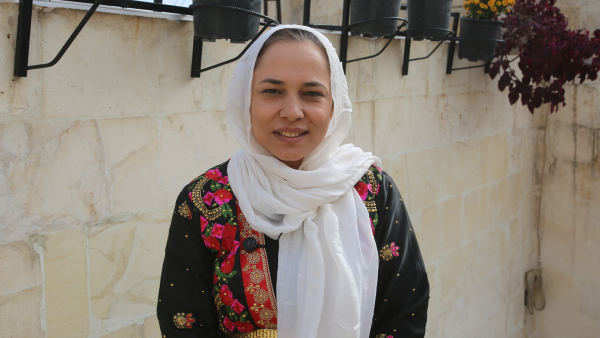
As for Shehriban Aydın, who has never had a work experience before, she sees in the "Together" cooperative a source of hope for women.
Rojda Kip, who has worked for years in pomegranate cultivation in her own orchard, embodies one of the models of women benefiting from the cooperative, where she displays the pomegranate molasses she prepares from her harvest.
She explains that the pomegranates of Suruç enjoy wide fame, and that she previously had to send her harvest to the center of the city of Riha to sell it, but now she has become able to market her products through the cooperative.
"Women grow stronger together"
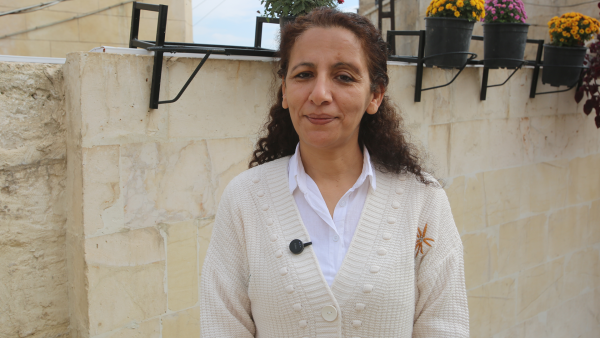
For her part, Firda Üncel, the co-spokesperson of the Environment Council in Riha, affirms that the cooperative seeks to highlight the value of women's work and make their efforts more present and appreciated, stressing that solidarity gives them greater strength.
She believes that "Together" can become a source of hope for women, by providing opportunities that allow them to remain on their lands, obtain fair compensation for their efforts, and reduce their being forced to migrate for seasonal agricultural work, and the repercussions that accompany it on children's education and family life, affirming that the goal is not to achieve profit as much as to build bonds of solidarity and joint work.
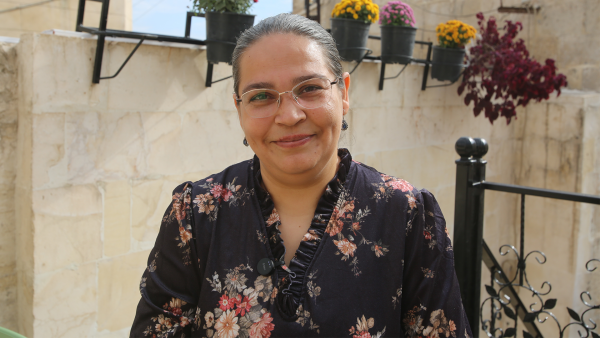
Calls to join the cooperative
Sacide Çelik Güçkan, one of the seven founders of the cooperative, affirms that reaching women in need and providing income opportunities for them represent an essential part of the initiative's goals, explaining that the place's activities will include providing breakfast, lunch, and dinner, alongside marketing the local products that women prepare themselves.
As for Naila Ak, she believes that the cooperative goes beyond being a space for production and sale, to become a home that brings women together in solidarity, work, and shared learning. She summarizes this by saying: "Our primary goal is to highlight the value of manual work and women's efforts, and to enhance their economic and social status. Here we learn together and grow together."