
The Siege Weakens Economic Activity and Heavily Affects Families
The Women’s Economy Committee in the neighborhoods of al-Ashrafiya and Sheikh Maqsoud in the Syrian city of Aleppo is working to finance and implement service and productive projects to support women and challenge the reality of the siege.
Sirin Mohammed
Aleppo – The Women’s Economy Committee in the neighborhoods of al-Ashrafiya and Sheikh Maqsoud in the city of Aleppo has expanded its economic projects and established service and productive initiatives to accelerate the effective integration of women into economic activity.
The negative impacts of the siege imposed on the neighborhoods of Sheikh Maqsoud and al-Ashrafiya by militants of Hay’at Tahrir al-Sham are directly reflected on families. This siege, which has continued for nearly three months, has caused severe shortages of essential materials such as diesel fuel and flour, disrupting the operation of bakeries amid a deteriorating electricity situation.
Residents of both neighborhoods are deprived of their right to heating fuel despite extremely low temperatures, especially during the early morning hours. Children, women, the elderly, and the sick suffer from the severe cold, which increases the spread of illnesses amid declining health services due to shortages of medical supplies and treatments.
The Largest Share of Profits Goes to the Women Workers
Yasmin Najjar, a member of the Women’s Economy Committee in al-Ashrafiya and Sheikh Maqsoud, told our agency that their projects have been harmed by the imposed siege:
“Checkpoints of the interim government prevent the entry of commercial goods needed for the committee’s shops, in addition to the shortage of agricultural supplies, which damages the committee’s agricultural project and obstructs the normal course of life.”
The work of the committee, which aims to achieve economic self-sufficiency for women and support their ability to work, has been affected. The committee seeks to empower women so they can develop strong, independent personalities and play an active role and have a respected position and voice in society.
The working system, as explained, is based on valuing the efforts of women workers by allocating the largest share of project profits to them, while the committee takes only 25% of the profits.
Yasmin Najjar explained that all those managing the projects are women. From this standpoint, the committee strives to establish projects even if they are small, as what matters most is that women benefit and develop:
“Women are capable of managing the household and raising children, and they also possess strong management and organizational skills.”
With the onset of winter, students in al-Ashrafiya and Sheikh Maqsoud are suffering from severe cold and falling ill due to the lack of heating fuel in classrooms.
Therefore, the women of the two neighborhoods are raising their voices to express their rejection of the practices of the interim government against residents, calling for an end to this targeting.
Projects of the Women’s Economy Committee
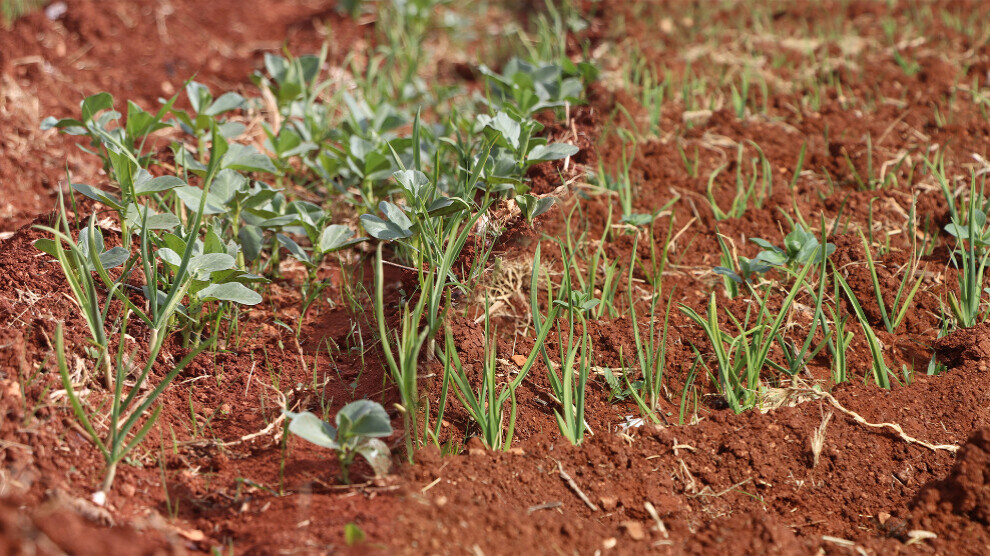
Yasmin Najjar stated that the committee’s latest project involved planting a garlic crop, but due to the siege and the shortage of necessary agricultural supplies, the project failed.
Previously, the committee invested in an agricultural land project located in the al-Shaqeef area, managed by a woman and her husband, including irrigation, supplies, and all farming requirements, while the committee supervised the project. Additionally, the committee recently opened a small shop in al-Ashrafiya, managed by a mother of a child. However, after the siege was imposed by the interim government, the shop was severely affected, as the woman was unable to bring in goods, causing financial losses for both her and the committee.
At the end of her statement, Yasmin Najjar called for lifting the siege imposed on the two neighborhoods, stressing that the attacks and violations carried out by militants of Hay’at Tahrir al-Sham primarily target the people’s achievements.