
Sudan Under Conflict... An Exhausted Economy and an Unknown Recovery Future
As the conflict in Sudan continues, the economic crisis worsens and citizens' purchasing power declines, amid currency collapse, rising prices, and damage to productive sectors.
MERVAT ABDEL QADER
SUDAN – The economic crisis in Sudan is no longer just numbers about inflation or the exchange rate in news bulletins, but has turned into harsh daily details. A mother has removed meat from her shopping list for months, a university student has left his studies to work in the markets if he finds work, and a farmer looks at his land whose cultivation has been disrupted after his machinery was stolen and his crop burned. It is a battle for survival in the fullest sense of the word, waged by millions of Sudanese amid a war that has exhausted the country and plunged its economy into one of the most severe crises in modern history.
From Khartoum, which was the beating heart of the economy, to Darfur, Kordofan, and Al-Jazira, which are among the most prominent areas of agricultural and animal production, reaching Port Sudan, which has turned into an important administrative and economic center during the conflict, the same story is repeated: a currency declining in value, prices constantly rising, and a citizen standing alone in the face of a crisis he did not create.
So how did the third-largest country in Africa in terms of area, and the one rich in agricultural and mineral resources, reach this edge? How did an economy that was viewed as one of the promising agricultural economies in the region turn into an economy exhausted by conflict, with many of its citizens now dependent on aid and remittances from expatriates? And what is the real price that the citizen pays when the ability to finance basic services and provide food and medicine declines amid the requirements of the conflict?
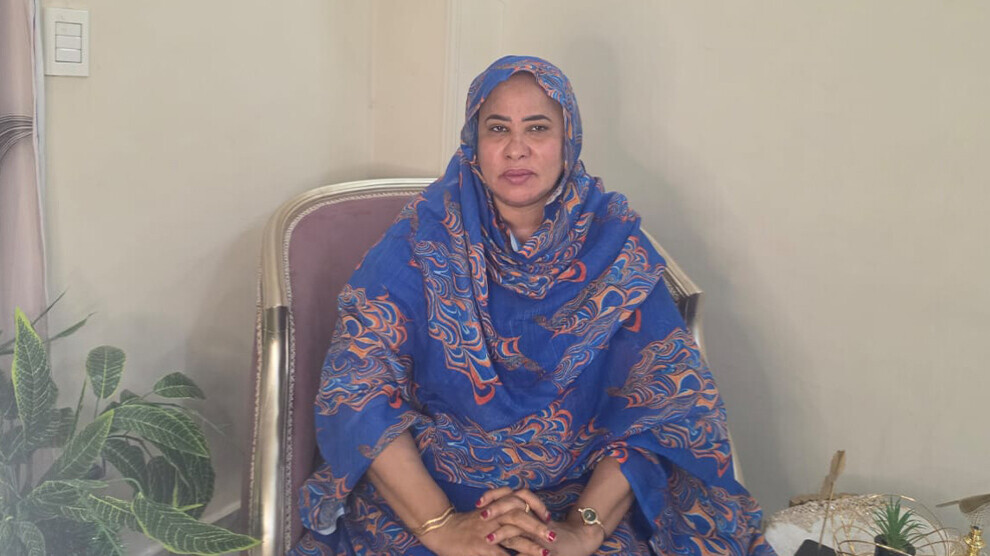
Economic official Dr. Heba Mohammed Nour answered these questions for our agency, explaining the nature of the crisis and revealing how old economic imbalances combined with the destructive conflict to produce one of the worst economic crises in the history of modern Sudan.
She says: "The Sudanese economy has gone through many stages and crises over the long term, but the most difficult of these stages is the current one, which we call the economics of wars. There is always instability, because there is no political or security stability, and therefore there is no economic stability, because the basis of economic stability is always built on security and political stability."
The Roots of Collapse... Imports Exceeding Exports
Heba Mohammed Nour returns to the roots of the crisis to confirm that it did not begin with the outbreak of the conflict, but was preceded by structural imbalances that made the Sudanese economy fragile in the face of shocks, most notably weak production and declining exports compared to imports.
She says: "Sudan imports more than it exports, and its exports have declined significantly, and therefore revenues decline, because it does not possess sufficient production to cover its needs."
She added that the figures currently circulating may not be fully accurate due to large areas slipping out of control, the disruption of statistical institutions, and the difficulty of collecting data, but they reflect the scale of the crisis. She noted that poverty rates have risen significantly, public revenues have declined, while inflation has remained at high and fluctuating levels, which has been directly reflected in citizens' lives.
As for the most dangerous manifestations of the collapse, she attributed it to the deterioration of the exchange rate, which Heba Mohammed Nour describes as a "structural distortion." She says: "The problem is that the Central Bank of Sudan is supposed to be the one controlling the money market, but due to the conflict and the lack of production, the problem of the parallel market emerged and became greatly influential in determining the exchange rate."
The Gap Between the Official Rate and the Parallel Market Rate
She explains that the Sudanese pound has witnessed a sharp decline against the dollar, with the gap widening between the official rate and the parallel market rate. She noted that exchange rates that were around hundreds of pounds to the dollar before the conflict reached in later stages thousands of pounds, with prices varying according to the period and the source of the transaction.
She says: "We need currency to import wheat and fuel, which are among the needs whose high cost the citizen suffers from most. So where will the bank get currency from in light of declining revenues and weak exports? It is forced to rely on available resources from taxes and customs, while the shortage of foreign currency increases pressure on the dollar price in the parallel market."
She confirmed that Sudan has lost a large part of its agricultural and animal production capacities due to the conflict, as major production areas, especially in Darfur, Kordofan, and Al-Jazira, were subjected to widespread damage as a result of battles, displacement, looting of property, and disruption of supply chains. Agricultural and animal products were also affected by the difficulty of transporting and marketing them, and smuggling operations and changes in cross-border trade routes emerged, depriving the country of part of its export revenues.
She points out that gum arabic, which is considered one of Sudan's most important cash products and is in demand in world markets, has been affected in its production and marketing by the conflict, as its production belt extends across multiple areas of Sudan, some of which have been exposed to security turmoil and disruption of trade movement. The infrastructure of the Al-Jazira project, which represents one of the most important agricultural projects in the country, has also been damaged, and cotton and other crop production activities have declined, in addition to the impact on gold production areas, which has been reflected in the state's foreign currency resources.
The Budget of the Rifle Versus the Budget of the Loaf
Heba Mohammed Nour attributes the dilemma of public spending in this period to the difficulty of balancing the requirements of the conflict and the basic needs of citizens, in light of declining public revenues and rising security and military expenditures, which doubles pressure on services and productive sectors. "If any citizen were given the choice between liberating his city or providing food and drink for him, he would choose to liberate his city. Most of the residents of Khartoum and Wad Madani needed their areas to be liberated so that they could return after losing their homes." She confirmed that "the budget faces great pressure, as the requirements of the conflict compete with the needs of food, health, education, and rehabilitation of infrastructure."
Will Sudan Go Hungry?
She explained that despite Sudan possessing many natural resources, this did not prevent famine from occurring in areas of the country, according to the reports of the Integrated Food Security Phase Classification, which documented catastrophic levels of food insecurity in some areas, especially in Darfur and parts of Kordofan.
Despite the dark scene, Heba Mohammed Nour believes that Sudan possesses agricultural and water resources that could help it overcome the food crisis, but she notes that benefiting from these resources requires providing security, fuel, machinery, and agricultural inputs, alongside facilitating the movement of production and trade.
The Sudanese Economy Will Not Recover Quickly
Heba Mohammed Nour explained that treating the Sudanese economy will be long and cannot be achieved quickly, because a post-conflict economy needs rebuilding institutions and infrastructure, restoring productive and commercial activity, alongside reforming the financial and banking system.
Political Will and Economic Management
She stressed that the problem is not in the government that comes or goes, but in the policies that governments follow. Reforming the economy needs determination, will, transparency, and a clear logical vision, not just words on paper.
Economic official Heba Mohammed Nour concludes her interview by emphasizing that the road to recovery will be difficult and long, but not impossible if political will, security stability, and sound economic management are available. "Restoring production, providing job opportunities, and improving citizens' living standards are the real foundations for building a Sudanese economy capable of overcoming the effects of the conflict."