
Rural Women Sellers in Yemen Preserve the Bridge Between the City and Local Agriculture
Rural Taiz women keep selling natural goods despite transport hardships and falling demand, sustaining family incomes and local ties—a testament to Yemeni resilience.
RAHMA SHANZOUR
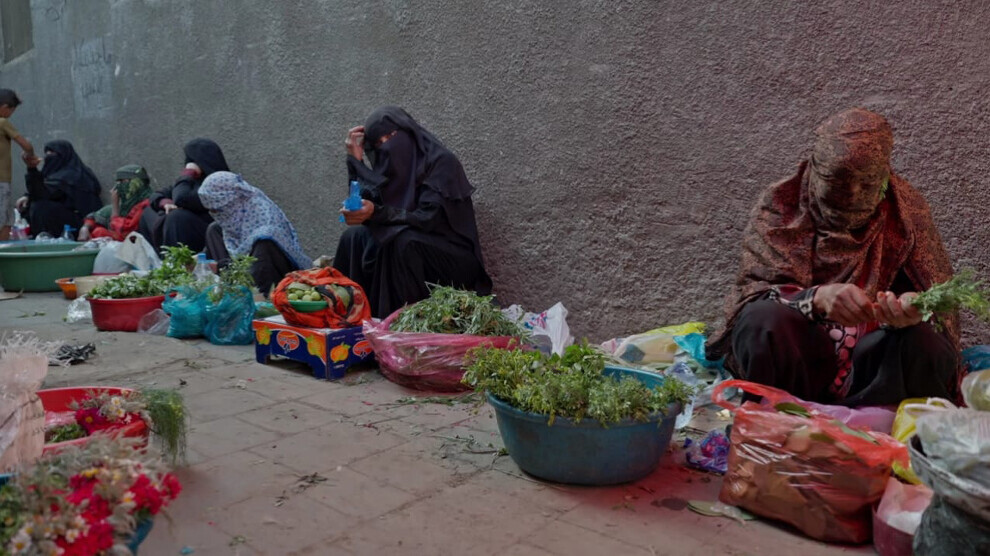
Yemen — In the alleyways of Taiz's old city, specifically in the Al-Bab Al-Kabir market—one of the city's most historic traditional souks—rural women sellers continue to form part of the daily landscape. With the early morning hours, dozens of women arrive from the agricultural areas surrounding Taiz, carrying fresh rural products they have been selling in the market for many years.
The products these women bring range from traditional ghee (clarified butter) and rural cheese to seasonal vegetables and wild plants for which the mountain villages are known. These products serve as a primary source of income for many rural families and also contribute to providing local, natural food for city dwellers.
Despite the hardship of daily travel, rising transportation costs, and declining consumer purchasing power, the rural women sellers persist in their work with determination—a scene that reflects the ability of Yemeni women to adapt to difficult economic conditions and to rely on themselves.
The role of these women is not limited to selling local products but extends to preserving the ongoing relationship between the countryside and the city by delivering agricultural products directly from producer to consumer, thereby supporting the local economy and preserving part of the food heritage associated with rural Yemen.
30 Years of Toil in Taiz's Oldest Markets
Before the first thread of dawn creeps behind the mountains of Taiz, Noor Abdul Salam (61 years old) has already finished her preparations and left her home in one of the city's villages, carrying her rural products on her shoulders for a daily journey that has repeated for over three decades—toward the Al-Bab Al-Kabir market, one of the city's most historic and bustling souks.
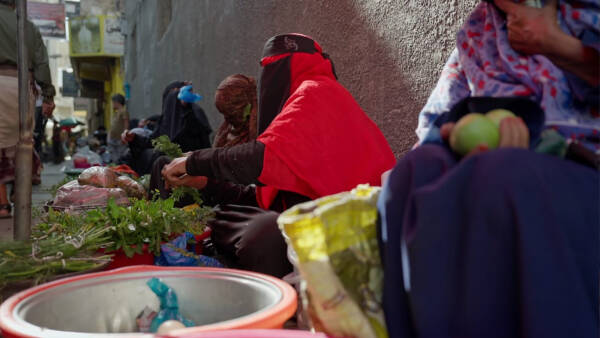
In her customary corner of the market, Noor Abdul Salam carefully arranges her small plastic containers, displaying what her village's land has yielded: traditional ghee, rural cheese, and some seasonal vegetables. She receives her customers, who know the time of her arrival and her spot, as if she were a fixed part of the market's daily details. She says: "For over 30 years, I have come to the market every day. This work is my only source of livelihood, and from it I provide for my family's basic needs."
Working as a seller of rural products was never an easy choice for Noor, but it became her means of facing life's growing demands. Despite her advancing age, she continues her daily journey, driven by her belief that work gives a person dignity and the ability to rely on oneself.
Noor Abdul Salam describes her daily journey, saying: "I wake up before dawn to prepare the goods, and I endure the hardship of the road and the high cost of transportation to arrive on time. Despite the difficult road and rising transport costs, we continue to work and are careful to provide natural rural products that many people prefer."
In recent years, the burdens borne by rural women sellers have worsened amid a sharp decline in citizens' purchasing power and a staggering rise in transportation costs due to the deteriorating economic conditions in the country. Nevertheless, she continues her daily presence, aware that her customers prefer her products because they are "natural and fresh—many of them have known us for years and come specifically to buy the ghee and cheese we sell."
A Societal Role Beyond Selling, and Suffering Multiplied After the War
The impact of Noor Abdul Salam and her fellow rural women sellers extends beyond providing daily income for their families to include a developmental and integrative role. They form a direct channel connecting local agricultural produce to the consumer, bypassing complex marketing chains that raise prices and deprive small producers of fair profit margins. In this way, they strengthen the bond between the countryside and the city and contribute to sustaining simple commercial activity amid the collapse of basic services.
Half the Goods Spoil Before Selling
However, this vital role faces immense challenges, as affirmed by seller Amriya Thabet (67 years old), who sits a few meters away from Noor and carries a similar story of struggle. She says: "I spend every evening going around to farmers in the villages to collect products, then I wake up before dawn and head to the market. But the situation now is not like it was before the war. Transportation has become almost impossible, and its costs are very high. I often arrive late because of the rough roads."
She adds: "People's purchasing power has collapsed. More than half of what I bring—vegetables and cheese—spoils before I can sell it, because customers are no longer able to buy as they used to. I used to sell everything I brought by early morning, but today I sometimes have to throw away spoiled goods at my own expense."
Despite this vital role, rural women sellers continue to work under difficult conditions, without social protection or support to alleviate their burdens. They spend long hours in open markets and endure the hardship of daily travel at a time when the country's economic challenges continue to mount.