
“PÎK” Workshop in Qamishlo… Local Industry with a Kurdish Identity
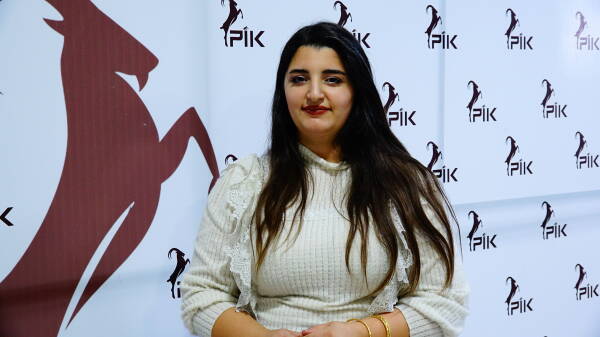
PÎK workshop administsrator Aya Mohammed said it became Rojava’s first and largest facility manufacturing clothing from local cotton, aiming to present a new industrial concept and achieve self-sufficiency with Kurdish-identity products.
SORKEL SHEIKHO
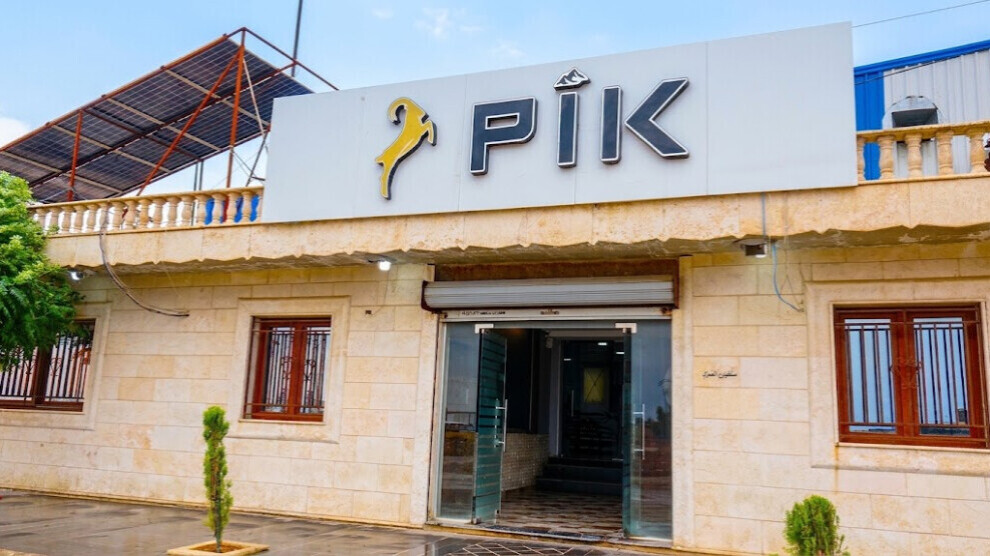
QAMISHLO_The story begins every morning with the first threads of the sun, as life stirs throughout the large workshop consisting of three main sections. For a year and a half, the workshop has opened its doors daily to the rhythm of the workers’ activity and the sounds of sewing machines, together forming a continuous symphony of work and hope.
Production at the “PÎK” workshop is not limited to sportswear and jeans for men and women only but also includes colorful children’s clothing. Within the folds of these pieces, stories of resistance and resilience are woven; every new piece made carries within it a promise of a better future and comes as a gift from the workers, reflecting the high productivity of local hands.
The “PÎK” workshop opened its doors to dozens of workers and tailors in mid-2024, and since its founding a year and a half ago, it has developed into an important industrial center. Today it is considered the first and largest clothing manufacturing facility in Rojava, and what also distinguishes it is that all its clothes are made from locally produced cotton.
Behind every sewing machine and among the piles of colorful fabrics carefully cut, skilled local hands work, believing that their craft is no less important than that of global brands. Here, fabrics turn into ready-made clothes through a creative process that knows no bounds, and the products that come out of the “PÎK” workshop are distributed in the markets of Rojava’s cities.
How Do Fabrics Turn into Clothes?
Aya Mohammed, a member of the administrative team at the “PÎK” workshop, explained that the journey inside the workshop begins with transforming raw fabrics into ready-made clothing, where sportwear and jeans are produced according to high quality standards.
She added that sportswear is made from cotton, while clothing made from denim fabric (jeans) is produced using fabrics of three different weights: light, medium, and heavy. She drew attention to the existence of three other specialized sections in the workshop: the cutting machines section, the digital and manual printing section, in addition to the fabric printing and embroidery facilities, making it the first and largest factory of its kind in the region.
She said: "Rojava, which suffered from 14 years of war and extremely difficult phases, has succeeded in transforming into a center for establishing and developing industry. Our factory is the largest and first of its kind in the region in the field of clothing manufacturing. Although there are other sewing workshops, they do not match our factory in terms of size or the diversity of internal sections."
A New Industrial Concept
Every institution or organization carries a unique name, inspired by geographical, civilizational, and historical characteristics, as well as the geographical nature of the land. Regarding the meaning of the name "PÎK," Aya Mohammed says: "It is a name derived from English and means the mountain peak (Peak), and our logo carries the image of a wild mountain animal, a creature that always lives on mountain peaks. Through this name and logo, we aspire for our brand to reach the top in terms of quality and production. We also aim to present a new industrial concept for our region. Historically, our region was known only for agriculture, and there was no previous existence of the clothing industry or the industrial sector. We have provided job opportunities for local residents and helped them acquire valuable skills."
Obstacles and Challenges Facing Industrial Development
Implementing any new concept, especially in areas or cities that have not witnessed such activities before, inevitably raises many challenges. Regarding the difficulties facing the workshop, she explained: "Achieving this vision depends entirely on clothing production and the availability of a skilled workforce. Since industrial culture has not yet taken root here, we face challenges in finding workers in the clothing sector and skilled cadres capable of operating machines with the required precision. Despite these challenges, we strive hard to find suitable solutions that ensure our brand gains fame and recognition, so that it can be said in Syria that these clothes are made from Qamishlo's cotton, threads, and fabrics."
The vision and goals of "PÎK" transcend the borders of Rojava, as the brand aspires to achieve a presence in other regions as well. In this regard, Aya Mohammed notes that their goal in the workshop is not limited to Rojava only. "We want the PÎK brand to reach markets throughout Syria. We aspire for a day to come when it is not said that clothes come exclusively from Aleppo, but rather that Qamishlo also produces clothes made from cotton, threads, and fabrics with Kurdish hands."
The workshop was able to offer prices lower than those imposed by brands coming from outside the region, allowing the community to obtain clothes at reasonable prices. "The brands currently present in our markets come almost entirely from outside the region, with very few local options. Therefore, our goal in establishing this workshop was to ensure our community obtains beautiful, high-quality clothes at prices within everyone's reach."
"Kurds Are Also Developing Industry on Their Land"
She confirmed that the PÎK workshop is not limited to being a manufacturing facility only, but also provides various services to retailers in the market. "If a retailer has a certain model in mind, we can manufacture it here, add the brand they want, and deliver the finished product. We also print images, words, and phrases on T-shirts using manual and digital printing techniques. During the Qamishlo Festival, we printed Kurdish images and texts on T-shirts. Through this, we wanted to highlight the identity of our workshop; to show that this project was founded by Kurds, continues with Kurdish efforts to this day, carries a Kurdish name, and its brand is written entirely in the Kurdish language."
Aya Mohammed hopes at the end of her interview that Kurds will gain recognition and fame in the industrial sector. "Away from defending the homeland or carrying weapons, we want Kurds to be known and praised in the fields of industry and science. Only in this way can we truly advance our country."