
Leek Sellers…Struggling Women Resisting Social Discrimination in Yemen
From fields to Taiz markets, Yemeni women leek sellers endure hardship, economic instability, and social stigma, yet remain determined to secure livelihood for their families.
RAHMA SHANZOOR
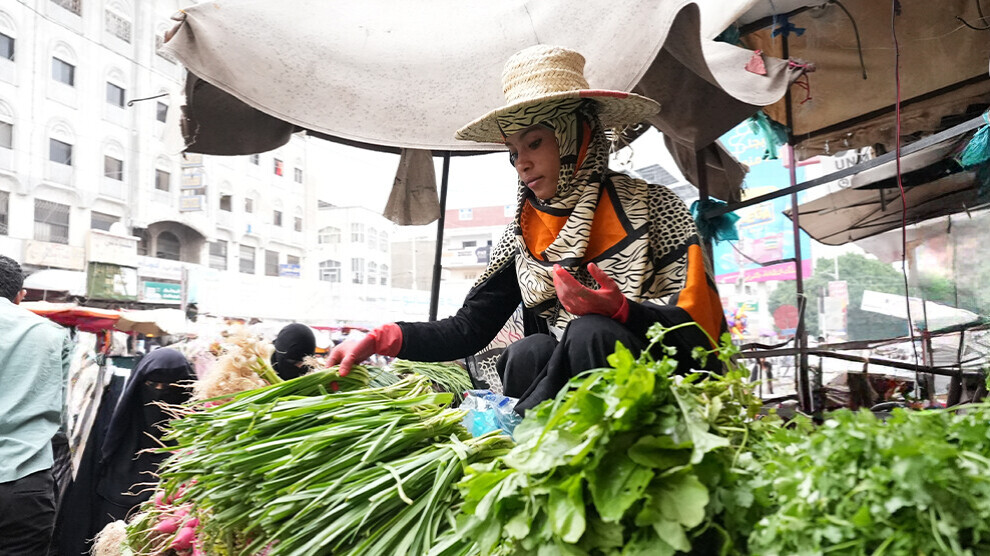
Yemen_With each dawn,hundreds of Yemeni women leave their homes in villages and rural areas of Taiz Governorate,heading first to the fields and then to the city's markets, on a daily arduous journey in search of a source of income to help their families bear the burdens of living. The journey begins with planting and tending leeks, and does not end until after harvesting, preparing, transporting, and selling them in the markets.
The cultivation and sale of leeks (green onions) is an agricultural profession that families in rural Taiz have inherited over decades. Families cultivate the crop on small plots, tend to it, harvest, clean, and tie it in bundles before transporting it to the city's markets. Women participate in various stages of this process—from fieldwork, irrigation, and harvesting to preparing and selling the crop.
With declining job opportunities, rising living costs, and worsening economic burdens, this profession has become a source of income for hundreds of women, most from low- and middle-income families, who rely on it wholly or partially to secure their daily needs.
According to field estimates, the number of women working in leek cultivation and sales in Taiz Governorate ranges between 300 and 500 women, amid increasing reliance on agricultural work and markets as a source of income in rural areas.
Among these women is Maryam Qasim, 49 years old, who begins her day in the Al-Dabab area of Sabr Al-Mawadam District before heading to central Taiz to sell leeks.
She says she leaves home at six in the morning, arrives in the city after about an hour, then spends long hours in the market waiting for customers. "I sit in the market from seven in the morning until two in the afternoon, and sometimes until Asr prayer."
Maryam Qasim has been selling leeks for about 30 years, and says the profession has become an essential part of her life. "This profession is my source of income and my family's source of income."
The hardship of work does not end upon arrival at the market; it is preceded by hours of fieldwork, and income remains uncertain, affected by the quantity of produce available for sale, prevailing prices, and the level of customer demand throughout the day.
Discrimination Compounds Suffering
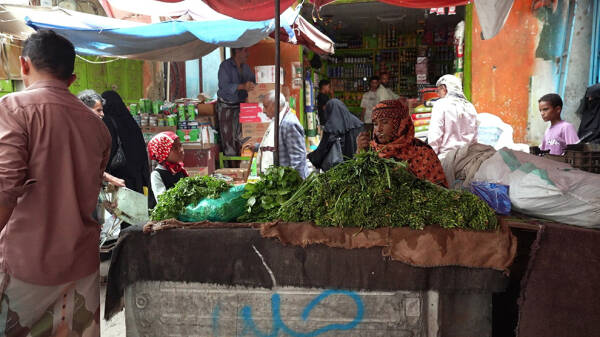
Alongside economic burdens, some leek sellers face an additional challenge: negative social perceptions of their work, particularly women from marginalized groups. Thus, the market becomes for them not merely a space for earning a living, but a place where they also encounter stigma and discrimination.
Women workers in the markets say they are sometimes subjected to hurtful comments and looks that belittle their work or associate it with their social background, adding a psychological and social burden to the harsh working conditions they endure.
Maryam Qasim believes that work should not be a reason for discrimination or belittlement of human dignity, affirming that women practice this profession out of necessity to provide for their families, given limited options and the absence of job opportunities that offer stable income.
She says: "We have become accustomed to some negative comments and looks, but the need to work drives us to continue and ignore what we face." She notes that securing the family's needs remains the primary motivation to continue working, despite the negative attitudes and looks she may encounter in the market, affirming that the need to earn a living makes her move past those situations and continue her work.
Work Begins in the Field, Income Governed by the Market
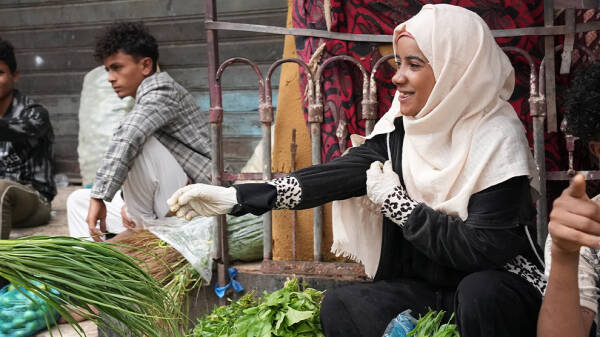
For leek sellers, the work journey begins long before reaching the market. In the fields, women participate in planting, tending, harvesting, cleaning, and tying the crop, before loading and transporting it to the city for sale.
Omnia Saif, 65 years old, who has been selling leeks for about 50 years, says: "We plant leeks and care for them, then we harvest them and come to the market to sell them."
She notes that citizens' purchasing power has declined noticeably compared to pre-war levels, due to difficult economic and living conditions that have weakened families' ability to buy, reflected in market activity and demand for agricultural products.
Cultivating, harvesting, preparing, and transporting leeks require significant effort and time, while many women lack a stable income or alternative source of livelihood. Earnings thus become tied to price fluctuations, market activity, crop volume, and the ability to sell it.
Omnia Saif explains that rising transportation and living costs, along with fluctuating agricultural prices and declining purchasing power, all reduce the income sellers receive.
Even selling a good quantity of leeks in a single day does not necessarily mean high earnings, as revenues are determined by the volume of produce sold and the price at which it is sold, with part of the earnings going to cultivation, transportation, and preparation costs, leaving limited and unstable profits.
Limited Income and Unending Responsibilities
The burdens of leek sellers are not limited to work in the fields and markets; they extend to family responsibilities that make the income they earn essential for providing food and covering daily needs.
Omnia Saif says that what she earns from selling leeks forms an essential part of her family's income, and that her continued work is compelled by the need to secure life's requirements amid rising living costs and declining income sources.
With limited job opportunities, especially for women in rural areas, agriculture and selling produce in markets have become among the few options available to many. Although the returns may be modest, they represent a necessary resource for their families, helping them face poverty and increasing economic pressures.
A Profession Passed Down Through Generations
Over decades, families in rural Taiz have maintained the cultivation and sale of leeks, passing the profession from one generation to the next, becoming for some more than just an agricultural activity—it is a source of income and a form of self-reliance amid limited economic alternatives.
For Maryam Qasim, Omnia Saif, and other leek sellers, the market is not merely a place to sell produce, but a space to secure income that helps their families continue in the face of difficult economic conditions.
Despite long working hours, declining purchasing power, rising transportation and living costs, and unstable returns, women continue to transport their produce from villages and agricultural areas to the markets of Taiz city, holding onto a livelihood inherited generation after generation.