
Arzu Temo: Economic independence is the foundation of women’s liberation from violence and dependency
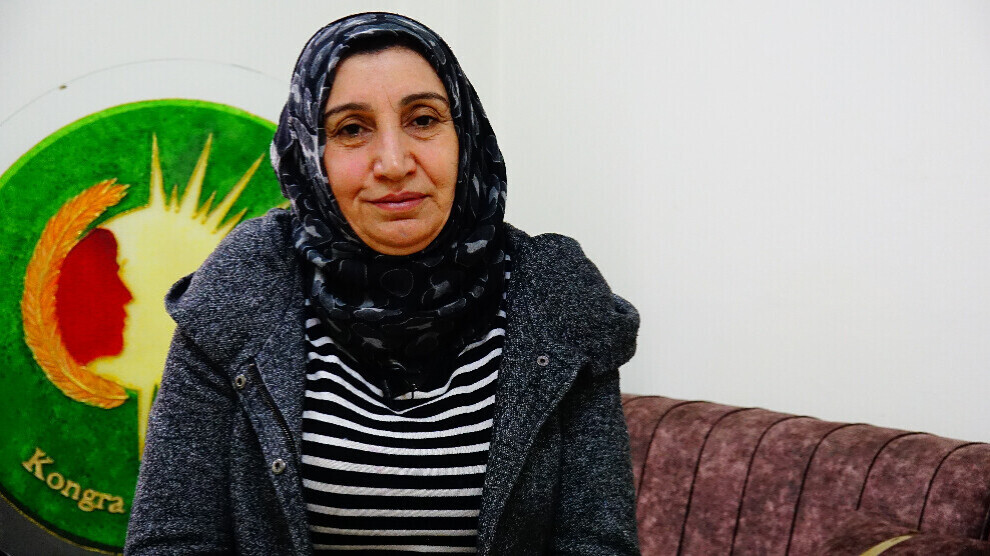
Arzu Temo, Star Congress administrator in Qamishlo, affirmed verbal violence is among the most dangerous, widespread forms against women, and economic independence is a fundamental pillar strengthening women’s will and rights defense.
SORKIL SHEIKHO
QAMISHLO_With the approach of November 25, the international Day for the Elimination of Violence against Women, calls are renewed to shed light on the various forms of violence that women are subjected to, especially verbal violence, which is considered among the most widespread and impactful, despite the neglect and underestimation surrounding it.
Hurtful words, insults, sarcasm, and belittling women are practices that have turned in many societies into familiar daily behavior, practiced within the family, school, street, and workplaces, to the point that some women no longer realize they are victims of violence, or find it difficult to break the barrier of silence and confront it.
In this context, Arzu Temo, an administrator in the Star Congress in the city of Qamishlo, affirmed that verbal violence is one of the most dangerous forms of violence practiced against women, due to the psychological, social, and health effects it leaves, pointing out that confronting it requires changing the prevailing patriarchal mentality and enhancing women's awareness of their rights.
Verbal violence... a daily practice inherited across generations
Arzu Temo explained that violence in its various forms, whether physical, economic, social, or verbal, has become part of the prevailing culture in many societies, especially in the Middle East, where it is sometimes practiced under the pretext of honor.
She said that the most dangerous aspect of this phenomenon is women considering violence something imposed on them or an unchangeable fate, affirming that this is linked to the patriarchal mentality that seeks to impose its authority over women and restrict their will.
She added that verbal violence sneaks into the details of daily life through words, insults, offensive jokes, and phrases that diminish women's capabilities, noting that society's habituation to these practices does not reduce their danger but deepens their psychological and physical effects, especially among women and children.
Breaking the silence and setting limits to abuse
Arzu Temo stressed the need for women to break the barrier of silence and not to deal with insults as something normal or acceptable, calling for taking clear positions in the face of all forms of belittling them and setting limits based on mutual respect.
She affirmed that building a sound society begins with the family, by entrenching equality, love, and acceptance of the other, and establishing democratic family relations not based on power and domination but on understanding and respect for the rights of all its members.
Changing men's mentality is the foundation for dismantling the cycle of violence
She pointed out that the impact of verbal violence is not limited to women alone but extends to children, who grow up in an environment dominated by contempt and fear, which may be reflected in their personalities, self-confidence, and future.
She noted that these practices reproduce themselves from one generation to another, which calls for launching awareness campaigns, seminars, and training courses aimed at changing the mentality based on domination and enhancing the culture of shared life and gender equality.
She affirmed that reforming society begins with changing men's view of women and abandoning the mentality that grants them the right to control them, stressing the need for fathers and mothers to bear their responsibility in resolving their disputes away from children and protecting them from the psychological and social effects of violence.
Economic independence is a step toward strengthening women's will
Speaking about economic violence, Arzu Temo linked women's financial independence to their ability to confront various forms of violence, affirming that economic dependency weakens their ability to make decisions and defend their rights.
She said that a woman remaining hostage to the financial assistance provided by a man makes her more vulnerable to pressure and abuse, while economic independence gives her a wider space to take firm positions and reject violence and humiliation.
She called on women to develop their economic projects, establish their own workshops, and enhance their presence in various productive fields, ensuring them an independent income and a greater ability to manage their lives.
Arzu Temo concluded her talk by affirming that economic independence is not merely a means of securing income but a fundamental step toward strengthening women's will, owning their decisions, and waging a stronger struggle in the face of violence in all its forms, reaching a society dominated by equality, freedom, and dignity.