
From the 74th Genocide to the Journey of Searching for Identity and Justice (6)
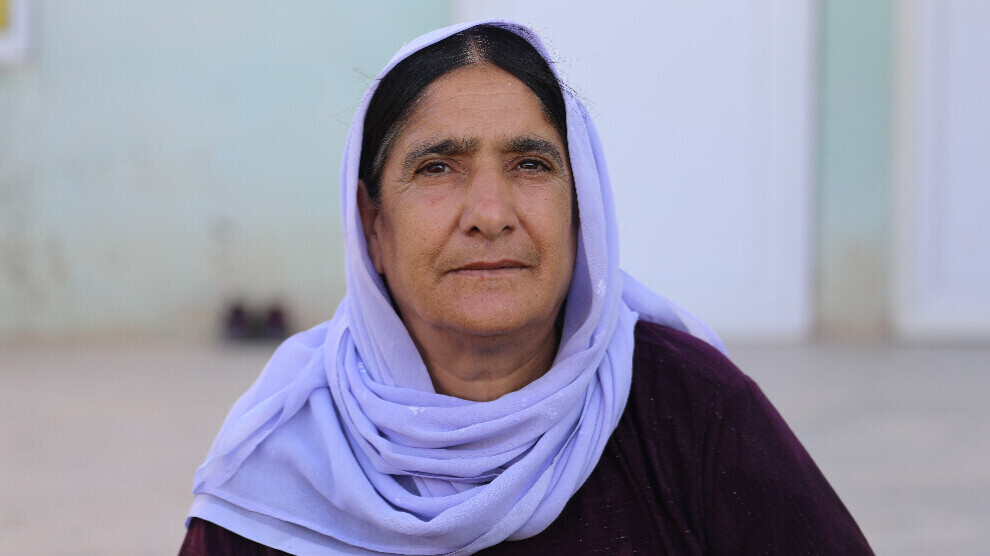
Mother Sherin's journey was not merely a passage from one place to another, but a survival journey steeped in fear, followed by years of patient endurance before she was finally able to return home to Shingal.
JIHAN ZIMO & KULISTAN AZIZ
Shingal — The attack on Shingal revealed two contradictory paths. On one hand, the Kurdistan Democratic Party (KDP) considered itself the guardian of Shingal, yet betrayed the Yazidis, leaving them without protection and paving the way for the massacres. On the other, PKK Freedom fighters and the People's and Women's Protection Units (YPG/YPJ), guided by leader Abdullah Öcalan's vision — who had said "Yazidism must live" — moved toward the Shingal mountains, opened a humanitarian corridor toward Rojava, and rescued thousands of Yazidis.
Mother Sherin was one of those who managed to cross through that humanitarian corridor with her family members, escaping ISIS's grip. After many long years, she returned to her home in Tal Ezer and rebuilt her life once again, even as many Yazidi families remain unable to return to their homes.
Twelve years on, Mother Sherin still recalls the details of those days as though they happened yesterday. She lost her son, who was killed while rescuing dozens of families, but she affirms that what pains her most today is not the loss alone, but the continued absence of justice and the Iraqi state's failure to fully recognize the rights of the victims.
12 Days Among the Graves, Without Water or Food
Mother Sherin recalls the first hours of the attack, saying that her son — who was later martyred — managed that day to save his family and neighbors.
She adds that they spent twelve days near the shrine of Sheikh Hassan, hiding among the graves, without water or food, amid the presence of snakes and other dangers. Despite severe hunger, everyone shared whatever piece of bread they could find: "We were all one, and we thank God we didn't fall into ISIS's hands."
She recounts that parents would place only a little water and a piece of bread in their children's mouths just to keep them alive, while one mother was forced to wash food that dogs had been eating in order to feed her daughter, so she wouldn't die of hunger.
After moving to the Derbûn area, her son went back once again to rescue two women and their children with the help of a relative. During the clashes, he was struck by two bullets. His mother says: "He stayed with his comrades until midnight. They tried to help him and treated his wounds, but he was martyred."
She adds that his body was temporarily hidden near the Shibl Qasim area, while his two young daughters stayed with the family: "He was very smart, and could do anything."
Despite the years that have passed, Mother Sherin affirms that the Iraqi state has not provided adequate support to her martyred son's family: "To this day, the state or any institution has not provided any real assistance to my two granddaughters. They lost both their parents, and they need care. We want the Iraqi government to recognize what happened to the Yazidis as genocide, and to grant us our rights based on that recognition."
Fleeing in the Final Moments
Mother Sherin recalls that the family stayed in their home until ISIS reached the outskirts of Tal Ezer. A neighbor first told them ISIS had reached the Karzarik area, and when she went up to the roof of the house, she saw bullets filling the sky like falling stars.
At that point, she decided to leave immediately, not even allowing her son's wife to prepare food, since there was no longer time for that — especially with ISIS hunting down girls and women.
Survival Through the Humanitarian Corridor
After reaching the shrine of Sheikh Hassan, the family crossed the humanitarian corridor toward Rojava. Along the way, they lost their direction and nearly fell into ISIS's hands again. Mother Sherin says the People's Protection Units and Women's Protection Units in Rojava received them there, provided them with water and food, distributed shoes to the children, and treated the sick.
Eight Years in Displacement Camps
Mother Sherin did not stay long in Rojava; she later moved to the Khanke camp in the Kurdistan Region, where she lived under tents for eight years, before finally managing, three years ago, to return to her home in Tal Ezer: "There is no place more beautiful than one's homeland. I always say home is the sweetest of all places."
Thousands of Families Still Waiting to Return
She noted that thousands of Yazidis still live in the camps: "Even living under a tin roof here is better than tents that keep catching fire. My son lives with his six children in a tent because he has no home to return to. He's not alone — there are thousands of families in the same situation. So what has the Iraqi government given us?"
Even twelve years after the genocide, the wounds remain present in the hearts of these mothers, just as the memory of the help they received during their journey to safety has stayed with them.
The Yazidi community came to understand, through the genocide, that its protection and future depend on its ability to organize itself and struggle for a free, dignified, and equal life — and that justice and recognition of the genocide remain demands that have not yet been fully realized.
The End...