
From the 74th Genocide to the Journey of Searching for Identity and Justice (2)
Mother Layla's son entered the house first and was horrified by what he saw. Returning with his mother, the tragedy of the women's prison unfolded before them — silent children's toys and blood-stained mattresses.
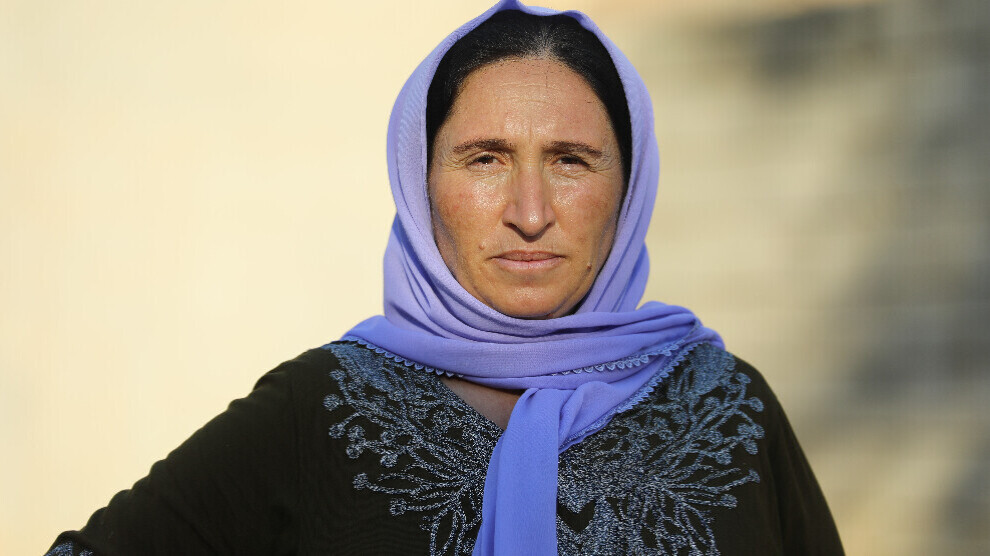
"We Will Not Abandon Our Land"
JIHAN ZIMO& KULISTAN AZIZ
Shingal — The word "Ferman" is used in Yazidi history and culture to refer to the campaigns of genocide and major attacks that have targeted them throughout history. When ISIS launched its attack on Shingal on August 3, 2014, the Yazidis called that tragedy the "74th Ferman," saying, "A new Ferman has befallen us."
The effects of that Ferman were heavy and devastating for the Yazidi community. Although the threat ISIS posed to Shingal ended thanks to the resistance of guerrilla fighters and the will of local residents, allowing the population to return to their land once again, the traces of that brutality remain as witnesses to what happened. Did Yazidi homes not become prisons? Were women and children not held captive inside them? Were murders not committed there? Were women not thrown into the wells of those homes?
In this installment, we present the testimony of Mother Layla from the village of Tal Ezer, who speaks about the prisons ISIS established to hold Yazidi women captive — having visited one such prison herself in 2020, after returning to Tal Ezer, where she saw the remains of women's bones, their clothing, and even their children's toys.
She says: "On the day of the Ferman, there was nothing we Yazidis didn't suffer — thirst, hunger, killing, looting, rape..." She paused briefly, as if searching for the most precise way to describe what happened, before adding: "It was a day when some mothers and fathers were forced to leave their children behind."
When she returned in 2020, only a very small number of residents had come back to the village. The village was submerged in heavy silence, and the bodies of victims still lay scattered on the ground, unfound and unburied, while the homes stood destroyed and empty of their inhabitants.
Her son was the first to see the house that ISIS had turned into a prison. He came back and told his mother, and she went with him to see the place: "We entered this house and another one on the same street. Women had been held in this house and several others. When we arrived, the traces of those days were still there, just as they'd been left. It was clear they had separated the women from the children — in one room were children's toys, while in two other rooms were the women's personal belongings. The mattresses laid on the floor were all stained with blood, and the women's belongings were scattered everywhere. In the kitchen, leftover food was still in their cooking pots, and the doors of the house were iron, locked with chains — there was no way to escape."
"I Saw with My Own Eyes a Murdered Woman Thrown into This Well"
After leaving the prison, they continued searching the surrounding houses for any other trace. Mother Layla says they found ropes hanging from the ceilings in some of the houses, like nooses: "They must have hung people with them — otherwise, why would they be there? Women who refused to submit to the group's members were killed, and their bodies were then thrown into those wells."
She added: "I saw with my own eyes a murdered woman, her body wrapped in a blanket and thrown into this well. Her hands were bound behind her back, and she was kneeling with her head raised upward. To this day, some of those women's belongings are still inside the well, and even when their families arrived later, their bodies were still there."
"I Will Never Forget Those Scenes as Long as I Live"
Mother Layla says the scenes she witnessed left a pain within her that never leaves. She describes seeing the women's bodies as reliving the Ferman all over again: "Perhaps I didn't know those women, but I grieved deeply for them. Those were extremely harsh moments for me, and as long as I live, I will never forget those scenes. Whenever the Ferman is mentioned, the image of that prison and those women comes back to my mind."
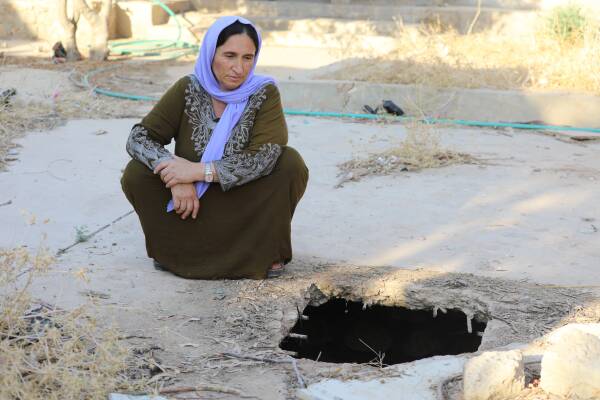
"We Will Not Abandon Our Land"
Mother Layla is the mother of one of the fighters and continues her activism for Shingal and the Yazidis, drawing inspiration from the ideas and philosophy of leader Abdullah Öcalan. She affirms that, whatever the circumstances, she will never leave her land: "If we had come to know the ideas of leader Abdullah Öcalan earlier, perhaps we wouldn't have suffered this Ferman."
How many victims were there? What did they endure? How many of them are still alive? And what became of those children? Many questions remain unanswered as we stand before that house.
Our task is to document these crimes, and to turn this place into a living witness in the memory of history. As for those responsible — will they fulfill their obligations? Will they take serious steps toward holding the perpetrators accountable and achieving justice?
To be continued...