
Women’s Revolution… A Struggle that Turned into a Societal Project Leading Democratic Transformation (1)
The women’s revolution in Rojava marked a historic milestone, evolving from a hidden movement into a societal project redefining women’s roles in politics, society, and defense.
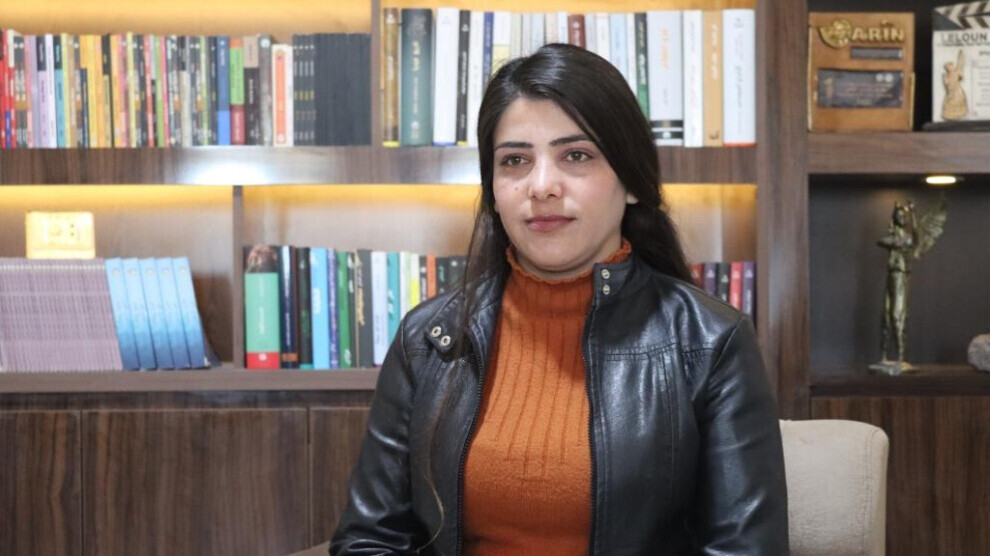
Silva Al-Ibrahim
Kobani — The women’s revolution in Rojava emerged as an extension of a long struggle that preceded the Syrian crisis. However, it became clearly visible after 2011 within the framework of the Autonomous Administration project, evolving into a unique experience of women’s empowerment politically, militarily, and socially. It has drawn global attention as a model of feminist resistance in the heart of conflict.
The women’s revolution in North and East Syria did not arise out of a vacuum. It was preceded by political and social accumulations, most notably the Kurdish uprising in the city of Qamishlo in 2004. This uprising, which erupted following the stadium events in the city, represented a turning point in Kurdish political awareness and laid the foundation for a new phase of community organization and clandestine as well as civil activism, in which women increasingly participated despite the security restrictions at the time.
The Women’s Revolution and the Solid Ground from Which It Emerged
Majida Hassoun, Co-Chair of the Women’s Committee in the Euphrates Canton, states that the women’s revolution in Rojava did not originate because of the Syrian crisis; rather, it surfaced publicly during it, since its roots had existed for years. The establishment of the Star Union (now Kongra Star) in 2005 indicates that women had been organizing themselves secretly under Ba’athist rule, reflecting the spirit of defiance and determination that characterized women during that period.
With the outbreak of the Syrian crisis in 2011, followed by the 19 July Revolution in Kurdish regions and the expulsion of the Ba’ath regime from Qamishlo, Afrin, and Kobani, the Kurds found an opportunity to activate their political and social project. This was based on the ideas of Abdullah Öcalan regarding women’s liberation, which later developed into clear organizational structures within the Autonomous Administration of Rojava.
“The launch of the women’s revolution in Rojava relied on the clandestine struggle that women carried out during Ba’ath rule. This made the foundation of the revolution strong and prepared women to enter a new stage of struggle on political, diplomatic, intellectual, and military levels. Through this struggle, women achieved gains in establishing gender justice,” she explained.
During the Rojava revolution, the Women’s Protection Units (YPJ) were established, the co-presidency system was adopted in councils, and institutions dedicated to women’s issues were created across various sectors. Thus, the women’s revolution can be understood as an extension of a long struggle that began to take shape in 2004 but crystallized after 2011 into an integrated project seeking to reshape the role of women in society—offering a unique model that emerged from conflict and entered international debate.
Attacks on the Women’s Revolution that Failed
The women’s revolution was subjected to fierce attacks by ISIS, which targeted its social project as the opposite of its extremist ideology. It also faced attacks by Turkish forces in Afrin, Ras al-Ain (Serê Kaniyê), and Tel Abyad (Girê Spî).
Amid these confrontations, the Women’s Protection Units emerged prominently, fighting decisive battles that contributed to repelling these attacks. Images of female fighters and their resilience became global symbols, bringing their achievements to the forefront of international attention as an unprecedented example of feminist resistance against extremism and war.
Majida Hassoun notes that:
“The pivotal role played by the Women’s Protection Units in eliminating the attacks aimed at undermining the women’s revolution succeeded in removing the threat of ISIS not only to our revolution but to the whole world.”
She added that women’s struggle was not limited to the military sphere. Women also fought against the patriarchal mentality entrenched in society for five thousand years. This was not an easy task, but through training, determination, and repeated efforts they were able to bring about change—an outcome of years of struggle during the revolution.
She pointed out that:
“What gave our revolution global resonance is that it was fought amid continuous military threats and attacks. Nevertheless, we never stopped striving to improve society through the liberation of women. All the attacks that targeted our revolution did not weaken it; rather, they strengthened our determination to achieve more accomplishments in response to any attempt to undermine it.”
The Peace Process and the Democratic Society
On the occasion of March 8, International Women’s Day, Majida Hassoun congratulated all women and leader Abdullah Öcalan, stating:
“The arrival of March 8 coincides with the second phase of the peace process and the democratic society, which we consider a source of inspiration for us as women to intensify our struggle and continue our efforts so that we can play our role in this critical phase, build a democratic Syria that embraces all components, protect our achievements, and enshrine them legally in the Syrian constitution.”
In his latest call on February 27, marking the first anniversary of his historic appeal for “Peace and Democratic Society,” Öcalan stressed that the phase of armed conflict has come to an end and that the future should be built through politics and democracy. He called for ending the era of weapons and beginning a “phase of positive construction” based on respect for rights, equality among citizens, and dialogue among all components.
In his message, Öcalan emphasized that democratic integration requires laws for peace and places women as a fundamental driving force in this process. He also noted that confronting social violence—such as femicide and domestic violence—demonstrates the importance of women’s participation in shaping the new society, stressing that democracy cannot be built through violence but through respect for rights and equality for all.