
From International Women’s Day to the Epic of Rojava… Women in the Arenas of Struggle (3)
March 8 marks women’s global struggle for rights. In North and East Syria, Rojava’s women’s revolution symbolizes a unique model of participation in building a democratic society.
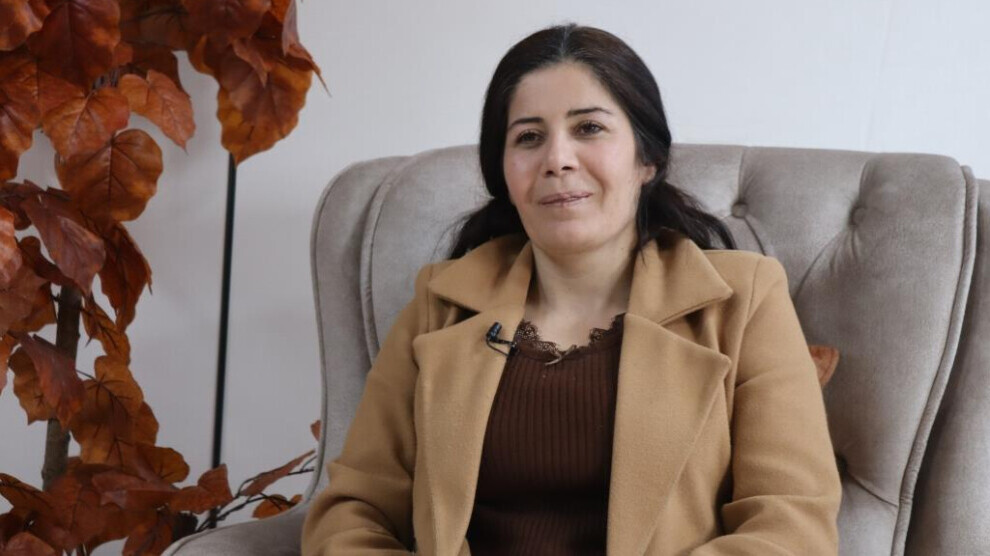
Silva Al-Ibrahim
Kobani – March 8 represents a legacy of struggle for women in confronting marginalization and injustice. It is an occasion to reaffirm their political, social, and economic rights. After decades of struggle and resistance, women have become essential partners in building democratic societies, especially in regions such as North and East Syria, where the women’s revolution in Rojava has demonstrated that struggle is not limited to military arenas but also extends to politics, law, education, and civil society.
Despite the historic achievements made by women, their reality still faces major challenges at the legal and political levels due to the rise of forces with radical orientations that have attempted to marginalize women and exclude them from decision-making positions. Therefore, it has become necessary to strengthen the gains of the women’s revolution through clear legal measures that guarantee women’s rights in various fields, and to transform the celebration of International Women’s Day into a sustainable institutional action that protects these achievements from attempts of abolition or regression.
March 8 and Its Legacy of Struggle
The celebration of March 8 stems from the struggles and sacrifices women made in defense of their rights to work, dignity, and equality. International recognition of this movement marked a turning point in the history of the feminist movement. The origins of this day go back to protests by textile workers in New York at the beginning of the twentieth century, when they demanded better working conditions and wages. As the global women’s movement expanded, the United Nations officially recognized this day in 1977 as an occasion to celebrate women’s achievements and promote their rights.
In this context, the Co-Vice President of the Executive Council of the Democratic Autonomous Administration in the Euphrates Canton, Mezkin Khalil, emphasized that March 8 represents a legacy of struggle for women, extending her congratulations to women in the Middle East and Kurdistan.
She stated that “the resistance that began in factories and spread among women across various arenas was a revolution against injustice and denial, and this struggle is what shaped International Women’s Day.” She noted that this journey did not stop but continued through the spirit of women who became icons in the history of feminist struggle, such as Rosa Luxemburg and Clara Zetkin, whose example inspired women in the Middle East and around the world.
Regarding Kurdistan, Mezkin Khalil recalled the legacy of the activist Sakine Cansız, who was assassinated in Paris along with two of her comrades. She described her as one of the pioneers who followed the path of women’s freedom and sought to establish justice and equality in a society that marginalized women’s roles. She added that the struggle of such women formed the legacy from which the women’s revolution in Rojava emerged, where women from diverse backgrounds and communities participated, contributing to the revival of feminist momentum and reinforcing the symbolism of March 8 as a day of renewed struggle.
She affirmed that “every revolution has its leaders, and the leadership of the Rojava revolution was distinctly female. Women’s struggle was not limited to the military sphere but also encompassed political, social, diplomatic, and academic fields.” Therefore, she believes that commemorating Women’s Day should not be limited to symbolic activities but should represent a continuation of women’s struggle until their rights are guaranteed in all arenas.
Political Transformations and Attempts to Undermine Syrians’ Aspirations
With the political and military changes Syria has witnessed in recent years, armed groups with radical orientations have emerged, including Hay’at Tahrir al-Sham, whose roots trace back to Jabhat al-Nusra, the former Syrian branch of Al-Qaeda. Al-Qaeda, founded in the late 1980s by Osama bin Laden, is known for adopting a transnational Salafi-jihadist ideology that rejects democracy and pluralism and seeks to impose a strict religious vision of governance and society.
With the rise of these jihadists to power following the fall of the Ba’ath regime after a crisis that lasted more than 14 years, and with the spread of this ideological legacy in parts of Syria, the hopes of many Syrians who aspired to build a democratic state ensuring the freedom of all religious and ethnic components—including women’s rights—began to fade.
During its control, Hay’at Tahrir al-Sham’s jihadists were accused of imposing strict restrictions on public freedoms and excluding women from decision-making positions, in addition to committing violations against religious and ethnic communities such as the Druze, Alawites, and Kurds. This approach affected a society historically known for its cultural and religious diversity, deepening divisions and shrinking the space for freedoms compared to the aspirations that accompanied the early days of the revolution.
A Call to Escalate Legal Struggle
In light of current transformations, and with dialogue being adopted as a path toward resolution, Mezkin Khalil addressed the current reality of women, stating that it still faces challenges similar to those experienced in previous periods, particularly with the rise of forces that do not grant women a real role within their institutions or decision-making bodies.
“The current situation of women is no different from what it was under the rule of the Ba’ath Party,” she said, noting that women continue to experience the same marginalization, especially with the rise of Hay’at Tahrir al-Sham’s jihadists to power. She believes that the current phase—marked by attempts at political integration—is accompanied by efforts to exclude women and marginalize their role.
Khalil stressed the importance of adopting new methods of struggle to ensure the protection of women’s rights in Syria’s future:
“We need a Syria in which women’s presence is clear and commensurate with their legacy of struggle and sacrifices, through building a democratic society where gender justice is achieved and oppression against women is lifted. This will only be realized through legal steps that guarantee women’s political, administrative, social, diplomatic, and military rights within the Syrian constitution.”
She also considers the exclusion of women from the political integration process unjust and inconsistent with democratic principles, as well as incompatible with the scale of women’s sacrifices during the years of the revolution.
In conclusion, the Co-Vice President called on women from all communities to participate in the struggle:
“On the occasion of International Women’s Day, we call on all women to join this struggle and to play an active role in shaping the future of Syria.”