
From International Women's Day to the Epic of Rojava... Challenges and International Conspiracies (2)
"The Rojava women's revolution, born from long resistance against oppression, saw its post-ISIS gains targeted by international conspiracies to undermine the democratic nation project."
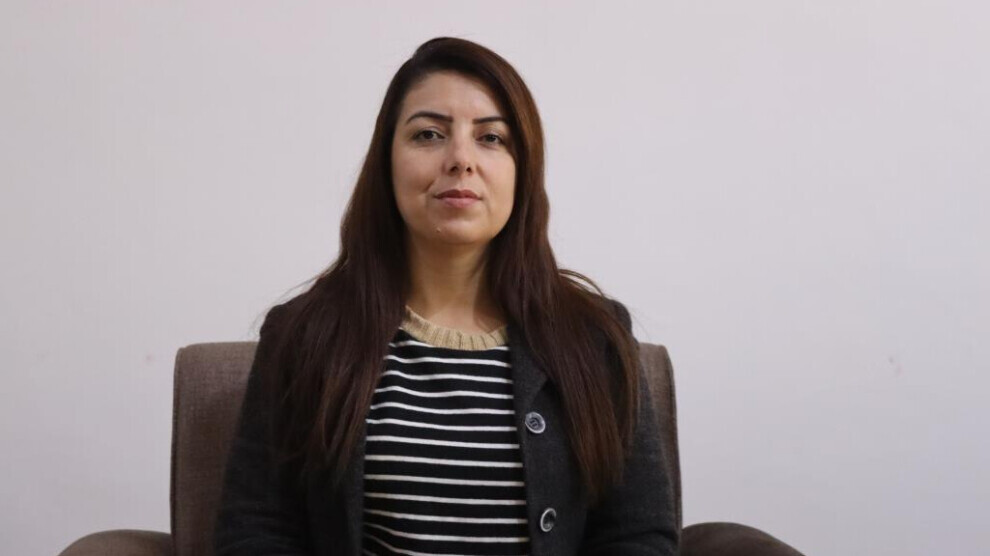
Silva Ibrahim
KOBANI — The city of Kobani witnessed pivotal transformations with the escalation of attacks in North and East Syria, where military confrontations intertwined with the birth of a new political and social project based on the concept of the democratic nation. Amid the challenges of war and the stakes of change, the Autonomous Administration experience emerged as a model seeking to entrench pluralism and justice.
Following the defeat of ISIS in Kobani and its elimination in its last strongholds in Deir ez-Zor, a new phase began centered on community rebuilding on participatory democratic foundations. The Syrian Democratic Forces, along with the institutions of the Autonomous Administration, adopted a model inspired by the ideas of leader Abdullah Öcalan, based on decentralization, coexistence among components, and women's empowerment, in the face of ongoing internal and external challenges.
The Democratic Nation and the Experience Led by the Women of Rojava
Regarding the expansion of this project to include all areas liberated from ISIS, Almas Rumi, Co-Chair of the Environment Authority in the Euphrates Canton, spoke about the leadership of Kurdish women in the democratic nation project: "The women's revolution started from the city of Kobani, but it expanded to include women from different components and other regions. The goal was to transfer this experience to the women of Syria so they could have a stance and free will, because before that, women were deprived of exercising their rights and expressing their ideas. The women's revolution played a pivotal role in providing an opportunity for women to reorganize themselves politically, diplomatically, and militarily."
Women's liberation is considered a fundamental pillar of the democratic nation project, alongside the environmental dimension which calls for harmony between society and nature, and a critique of capitalism and authoritarian modernity. The concept is also linked to the idea of "democratic confederalism" as an organizational model that coordinates between communities autonomously, without the need for a traditional nation-state. Thus, the democratic nation represents a societal project seeking to redefine politics based on grassroots democracy, pluralism, and social justice.
Almas Rumi points out that "with the liberation of areas from ISIS, women were open to change, especially since they had suffered tremendously from ISIS violations. This made them greet the liberation moments with ululations. Following the leadership of Kurdish women, they pursued the path of women's liberation. Through this solidarity, they organized themselves and developed their struggle."
An International Conspiracy Against the Women's Revolution
The experience of the Autonomous Administration of North and East Syria, based on councils, decentralization, and popular participation, in which multiple components—Arabs, Kurds, Syriacs, and Assyrians—engaged in joint management, strengthened coexistence and genuine partnership in decision-making. The uniqueness of the experience emerged in its focus on women's liberation, through the system of co-chairpersonship and women's participation in various institutions, granting them an unprecedented leadership role. In this way, it presented a pluralistic democratic model that transcends traditional divisions and emphasizes the brotherhood of peoples.
Almas Rumi believes that the achievements women have made through shared and prolonged struggle made their revolutionary experience unique, which in turn made it a target for hostile forces seeking to turn it into an object of international conspiracies. She noted that the attacks that began on January 6th, and the accompanying violations against residents and women in the Sheikh Maqsoud and Ashrafieh neighborhoods, amount to crimes, and that international silence constituted a green light for the perpetrators, as the will of the people and women was directly targeted.
She adds that this silence encouraged jihadists to repeat the same violations in the cities of Raqqa, Tabqa, and Deir ez-Zor, where humiliating practices against women appeared, from cutting their braids to throwing female fighters from building balconies, without any respect for the laws of war or basic humanitarian standards.
Revenge for the Defeat of ISIS... and Sowing Sectarianism Within Syrian Society
Almas Rumi considered that targeting women with such brutality is a form of revenge for the defeat of ISIS at the hands of Kurdish female fighters—by the forces currently leading the war against the unity of peoples. She believes that what is happening reflects the reality of the Syrian Republic after the jihadists of Hay'at Tahrir al-Sham reached power, as it seeks to impose its doctrine and ideological color on all of Syrian society, without any respect for the specificity of the different components and sects.
With the collapse of the Ba'ath regime and the rise of Hay'at Tahrir al-Sham jihadists to power, Syrian society began to propose multiple political models keeping pace with its aspirations for freedom and ensuring rights, such as establishing a decentralized republic or adopting a federal system. These proposals came within the framework of preserving cultural and religious diversity and enabling local communities to manage their own affairs. However, all these proposals were met with rejection, as the interim government insisted on reproducing the same centralist system previously followed by the Ba'ath, sparking a wave of popular discontent that the authorities faced with repression and violations in the Syrian coast, Suwayda, the Sheikh Maqsoud and Ashrafieh neighborhoods in Aleppo, and in North and East Syria.
Kobani Relived a Heroic Epic and Defeated the Jihadists Once Again
Almas Rumi points out that the Autonomous Administration, which emerged from the concept of the democratic nation, is a living model of peoples' brotherhood. However, power accustomed to sowing sectarianism among peoples has sought to fight it by all means. She considers that the recent attacks targeting the region aim to create sedition between the Kurdish and Arab people and to thwart the democratic nation project. "These peoples have lived together for thousands of years, and this war cannot undermine this brotherhood."
She explained that "since the outbreak of the Rojava revolution, everyone has tried to undermine it, but these attacks have always failed to defeat it, because the people have become aware of the reality of the conspiracy being hatched against the Kurdish people and against brotherhood. Therefore, although the recent attack was fierce, the stance of the Kurdish people and their rallying around their forces by responding to the general mobilization call and taking up arms to protect their land was the answer to all these attacks."
North and East Syria witnessed a military escalation represented by attacks launched by jihadist groups affiliated with Hay'at Tahrir al-Sham, in an attempt to abort the democratic nation project and target the forces and communities involved in it. Faced with this escalation, the Syrian Democratic Forces repositioned themselves in areas with a Kurdish majority, particularly in Kobani and the Jazira Canton, aiming to protect civilians and avoid further bloodshed.
Despite the continuation of attacks, the imposition of a siege on the city of Kobani, and attempts to impose surrender under the guise of agreements, these pressures were met with widespread popular rejection and adherence to the choice of steadfastness. With the insistence of the region's peoples on defending their gains, the hostile forces were ultimately forced to sit at the dialogue table. This resulted in reaching an agreement that respects the sacrifices of the peoples of Rojava and affirms the pursuit of building a democratic Syria that guarantees Kurds their rights and freedoms, and ensures their participation in the country's future, through democratic integration.