
Children in Turkey struggle to survive
Children in Turkey battle for survival amid poverty, hunger, violence, sexual assault, and labor exploitation, with data showing rights violations across all areas meant to provide them protection and care.
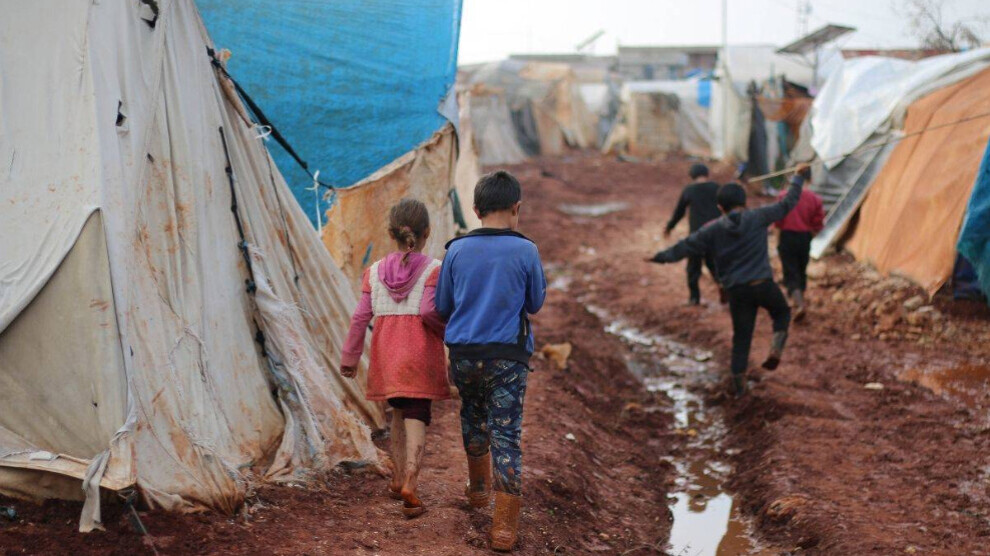
SARBIL SAVOMLU
NEWS CENTER_ The problems children face in Turkey reveal a complex reality that includes poverty, violence, rights violations, and exploitation. Inequalities in education, health, housing, and security, alongside child labor, early marriage, sexual assaults, and murders, increase their suffering. Impunity and weak justice and protection mechanisms also raise questions about their effectiveness.
Despite international conventions guaranteeing children's rights, their weak application and the continuation of cases of disappearance, violence, and violations against children, including those involved in crime, reveal a structural problem that goes beyond individual cases. This reality reflects the suffering of millions of children from poverty, insecurity, and neglect, and their deprivation of an equal and safe life.
Schools and their surroundings have become hotspots of violence
Children's future in the country is being torn away one after another. Measures taken regarding children, instead of caring for their future, restrict their rights and reproduce violence. Within the framework of arrangements made in cooperation with the Turkish Presidency of Religious Affairs, the educational process has been largely removed from science.
At a time when these arrangements open the door to a new form of social engineering, clerics have replaced educational counselors in schools. The matter did not stop there, but an attempt was made to shape children's consciousness through the discourse and ideology of "one homeland, one nation, one flag" inside schools, which have been used since the earliest times as bastions of cultural melting and forced assimilation policies.
In contrast, incidents of violence in schools and their surroundings escalated during this year, including assaults on students and teachers, gunfire, and other incidents that threaten the security and safety of educational institutions.
Teachers and students killed in armed attacks
According to what was circulated in the media, Turkey witnessed during 2026 at least 11 incidents targeting schools, students, and teachers. These attacks, which resulted in deaths and injuries due to the introduction of weapons into schools, revealed shortcomings in child protection mechanisms and affirmed the need for comprehensive policies to prevent violence inside schools and their surroundings.
Among the most prominent of these incidents was what occurred in the provinces of Urfa and Marash, where the Ahmet Koyuncu Vocational and Technical High School in Urfa was subjected to an armed attack carried out by a former student, resulting in the injury of 16 people, including 10 students, 4 teachers, a policeman, and a school cafeteria worker, while the attacker died during police intervention.
In Marash, a 14-year-old student opened fire inside two classrooms at the Ayser Chalik Middle School, resulting in the killing of a teacher and 8 students and the injury of 13 people, and the attacker also died during the incident.
Statistics related to children
Justice statistics for 2025, published by the Turkish Ministry of Justice, showed the continuation of impunity in crimes of rape and sexual harassment. In the same year, 33,407 new investigation files were opened against 30,591 people on charges of "sexual assault against children."
Of 35,060 files on charges of sexual assault against children, a decision not to proceed with prosecution was issued in 12,582 files, involving 15,272 defendants, equivalent to 35% of the files. In contrast, lawsuits were filed against 13,760 people, and 45% of cases related to the defendants ended with acquittals.
According to Turkish Ministry of Justice data presented in 2026 before the parliamentary investigation committee, the crime of intentional physical abuse topped the list of crimes committed by children between 12 and 15 years old, followed by crimes of insult, theft, threat, and damage to property. The same crime also topped the list of crimes for the age group between 15 and 18 years old, followed by crimes of insult, threat, drug possession for the purpose of use, and theft.
184 children were victims of sexual assaults
According to a statement by the Turkish Ministry of Justice issued on August 15 last year, 15,639 statements and testimonies were recorded during the year in judicial interview rooms. However, the data announced by the ministry regarding 2026 did not include comprehensive statistics on the total number of crimes of sexual assault and violence of which children were victims.
According to information gathered from reports published in the media, 184 children in Turkish cities and the cities of northern Kurdistan, since January 2026, have been subjected to what is classified as "sexual assault" by men. Children were also killed at the hands of people from their relatives, whether inside their homes, in public places, or even in places supposed to be safe. Since January as well, at least 17 children have been killed at the hands of men.
Children who gave birth to children
One in five women in Turkey was married during her childhood, while one in three women becomes a mother while still a child. At a time when attempts are being made to give legal status to sexual assaults under the name of "marriage," Turkish Statistical Institute statistics show that the rate of official marriages for girls between 16 and 17 years old reached 1.5% of total marriages during 2025.
These statistics include only official marriages and do not include unregistered religious marriages, which suggests that the actual number of child marriages is higher than the announced figures.
On the other hand, 116 girls under the age of fifteen gave birth during 2025, while 5,240 births were recorded among girls between 15 and 17 years old. During the past twenty-four years, the total number of births among mothers under eighteen reached 590,317 births, including 21,487 births for girls under fifteen.
These figures highlight the transformation of thousands of children into mothers, as an indicator that opens discussion about child marriage, sexual assaults, and shortcomings in child protection policies.
Children forced to work
On the other hand, children continued to suffer within the spiral of exploitation, especially those enrolled in vocational education centers, where they were subjected to exploitation, violations, and violence. According to Turkish Statistical Institute data for 2023, 4.4% of children between 15 and 17 years old, meaning more than 600,000 children, are engaged in the labor market, while 2024 data indicate the addition of 400,000 more children. These work in unregistered and unsafe conditions, without guarantees or social protection.
The Minister of National Education announced the death of 37 students due to work accidents in vocational education centers during 2025 and 2026. The legal framework for these centers was established in 2016 to combine theoretical education and vocational training, so that young people between 14 and 18 years old receive theoretical education one day a week, and work in vocational facilities four to five days.
According to the latest report of the Workers' Occupational Health and Safety Council, issued on November 10, at least 75 working children died while working during the first ten months of 2026.
Child poverty
The report on childhood policies, published by the Organization for Economic Cooperation and Development in 2026, reveals that Turkey is among the countries recording high rates of child poverty. While 12.5% of children in OECD countries live below the income poverty line, Turkey, along with Chile, Mexico, Spain, the United Kingdom, and the United States, is classified among the countries with high child poverty rates.
According to a study prepared by the Turkish Economic Policy Research Foundation, based on OECD and Eurostat data, 37.6% of children in Turkey are at risk of poverty or social exclusion, while the average of this rate in the 27 European Union countries does not exceed about 24.3%.
Also, 23% of children in Turkey cannot participate in school trips and activities due to difficult financial conditions, which reveals the direct reflection of economic deprivation on children's educational opportunities and social lives.
One in five children suffers from hunger
Data show that one in three children goes to school hungry. Estimates indicate that at least 6.5 million children live in Turkey under the weight of "extreme poverty." These figures reflect that one in five children does not get adequate nutrition.
During the past seven years, child poverty rates have risen by 40%, while 25 million people have become at risk of poverty, and there are 171,000 children whose families cannot provide them with the simplest basic needs, even while living with their families.