
Women with Disabilities in Yemen... Qualified Competencies and Absent Job Opportunities
Yemeni women with disabilities, despite their qualifications, face barriers beyond disability: stereotypes, inaccessible environments, and labor markets that exclude them.
RANIA ABDULLAH
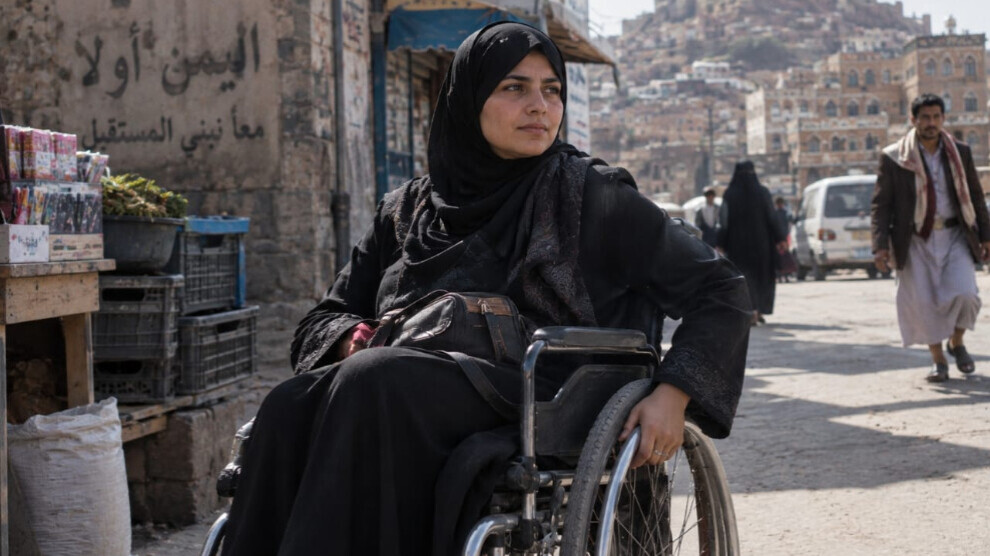
Yemen — The suffering of women with disabilities in Yemen does not stop at the limits of disability itself, as their stories and experiences reveal a clear gap between the capabilities and qualifications they possess and the opportunities for participation and independence that reality allows them.
The challenges facing Fathia Abdullah, 35, are not related to her capabilities or qualifications as much as they are related to stereotypes, the gap between legal texts and their application on the ground, and prejudgments against her as one of the women with disabilities.
Fathia Abdullah is a woman with visual disability and a member of Al‑Aman Association for the Care of Blind Women. She currently works as a teacher at Duroob Al‑Khair School for the Blind, after obtaining a bachelor's degree in special education from the Faculty of Education in Taiz, southwestern Yemen.
She says one of the most prominent challenges she faced was prejudgment against persons with disabilities, where their capabilities are sometimes reduced to their disability instead of looking at their skills and qualifications.
Fathia Abdullah believes the problem does not lie in losing one of the senses, but in the way society views the person with a disability, noting that this view may deprive qualified people of opportunities for education, work, and participation.
She says her personal experience began early, when she faced doubts from some around her about the usefulness of continuing her university education. The questions posed to her often carried a prior assumption that she would not be able to benefit from education or work.
Instead of withdrawing, Fathia Abdullah chose to make her education and work a space to prove competence. She continued her studies until graduation, then turned to teaching the blind. She also participates in artistic and community activities, including preparing and adapting sketches and participating in events.
She describes her experience as a transition from isolation to action and participation: "Confronting belittlement was not easy, but I found in success and work a means to change some of the perceptions around me."
She believes the media can play a greater role in this transformation—not by presenting persons with disabilities as stories of pity or exception, but by highlighting their competencies, roles, and daily contributions. She calls for harnessing drama, films, programs, and human stories to present a more realistic and diverse image of persons with disabilities, and for directing part of awareness efforts toward families.
From Protection to Empowerment
Fathia Abdullah's experience resembles that of Fairoz Ali Thabet, an employee at the Office of Social Affairs and Labor, seconded to the Fund for the Care and Rehabilitation of the Disabled. Fairoz, a woman with physical disability, faced family and social fears about continuing her education.
She says her family feared she would be harmed while moving and traveling, so it was difficult for her to convince those around her of the necessity of continuing her studies. But she insisted on completing her university education and graduated, then entered the labor market.
Today, Fairoz Ali Thabet works in more than one field: "For me, reaching work was not the end of the challenge but the beginning of new ambitions." She aspires to professional development and reaching administrative positions, and also looks forward to establishing her own project or institution that grants her greater independence.
The results of a field survey study conducted by the "Siyaq for Youth and Development" organization on a sample of 53 women with disabilities in August last revealed the alarming gap between educational attainment and available job opportunities, after cleaning and verifying data from a total of 92 targeted participants.
Although nearly half of the sample participants (47.2 percent) hold university qualifications (bachelor's degrees), the percentage of those actually engaged in the labor market did not exceed 32 percent—reflecting the loss of university competencies due to structural obstacles and stereotypes that prevent their absorption into various work sectors.
Infrastructure Besieges the Ambitions of Women with Disabilities
Unlike Fathia Abdel Rahman's experience, "M.A.S.," also a woman with a disability, was deprived of completing her university education due to the absence of appropriate infrastructure that takes into account the needs and privacy of persons with physical disabilities.
She says: "I wanted to complete my university education, but my limited body movement and my constant reliance on crutches prevent me from that. I avoid buildings that rely on stairs and distant places that transportation does not reach. Buildings and institutions in our country do not take into account our needs or privacy."
She adds bitterly: "My family feared for me and preferred that I stay at home. But even inside our home, I did not find a encouraging environment. So I rehabilitated myself through online courses, and I have become able to work—whether in an office or online. But I remained confined to the house, feeling a lump in my throat whenever I remembered my dream of working."
This deprivation comes despite legislation guaranteeing the rights of this group. Yemeni Law No. 61 of 1999 on the care and rehabilitation of the disabled obliges units of the state administrative apparatus and the public and private sectors to allocate no less than 5 percent of total employment to persons with disabilities. However, the reality of the urban and social environment still stands in the way of achieving these aspirations.
The Problem Is Not in the Law Alone
But individual experiences alone are not enough to change the reality of the labor market, according to Amani Al‑Joubani, head of the Siyaq for Youth and Development organization and an activist in the issues of persons with disabilities. She believes that the low access of women with disabilities to job opportunities is linked to several factors, most notably society's view of their capabilities, in addition to perceptions among some employers that employing persons with disabilities—and women among them specifically—may impose additional costs on institutions.
She pointed to a gap between the rights stipulated by law and their actual application, explaining that the conditions of war and conflict have weakened the ability of government institutions to perform their supervisory and executive roles, along with the limited tools of follow‑up and accountability.
She notes that there are indications of official movement toward strengthening the rights of persons with disabilities in the labor market, including reactivating the 5 percent quota allocated for employing persons with disabilities under the Yemeni legal framework. She considers this a positive step that needs follow‑up and transformation into actual practice in public, private, and mixed institutions.
She believes that the responsibility for implementing these rights does not fall on one party alone but requires the cooperation of government bodies, institutions concerned with persons with disabilities, employers, and persons with disabilities themselves, along with providing clear mechanisms for oversight and follow‑up.
According to Amani Al‑Joubani, the problem is not always related to the absence of opportunities, but also to the extent of women with disabilities' knowledge of their rights and their ability to claim them. She notes that some academically qualified women hesitate to claim their right to work due to previous experiences, the negative view of their capabilities, and fear of rejection or exclusion.
When the Environment Itself Becomes an Obstacle
The problem of access to the labor market does not stop at the hiring decision, as a number of women with disabilities may possess the qualifications and desire to work, but the design of workplaces may prevent their access to them. Offices located on upper floors without elevators or appropriate means of access, for example, may make the job practically unavailable to persons with physical disabilities. To solve this problem, Amani Al‑Joubani believes in the importance of building a more inclusive labor market that requires looking at accessibility as part of the right to work, not as an additional service.
She proposes reassessing existing infrastructure to determine access needs, integrating universal design and accessibility standards into any new buildings and projects, so that the same obstacles are not repeated in the future.