
Women Agricultural Workers: Struggling Without Protection, Broken Promises, and Laws Left on the Shelf
Despite legistative gains, Tunisian agricultural workers still face tragedy,”Death truck” accidents have killed 69 women in just a few years, as unsafe transport persists.
ZOHOUR ALMASHRQI
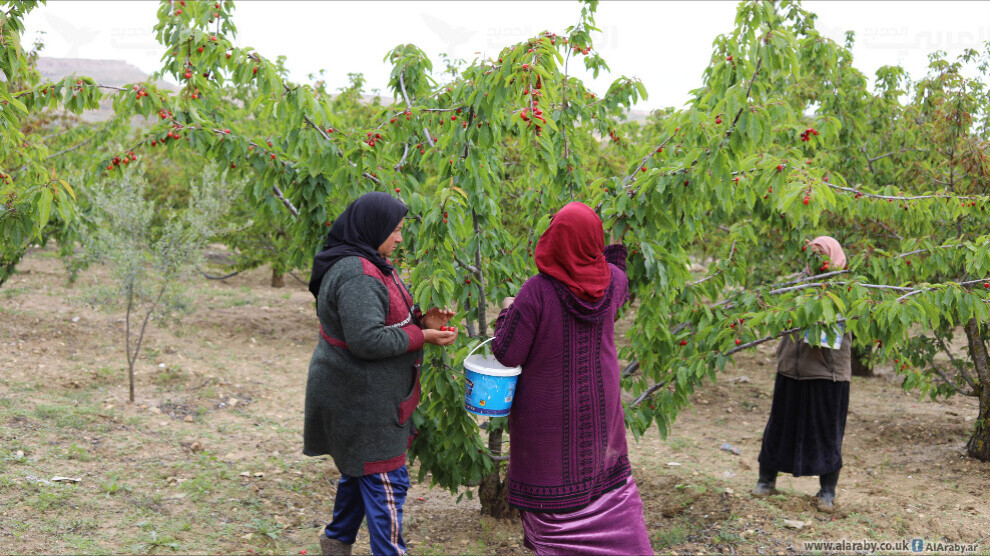
Tunis — Beneath the scorching sun and deep inside greenhouses where temperatures exceed forty degrees Celsius, daily chapters of one of the harshest human tragedies in modern Tunisia are being written. These women are not merely numbers to be counted in the records of devastating road accidents; they are the "backbone" of the country's food security. They mix hazardous chemicals with bare hands and carry bags of fertilizer on their backs for decades, yet these sacrifices have not earned them a health insurance card or social coverage to protect them from the treachery of time.
Caught between the hammer of meager wages—barely exceeding six dollars a day—and the anvil of unsafe transport via "death trucks," the stark contradiction in the identity of the Tunisian woman worker emerges. She is officially registered on her national ID card as "nothing," yet in reality she represents "everything" for Tunisia.
The tragedy of women workers today is no longer merely a deferred human rights file; it is a continuous bloody hemorrhage on the roads, and a series of frozen legislative promises, most notably Decree No. 4, which remains ink on paper awaiting actual activation, and Law No. 51 of 2019, on which hopes remain pinned for improving the situation.
Civil society statistics indicate that 89 "death truck" accidents occurred between 2015 and 2026, in which 69 agricultural workers died and 990 were injured, with 60% of these accidents occurring after the enactment of Law No. 51 in 2019.
Bread Stained with Blood
"We have shouted, protested, presented studies, and supported demands, but no one listens. Seeing bread stained with the blood of women workers is beyond human endurance, yet officials treat it as just another ordinary accident." With these words, feminist activist Halima Al-Hammami expressed her anger at the neglect of the recurring accidents that have claimed the lives of many agricultural workers.
Halima Al-Hammami summarized the magnitude of the complex crisis the country is experiencing, declaring that what is happening today goes beyond coincidence, approaching a "systematic conspiracy" targeting the humanity of this nation—"from the blood-soaked livelihood of women workers to the dignity of intellectuals trampled under the feet of marginalization."
She spoke of the recurring accidents that befall women in the agricultural sector at the start of every season, describing unsafe transport trucks as "human slaughterhouses" and a heinous crime committed against women who have no choice but death or hunger.
With profound bitterness, Al-Hammami criticized the official media blackout, saying: "When it comes to a sporting event or a player from the 1960s, the media devote extensive coverage, while the news of three hardworking women dying passes almost unnoticed on national television."
She added that the virtual scene "has become merciless," with Facebook turning into a platform for schadenfreude and victim-blaming, even as the victims lie in their final struggle. She affirmed that women are the cornerstone of food security in Tunisia, accepting work in scorching or freezing climatic conditions for meager wages that men refuse.
She cited the words of one worker that encapsulate the tragedy: "If I do not go out to work today, I will have nothing to cook for my children's dinner."
Faced with this reality, Halima Al-Hammami expressed her shock at the image of "bread stained with blood" documented by recent indicators and reports, describing it as a "gruesome symbol" of a reality steeped in oppression, amid suspicious silence from the executive authority, represented by the Prime Minister and the Minister of Women's Affairs, who have chosen to treat these disasters as "incidental accidents" that do not warrant action.
The issue of women workers was not separate from the broader context, which Al-Hammami considers part of a systematic plan aimed at dismantling the intellectual fabric of society. After speaking about unsafe transport, she moved to the file of the "debasement of political and cultural life," including the targeting of intellectual and scientific figures and attempts to weaken their role in the public sphere.
Studies and Demands Left in the Wind
For her part, Raja Al-Dahmani, President of the Tunisian Association of Democratic Women, considered that women workers in Tunisia's agricultural sector face a bitter reality that threatens their lives daily, expressing strong condemnation and denunciation of the continued loss of life and blood on the roads. She noted that these women are not just numbers in accident records but are fighters who represent the backbone of entire families, securing their daily sustenance under harsh conditions.
She explained that over the years, demands for safe transportation that preserves the dignity of women workers and puts an end to "death trucks" have not ceased. Despite the preparation of a comprehensive field study on the reality of women in the agricultural sector, containing clear recommendations and precise indicators warning of the danger of continuing the current situation and calling for improved conditions for this group that provides food for Tunisian society, the matter has remained unchanged without any real response.
She clarified that the current crisis is not a coincidence but rather the result of an interconnected system of negligence, with responsibilities distributed among several parties. First, there is the absence of political will, with clear inaction in taking firm and strong political decisions to protect women from daily death. Second, bureaucracy and weak laws: the laws regulating transportation are characterized by weakness and extreme slowness in implementation, hindered by complex administrative procedures and a long chain of officials, which prevents their translation into reality on the ground.
She also pointed to family ties and driver behavior: drivers bear a large part of the responsibility. Since they are often relatives (cousins or brothers), women workers find it awkward to file complaints against them, despite drivers cramming 20 to 30 women into a single truck, directly causing disasters. Added to this is the difficulty of security oversight, as drivers take unpaved and makeshift roads to evade monitoring, making it difficult for security agencies to track them and prevent this illegal transport.
Dysfunctional Legislation and Absent Social Protection
On the legislative front, Decree No. 4—the project on which hopes were pinned to protect women workers and ensure social security coverage for them—remains merely ink on paper, as the implementing regulations for its activation have not yet been issued. The tragedy is compounded by a triad of suffering: wages, health, and transportation.
The latest accident in the Mazouna area of Sidi Bouzid Governorate has been added to the black record of this file, resulting in the deaths of two women who had set out at dawn to secure their livelihood, leaving behind orphaned children. This confirms that the agricultural worker still lives "day by day" under the threat of death.
The continuation of this situation is a stain of shame. A country that witnessed a revolution for dignity and social justice cannot apply double standards while watching its women pay with their lives for survival.
The case of worker Rabih, aged sixty, was merely a mirror of a long suffering that spanned three decades. Thirty years she spent in hardship in the fields, without any social coverage to protect her or acknowledge her effort. Throughout all these years, she was deprived of the most basic rights of occupational safety: no social coverage, no health insurance card, not even a single official document proving her work or preserving her rights, which have been lost to time.
She recalled the details of her daily suffering from health and environmental risks: "I spent 30 years carrying fertilizer bags on my back and mixing hazardous chemicals with my bare hands, without any protective equipment."
She highlighted working in harsh conditions: "We enter greenhouses where temperatures exceed 40 degrees Celsius to harvest tomatoes and peppers and secure food for the Tunisian people."
She also spoke of resilience during the pandemic: "During the COVID-19 crisis, when everyone was confined to their homes under lockdown, we were in the fields continuing to work non-stop so that the people of Tunisia would not go hungry and so that fresh produce would reach every citizen."
She concluded her testimony with a precise description of the contradiction between their economic role and their legal reality: "It is unfortunate that our identity is reduced on the national ID card to the word 'nothing,' while we represent 'everything' in Tunisia. Women farmers are the backbone of the economy and food security in the country. The soil and the land bear witness to the extent of our struggle. Today we look at our hands and faces, worn out by illness and hardship; some of us suffer from chronic diseases, others have damaged eyesight due to chemicals, yet we cannot afford the cost of treatment."
She addressed an urgent appeal to the highest authorities to look at their situation with the eyes of justice and to work immediately on activating and implementing Decree No. 4, to grant them the minimum of their human and professional rights that ensure they live in dignity.