
Winter turns into a nightmare in displacement camps in Palestine
With the approach of winter, the suffering of displaced people in Palestine worsens inside tents lacking the elements of protection, where rain, cold, and sewage water turn into a daily threat to their lives and lives of their children.
NAGHAM KARAJA
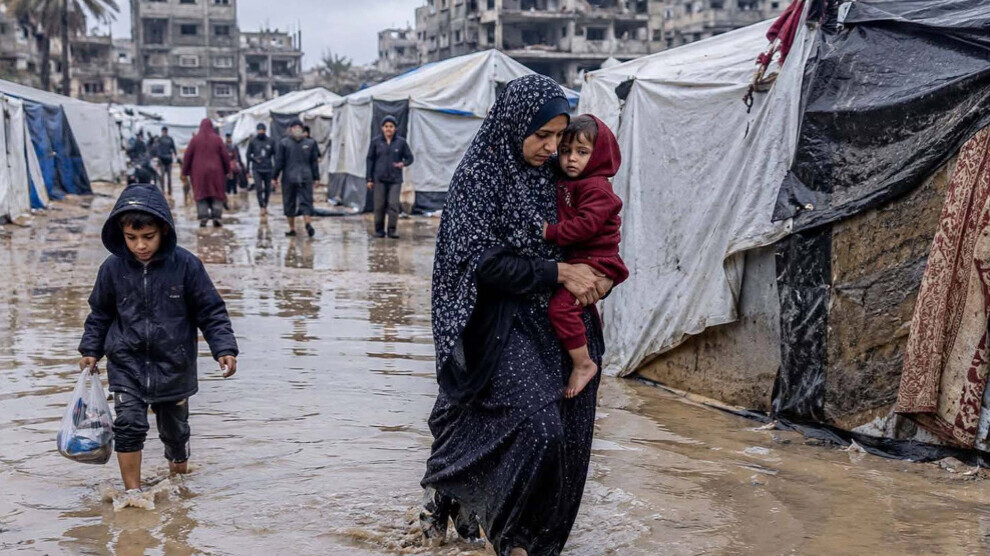
PALESTINE_ For Reham Rifat, the rainfall was not merely the beginning of winter, but a warning of renewed suffering that has not ended since her displacement to the Yarmouk camp in Palestine. In the first low-pressure system, rainwater and sewage infiltrated and being daughter submerged in water, before it ended with her contracting chest inflammation and being transferred to the hospital. Reham finds nothing to protect her family from a repeat of the scene.
Reham Rifat lives near the old landfill of the West Gaza municipality, in the Yarmouk camp, inside a tent that does not provide the minimum protection from rain and cold. She recalls the details of the first low-pressure system with clear anxiety, pointing out that her family did not possess sufficient winter clothing, while the tarpaulins covering her place of residence have worn out and are no longer able to withstand the rainwater.
She says: "We faced great difficulties during the first low-pressure system that struck the Gaza Strip. The cold was severe, and my children did not have winter clothing, and to this day we still lack it. We do not have suitable tarpaulins, for the tarpaulins we have are worn out and cannot protect us from the rain."
But what the family experienced went beyond wetness and cold, as the tent turned into a pool of water mixed with sewage, flooding the sleeping areas, covers, and bedding, leaving Reham facing a scene she did not expect to encounter inside the place that is supposed to provide protection for her and her children.
She recounts: "I woke up in the morning to find my daughters completely soaked, and the bedding and covers submerged in water. Rainwater and sewage entered the tent, and the sewers overflowed due to the heavy rain, until the place filled from inside and outside. We had no dry place to take refuge in, and the scene was shocking to me."
She adds: "Since that low-pressure system, I have been suffering with my daughter in the hospital. She contracted chest inflammation after spending the night on a mattress submerged in water, and all her clothes were wet. It was an extremely harsh day, and I had no means to protect her or spare her exposure to this cold and water."
A winter without shelter
Reham Rifat's experience is inseparable from the reality of thousands of displaced families who receive winter inside worn-out tents and shelter centers lacking basic equipment, amid damage to the infrastructure of sewage and rainwater drainage, and a decline in the ability to provide shelter and the materials needed to rehabilitate it.
Data from the UN Office for the Coordination of Humanitarian Affairs (OCHA), issued on September 2, 2026, reveal that about 1.98 million people, equivalent to 94% of the population of the Gaza Strip, need assistance related to shelter and basic household items. Also, 65% of the families covered by the assessment live in tents or temporary housing, while 54% of these dwellings were described as being in bad or very bad condition.
The risks are not limited to water entering the tents, but extend to its mixing with sewage water and the accumulation of waste, and the resulting possibilities of the spread of skin, respiratory, and intestinal diseases, especially among children, the elderly, and pregnant women.