
The War on Consciousness... A Systematic Escalation of Media Disinformation Targeting Rojava Areas
Organized campaigns escalate via digital media, falsifying facts, distorting revolution symbols, undermining trust in local institutions, deepening societal divisions to serve regional and international agendas.
Asmaa Mohammad
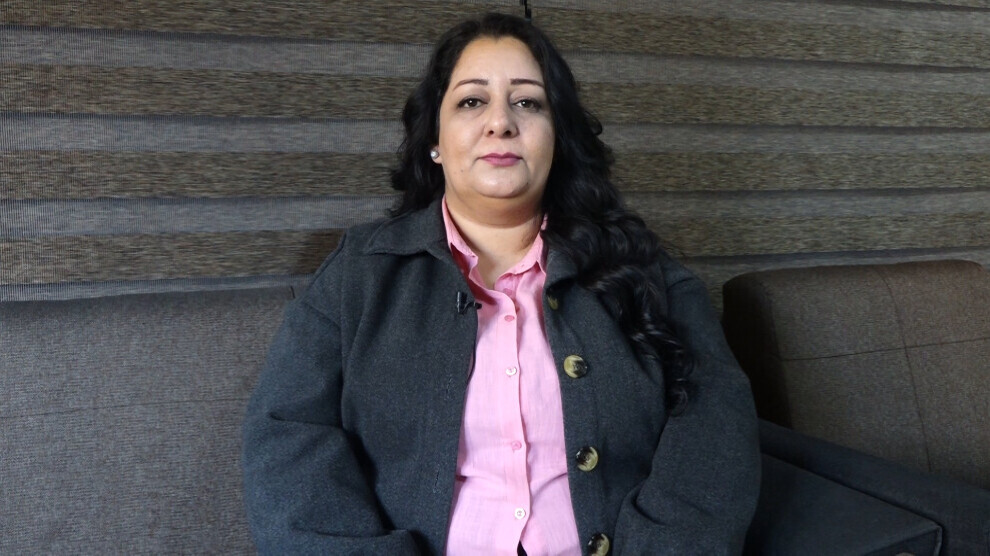
Qamishlo_Avin Ibrahim, the co-chair of the free Media Union in Qamishlo, stated that the ongoing battle is on longer merely military but has shifted to the consciousness and perception of society.
Fabricated narratives and the reinterpretation of events are being used to influence people’s stances and reshape their view of what is happening in the region.
Amid escalating regional and international conflicts and the intertwining of influence projects in the area, the conflict in Syria is on longer confined to military fronts or confrontation lines. Instead, the arena of public consciousness itself has become an open field for confrontation.With the With the multiplicity of international and regional actors, media disinformation has transformed into an advanced strategic tool used to reshape collective perception, influence the positions of communities, and redefine the victim and the perpetrator according to specific political interests.
In Rojava, where the experience of the Autonomous Administration and local communities face complex existential challenges, media has been systematically used as a means to reframe facts, justify violations, and fabricate alternative narratives that serve regional and international agendas seeking to weaken this experience and undermine its societal project.
Targeting Societal Fabric Through Digital Space
Avin Ibrahim, the co-chair of the free Media Union in Qamishlo, affirmed that the recent period has witnessed a clear and organized escalation in the media war. She pointed out that the targeting is no longer confined to traditional media or satellite channels, but has intensively moved into the digital space and social media platforms, which have become the broadest and most influential arena in shaping public opinion. She explained that these platforms are used to repeatedly and deliberately spread lies and rumors, to broadcast hate speech, and to incite divisions among the Kurdish, Arab, Syriac, and other components of the region, aiming to strike at the foundations of societal coexistence that have been built over many years of joint work.
She clarified that media disinformation today is no longer just the transmission of false information, but has transformed into an integrated system relying on advanced techniques in crafting political narratives. This system is based on distorting facts, taking events out of context, and reconfiguring perpetrators as victims and victims as perpetrators. She indicated that the goal of this is to confuse public opinion, generate distrust among society towards its institutions, and create a deep state of polarization within the social structure.
She also noted that the media war is no longer limited to news or reports, but includes the creation of organized electronic armies that run precisely targeted campaigns. These campaigns target political, civic, and women's figures, attempting to undermine the symbols of the revolution and tarnish their image in the eyes of local and external public opinion.
She explained that the relentless media attacks on Rojava are not random, but are part of a long-term strategy aimed at dismantling the social fabric, sowing mutual distrust among the various components, and weakening confidence in local institutions, whether they are media, civic, service-oriented, or political.
She pointed out that these campaigns often coincide with military and security developments in the region, especially given the ongoing tensions with the Turkish state and the military operations and occupation the region has witnessed in cities such as Afrin, Sere Kaniye, and Gire Spi. In this context, media is being employed to justify the realities on the ground and present them in a light that contradicts the truth.
She further emphasized that the Syrian experience over the past years has provided a clear model of how media is used to justify violations against civilians and to portray popular movements demanding rights as projects of chaos or international conspiracies. She affirmed that the current phase represents a more complex and dangerous version of those policies, where revolutionary symbols, women leaders, and human and political achievements are being targeted in an attempt to empty the experience of its content and weaken its moral and political presence in the eyes of society and global public opinion.
Free Media as a Societal Shield in the Face of Information Warfare
Avin Ibrahim explained that "the media in Rojava represents a model of free media based on the ethics of truth, social responsibility, and respect for diversity and democracy," pointing out that this type of media constitutes the first line of defense for society against information manipulation. "The role of free media is not limited to transmitting news, but extends to protecting public awareness, preventing the falsification of facts, and ensuring the delivery of accurate information without distortion or hidden political agenda."
She noted that the responsibility of confronting disinformation does not fall solely on journalists, but includes the entire society. She emphasized the necessity of raising the level of community awareness, developing news verification skills, reading media policies critically, and not being drawn into organized campaigns. She stressed that the most dangerous aspect of information warfare is its ability to create an alternative psychological reality that weakens people's trust in themselves, their surroundings, and their institutions, which gradually leads to an internal disintegration more dangerous than any direct military confrontation.
Avin Ibrahim, the co-chair of the Free Media Union in Qamishlo, concluded her remarks by stating that media disinformation targets not only the truth, but also the mind of society, its collective memory, and its morale. She affirmed that free media is not a political luxury nor a secondary option, but a strategic necessity to protect society, preserve achievements, and ensure the continuity of stability. She added that an aware society and a vigilant, professional media together form the strongest fortress against any information warfare seeking to falsify collective consciousness and undermine democratic experiences, and that the responsibility of conveying and defending the truth falls upon everyone who believes in the value of freedom, justice, and the right of peoples to know what is happening around them without manipulation or deception.