
The Strangling Siege Doubles the Suffering of Civilians in Yemen's Taiz City
Yemeni women activists launched a distress call to organizations and the international community amid Taiz's strangling siege, highlighting tragic humanitarian conditions and escalating survival challenges facing residents.
RANIA ABDULLAH
YEMEN- After a fragile four-year truce, the city of Taiz in southwestern Yemen has rapidly turned in recent months into the fiercest front in the conflict witnessed in the country between the Houthis and the internationally recognized government.
With the Houthis' move to besiege Taiz city and cut the main artery leading south to Aden, families, especially women, find themselves trapped between the fires of shelling and survival amid the absence of services, which portends an unprecedented humanitarian catastrophe.
Siege and Shelling
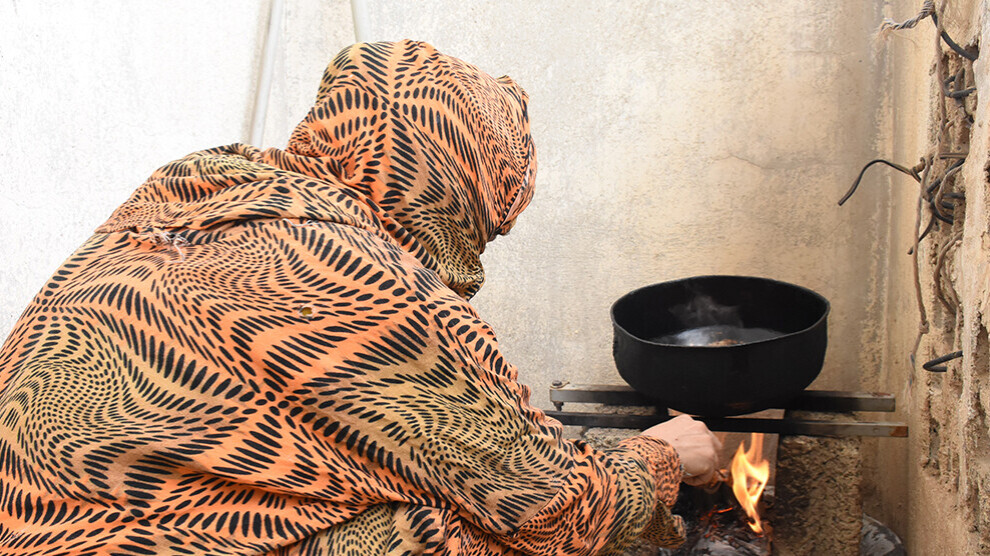
Saada Ali, a mother of four, bears the task of providing food for her children amid the scarcity of food and water and the gas crisis. "Long years of war have made us pay a heavy bill, and with the city besieged from all directions, we now find it difficult to obtain gas and vegetables, and food prices have risen." She was forced to use wood and some straw to cook food, due to the domestic gas crisis since the siege was imposed.
Arwa Hajar explains the scale of the daily tragedy, saying: "The siege in Taiz is strangling, garbage is piled up in all the streets," in reference to the environmental and health crises threatening the lives of families and children in residential neighborhoods.
Residents confirm that they face "death by Houthi fire," and displaced persons, especially women, suffer from extremely harsh conditions, stressing that thousands of families resort to unfinished buildings, shops, or homes lacking the minimum requirements of a dignified life.
Twenty days after the isolation and siege of Taiz city, the United Nations warned that the humanitarian crisis has reached a catastrophic level, as access to aid has become impossible and residents have been deprived of the simplest necessities of life. Fuel scarcity and road closures have led to a drop in water production by half, a doubling of its prices, and the halt of gas.
On the health level, 42 health facilities face an imminent risk of running out of oxygen and medicines, threatening the lives of 154 newborns in incubators, mothers, and hundreds of patients in intensive care and with kidney failure, as time runs out for local relief efforts.
Zoe Brennan, spokesperson for the International Organization for Migration, revealed the displacement of more than 233,000 people due to the renewed conflict, including more than 121,000 displaced in Taiz alone, most of them mothers and children suffering from cold, insecurity, and lack of supplies.
Calls to Lift the Siege
Regarding the strangling siege on Taiz city, male and female activists in Taiz city launched a distress call to organizations and the international community. Community activist Ola Al-Saqqaf shed light on the tragic humanitarian conditions in Taiz city, amid escalating daily challenges facing residents to survive.
She explained that the crisis of preventing the entry of petroleum derivatives into the city has created a near-total paralysis in transport and transportation movement, as buses have disappeared from the streets due to the crazy rise in fuel prices, which has been directly and negatively reflected on citizens' movement and their ability to move around.
The crisis was not limited to transportation only, but extended to include an acute scarcity of basic foodstuffs whose quantities in the markets have gradually and alarmingly declined. The city is also witnessing a serious environmental and health crisis represented in the accumulation of garbage in the streets, due to the inability to lift and transport it to the main landfill near the front lines, given the lack of petroleum derivatives and the difficulty of safe access to it.
On the health level, Ola Al-Saqqaf noted that medical facilities suffer from an acute inability to respond to urgent needs and combat the increasing disease cases, in parallel with the large numbers of wounded and civilian victims due to the continuation of random shelling.
She confirmed that the continuation of the siege imposed on Taiz city places more than a million people in an inevitable confrontation with death, especially due to their deprivation of the basic necessities of life, and not only as a result of the continuous shelling.
She stressed that women and children bear the greatest burden and the heaviest humanitarian bill of this conflict and the continuous tightening of the siege. Painful evidence of the scale of the tragedy clearly stands out, most notably the suffering of mothers who face harsh conditions, such as the painful incident documented of a mother carrying her daughter's body on her back in one of the besieged villages.
"Taiz Is Witnessing Catastrophic Levels in the Simplest Necessities of Living"
For her part, human rights activist Noura Hujaira said that Taiz city is witnessing "historical moments that are more severe with the continuation of the strangling siege imposed by the Houthis, which is no longer just a closure of outlets and vital arteries, but has turned into a systematic process of draining all the necessities of daily life."
In a live testimony reflecting the depth of the tragedy, she confirms that Taiz was suffering from the collapse of purchasing power and high prices before the renewal of the escalation, and today the situation has reached catastrophic levels in which the simplest necessities of living have become absent and are only available at unimaginable, unbearable prices.
Noura Hujaira describes the residents' movement to obtain food through dangerous roads as an exhausting "journey of death" that consumes time, money, and psychological effort, so that a citizen spends their day in arduous suffering just to feed their family.
At the end of their statement, the two activists, Ola Al-Saqqaf and Noura Hujaira, directed an urgent humanitarian call for serious and immediate action to lift the siege on Taiz, and to stop all violations and acts of violence practiced by the Houthis against civilians, to save innocent lives and guarantee their fundamental right to life and a dignified living.