
The Siege of Ashrafieh and Sheikh Maqsoud Puts Patients’ Lives at Risk
The siege imposed on the Ashrafieh and Sheikh Maqsoud neighborhoods in the city of Aleppo has led to the shutdown of several vital hospital departments, including neonatal incubator units, putting the lives of dozens of other patients at risk.
Sirin Mohammad
Aleppo — The siege imposed on the Ashrafieh and Sheikh Maqsoud neighborhoods in the Syrian city of Aleppo has led to the shutdown of several vital hospital departments, including neonatal intensive care units for premature infants, placing the lives of dozens of other patients in danger.
With roads and crossings leading to Ashrafieh and Sheikh Maqsoud closed by militants of Hayat Tahrir al-Sham (HTS), strict inspection measures imposed, and the entry of essential supplies banned—including fuel (diesel and gasoline), gas, and medicines—alongside a complete electricity blackout, residents’ suffering has continued throughout the winter.
This siege has directly impacted civilians’ lives and increased the spread of diseases, particularly among children and the elderly. Residents have been forced to resort to dangerous alternative heating methods, further worsening health and humanitarian conditions. Thousands of students have also been deprived of a suitable learning environment due to the lack of heating fuel and the difficulty of reaching schools.
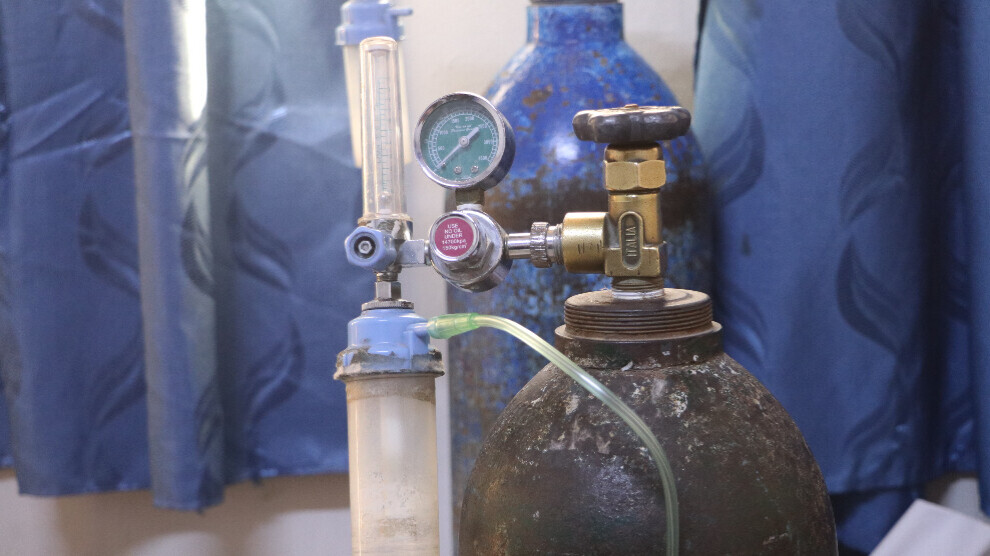
The only hospital serving the area, Martyr Khaled Fajr Hospital, has seen a sharp decline in its operational capacity due to severe shortages of diesel and electricity. This has led to the suspension of several critical departments, most notably the neonatal incubator units, endangering the lives of dozens of patients, in addition to an acute shortage of medicines and medical supplies.
Patients Are Suffering
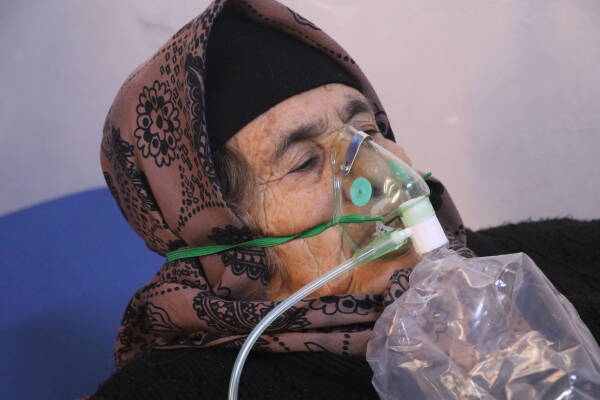
Nazliya Haj Othman, a woman from Sheikh Maqsoud neighborhood, sits on one of the beds at Khaled Fajr Hospital. At 85 years old, her body has been worn down by time, and she suffers from multiple chronic illnesses, including diabetes, high blood pressure, coronary artery blockage, two blood clots in her leg, high potassium levels affecting her kidneys, thyroid disease, hearing impairment, and pulmonary fibrosis.
All of these conditions require continuous treatment, yet HTS militants prevent the entry of medicines, increasing her pain and suffering. She says, “My daughter brought me to the hospital because of the severe cold affecting my body. There is no heating in our home, and I have no medicines left.”
“We Want to Live”
Nazliya Haj Othman stresses that civilians are victims of political agendas and pay the highest price for conflicts. She calls on concerned authorities and human rights organizations to intervene, lift the siege on the two neighborhoods, and allow the entry of medicines and fuel.
“Children, the elderly, women, and men—we are all sick because of the cold. We want to return to our homes, to have everything available, and to live in safety and security. Enough with the siege. We want to live.”
Hospital at Risk of Shutdown
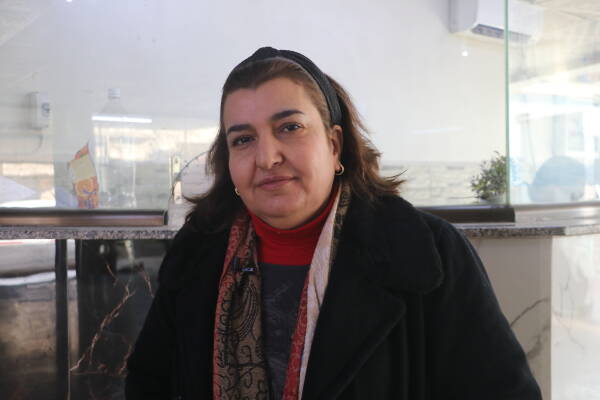
Ilham Othman, an administrator at Martyr Khaled Fajr Hospital, confirmed that the available medicines are insufficient, and if the siege continues, supplies will run out, leaving the hospital unable to treat patients. She added that commercial shops and food supplies will also be depleted if HTS continues to impose the blockade.
She noted that Nazliya Haj Othman’s case is just one of many suffering due to the lack of medical supplies and heating fuel. Khaled Fajr Hospital is the only free hospital in the two neighborhoods, and if the siege is not lifted, it may be forced to stop receiving patients altogether.
Ilham Othman appealed to concerned authorities and human rights organizations to lift the siege and allow the entry of all essential materials—especially heating fuel and medicines—so the hospital can continue receiving and treating patients.
Statement from the Health Council
In a statement issued on Sunday, January 4, the Health Council of Ashrafieh and Sheikh Maqsoud neighborhoods held the relevant authorities in the Interim Government and the Governor of Aleppo fully responsible for the continuation of the siege. The council described what is happening as collective punishment against civilians and a documented crime against humanity.
The council demanded the immediate lifting of the siege, the unconditional entry of essential supplies, and respect for international human rights laws and conventions without discrimination or selectivity.