
The File of Those Missing in Storm Daniel Returns to the Forefront of Legal Debate
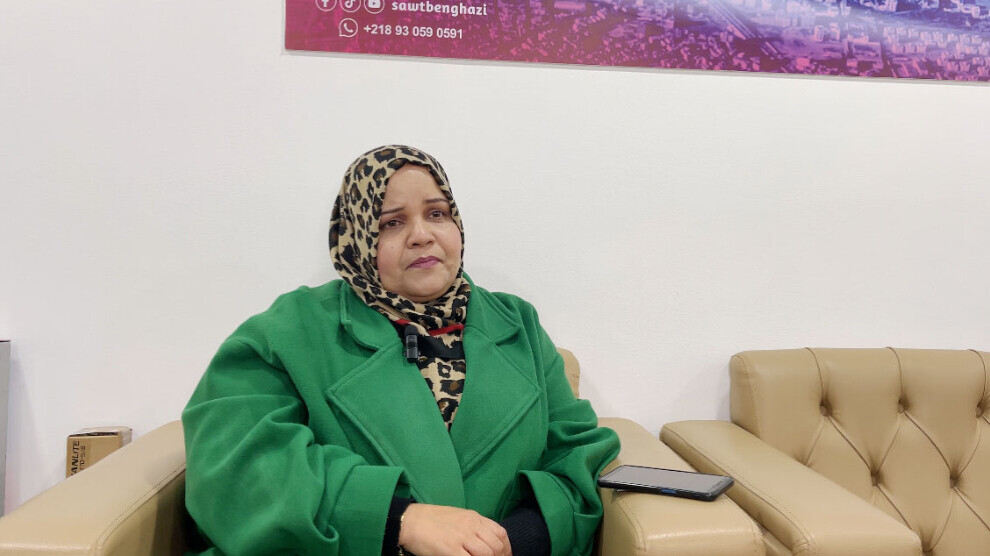
Lawyer Friha Hussein Al-Jilani said Storm Daniel exposed a deep legal gap in Libya, as missing persons cases remain governed by laws designed for war and revolutionary contexts, not natural disasters.
Ibtisam Aghfir
Benghazi —The catastrophe left behind by Storm “Daniel” in the city of Derna was not simply a flood that swept away stones and people alike; it was an earthquake that revealed the fragility of the legislative structure in the face of major disasters.
When Storm Daniel struck the Libyan city of Derna in September 2023, it was not only a natural disaster that left thousands dead and missing, but also one that exposed a profound legal vacuum in Libya. While families searched for their loved ones amid debris and floodwaters, it became clear that existing legislation was incapable of coping with the scale of loss, and that relevant institutions were acting in confusion, without a legal framework defining responsibilities or outlining procedures.
Amid attempts to heal the wounds, a glimmer of hope emerged with the announcement by the General Authority for the Search and Identification of Missing Persons on December 21 of this year, confirming the identification of 19 new victims after matching DNA samples with their relatives.
This announcement, which was referred to the Office of the Public Prosecutor, lifts the curtain on a deeper story where absent laws intersect with disorganized field efforts. In a detailed legal reading, lawyer Friha Hussein Al-Jilani explained that Libya confronted Storm Daniel with a legally defenseless weapon.
She pointed out that the file of missing persons in Libya has long been marginalized, especially when it comes to those missing as a result of natural disasters. Although laws regulating cases of disappearance do exist, they were drafted for different circumstances.
“If we talk about disappearance in general, there are laws that regulate this situation and clarify the stages of dealing with it. But when we reach the issue of missing persons in natural disasters, we encounter a clear legal vacuum,” she said.
A Law Not Designed for Such Cases
She explained that Law No. (1) of 2014, which prompted the authorities to establish the “General Authority for the Search and Identification of Missing Persons” to serve the families of martyrs and missing persons from the February Revolution events, did play an important role during Storm Daniel. However, this authority was not originally created to confront natural disasters of such magnitude.
Commenting on the absence of emergency laws addressing such cases, she said she could not definitively claim that Libya had not experienced similar disasters in the past, but she emphasized that the legal aspect had not received sufficient attention. The evidence, she noted, was the confusion that accompanied the handling of the missing persons file during Storm Daniel in Derna.
She also noted that some decisions were issued in different contexts, including Decision No. (184) of 2014 concerning the care of families of martyrs and missing persons from the February events. This executive decision was issued to regulate the implementation of Law No. (1) of 2014, but such decisions did not establish a comprehensive legal framework to deal with missing persons in natural disasters.
Between “Ordinary Disappearance” and “Disaster-Related Disappearance”
Friha Hussein Al-Jilani reviewed the fundamental legal differences that have compounded the suffering of the families of storm victims. In ordinary cases, disappearance follows a clear legal path (reports, judicial procedures, and sometimes recourse to Islamic jurisprudence). For example, Law No. (17) of 1992 treats a missing person as legally incapable of managing their property, appointing a guardian to manage their affairs until their death or survival is proven.
The Journey to Identify the Missing
Regarding families in ordinary cases, she explained that procedures usually begin with reporting the disappearance to the competent authorities, noting that many disappearance cases remain unresolved, especially since 2011, with the fate of many missing persons still unknown.
She added that families often limit themselves to filing reports, without having a clear legal understanding of whether the circumstances indicate a presumption of death, even if the disappearance occurred under exceptional conditions such as wars or events where death is highly likely. In such cases, a four-year waiting period is required before obtaining a judicial ruling declaring the missing person dead, after which they are treated as any deceased individual.
Confusion in the Post-Storm Response
In the case of Derna, however, reality was far harsher, she said. Families lost their identification documents and homes, making even the simple act of proving kinship in order to submit DNA samples an arduous journey requiring witnesses and newly issued documents from dilapidated official records, all within an “abnormal” situation that rigid legal texts failed to accommodate.
The General Authority for the Search and Identification of Missing Persons later began organizing the work, collecting samples from unidentified bodies and requesting samples from families for matching. This led to the identification of a number of victims. Yet all of this took place in the absence of a clear strategy or a specialized emergency authority, as Al-Jilani explained, describing the field scene after the storm as a mix of humanitarian “rush to help” and organizational improvisation. The roles of the Red Crescent, civil society organizations, and volunteers overlapped in the recovery of bodies, leading to a lack of order at the outset.
This confusion manifested most painfully in the practice of “burying bodies and then exhuming them later” to take samples and rebury them—an action that would not have occurred had there been a pre-established emergency strategy and legally and technically trained personnel to deal with disasters, she said.
Friha Hussein Al-Jilani believes that what happened in Derna was a harsh lesson. It is not enough to enact laws; they must be accompanied by training plans and prior preparedness, and a culture of emergency response must be instilled even in schools, so children know how to act in the face of disasters. She stressed that seeking international expertise should have been the first step, as countries that have faced similar disasters possess experience in procedures and mechanisms, while still taking into account the specificity of the Libyan context.
Today, sessions and discussions are being held to draft a new law regulating cases of disappearance in natural disasters, whether within a comprehensive emergency law or a special piece of legislation that defines the powers of competent authorities and ensures prior readiness. There are also efforts to establish permanent bodies staffed with trained professionals in various fields. However, lawyer Friha Hussein Al-Jilani emphasizes that the road is still long, and that the file of missing persons requires sustained effort so that the scene of confusion experienced by Derna in those dark days is never repeated.