
Syrian Women in South Lebanon… A New Displacement on the Pavements of War
Syrians residing in southern Lebanon never expected to find themselves once again on a journey of displacement, no less brutal than the war itself.
Fadia Jomaa
Lebanon — As airstrikes and military escalation intensified over the past week, tens of thousands of Syrian refugees in southern Lebanon were forced to leave the villages and towns they had lived in for years. Carrying whatever belongings they could gather and that were light enough to take, they left behind a life that was barely stable. Overnight, many of them became displaced once more, facing the same threats of being targeted and killed as the people of southern Lebanon, but this time within the very country that had offered them refuge.
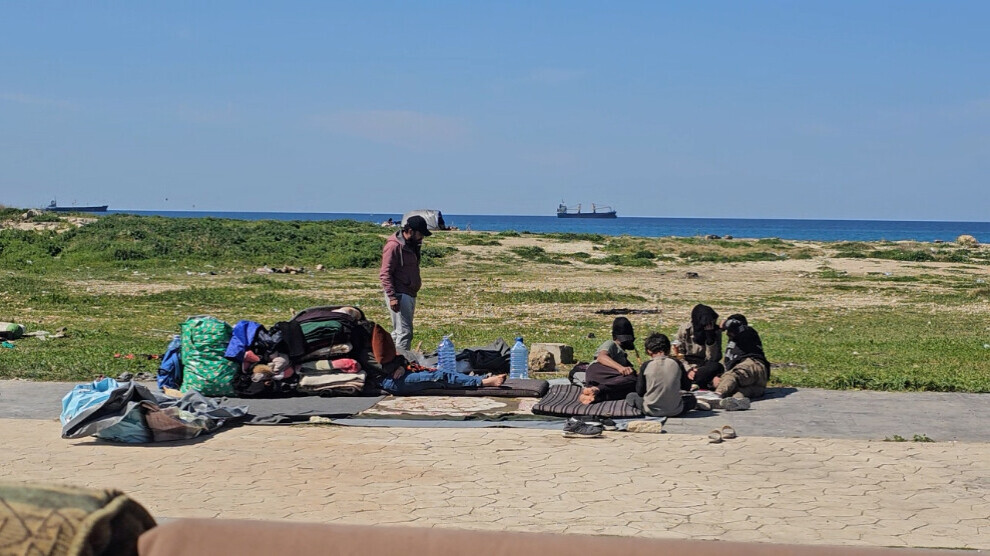
In the southern cities, particularly in Sidon and its surroundings, scenes familiar from wars emerged, but this time even harsher: cars parked on roadsides or near the seaside promenade turned into temporary sleeping quarters for entire families. Others spread their bedding on pavements and in public parks, or sought shelter under plastic tents that offer no protection from the winter cold, or even the heat of the sun during the day.
Many among them are Syrian women who have been unable to find alternative shelter and lack the financial means to rent a home, even for just a few days. However, the most fragile face of this tragedy is revealed in the lives of Syrian women. For them, displacement is not limited to the loss of home or work; it extends to confronting a harsh daily reality in unsafe or uninhabitable places. Numerous women spend the night in overcrowded cars with their children, in a tight space barely enough to sit, while trying to reassure the little ones amidst the fear of bombing and the anxiety of the unknown.
On the pavements, some mothers sit beside small bags or thin blankets, trying to create something like a temporary "corner of a home" for their children. In the absence of basic facilities, the simplest daily needs turn into major challenges: from securing water and food, to maintaining women's privacy, or even finding a safe place to sleep.
The suffering of women intensifies when one is pregnant or solely responsible for her children—a common reality among Syrian families who lost their breadwinner or were separated during the years of war. Here, the mother not only faces displacement but also bears the burden of protection and care under extremely harsh conditions.
Souad Al-Faleh spoke about the ordeal of displacement with two sick children, and how they ended up on the pavement of the seaside promenade after paths of return were blocked, to avoid being killed in Deir ez-Zor due to previous conflicts and family vendettas.
Souad is not alone; dozens of women have gathered in the same place. The majority fear returning to Syria for political and sectarian reasons, while only a few cite the lack of a home, shelter, or work in their homeland.
Meanwhile, some Syrians chose a different path: returning to Syria despite the risks. During the first days of the escalation, tens of thousands crossed the border into the Syrian interior, preferring to face the uncertainty there rather than remain in a country experiencing a new war. Many returned to their original areas or to relatives' homes, even if those areas themselves suffer from difficult economic and security conditions.
As for those who stayed in Lebanon, they scattered across several cities, most notably Sidon, Beirut, and the Bekaa Valley. Some found temporary shelter with relatives or acquaintances, while many rely on local initiatives and community organizations that provide food or basic aid. In the absence of sufficient capacity in official shelters to accommodate everyone, streets and cars remain the last resort for a significant number of families.
Thus, Syrians today find themselves facing what can be described as a "double displacement." They fled the war in their own country years ago, only to find themselves now fleeing another war in their host country. Caught between these two displacements, Syrian women stand on the front line of suffering, carrying the burden of fear for their children, while simultaneously trying to preserve what remains of the dignity of life—on a pavement or inside a car, waiting for a slightly less harsh morning.