
Sudanese Women Recount Their Displacement and Suffering After the Fall of El Fasher
A number of Sudanese women displaced from El Fasher confirmed severe hardship during their journey to Al-Afad Camp in Northern State, following the city’s takeover by the Rapid Support Forces.
Aya Ibrahim
Sudan — Sudanese women are among the groups most severely affected by the ongoing conflict between the Sudanese army and the Rapid Support Forces, a conflict that is approaching its third year since it erupted in 2023. During this period, women have faced a wide range of violations, particularly in areas under RSF control, making their suffering one of the most prominent tragedies of this conflict.
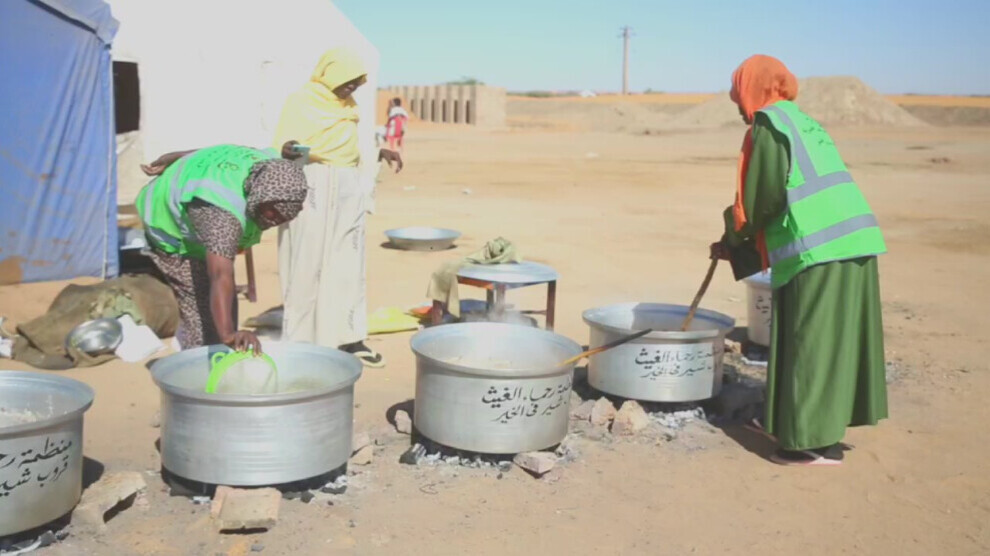
Our agency conducted a field visit to Al-Afad Camp in Ad-Dabbah locality in the Northern State, which hosts large numbers of displaced women from the city of El Fasher. During the visit, we documented painful testimonies from women who were forced to flee in search of safety after a prolonged siege imposed by the RSF on the city before it ultimately took control.
A Long and Grueling Journey
(N. A.), a displaced woman in her seventies who preferred not to disclose her identity, recounted that their journey from El Fasher to the camp was long and exhausting. They were transported in humanitarian aid trucks designated for relief supplies. She explained that RSF forces stopped them along the way and interrogated them, saying: “They asked us about the young men and said that if they had been with us, things would not have gone smoothly.”
She noted that the journey took more than three days before they reached the camp, and that she lost one of her relatives on the day of displacement after they were subjected to intense artillery shelling.
Our agency also observed a noticeable increase in the number of tents being erected daily in recent weeks, according to testimonies from camp residents, as the continuous influx of displaced people from El Fasher to Al-Afad Camp continues. These displaced persons arrive after an exhausting journey of more than 1,200 kilometers—the distance between El Fasher and Ad-Dabbah—necessitating the daily installation of new tents to accommodate the newcomers.
Before reaching the camp, the displaced are received at the public transportation hub known as “Millit Station,” where registration procedures and medical examinations are conducted, and food meals are provided, before they are transported in batches by trucks to the camp.
“We arrived at Al-Afad Camp, where we have been living for more than a month, after a long journey that began from El Fasher to Zamzam Camp, then to the town of Tawila, where we suffered greatly during that period until we finally settled in Al-Afad Camp,” says Mastoura Mohamed Issa, a young woman who has not yet reached the age of twenty, as she struggles to hold back tears while recounting her suffering caused by the ongoing conflict in her country.
She adds that she and her family were displaced on foot for three days until they reached Al-Afad Camp in search of safety and security.