
Between Khartoum and El Fasher, Sudanese Women Are Abused by Both Sides of the Conflict.
The 16 Days of Activism Against Gender-Based Violence campaign aims to strengthen international efforts to end violence against women.
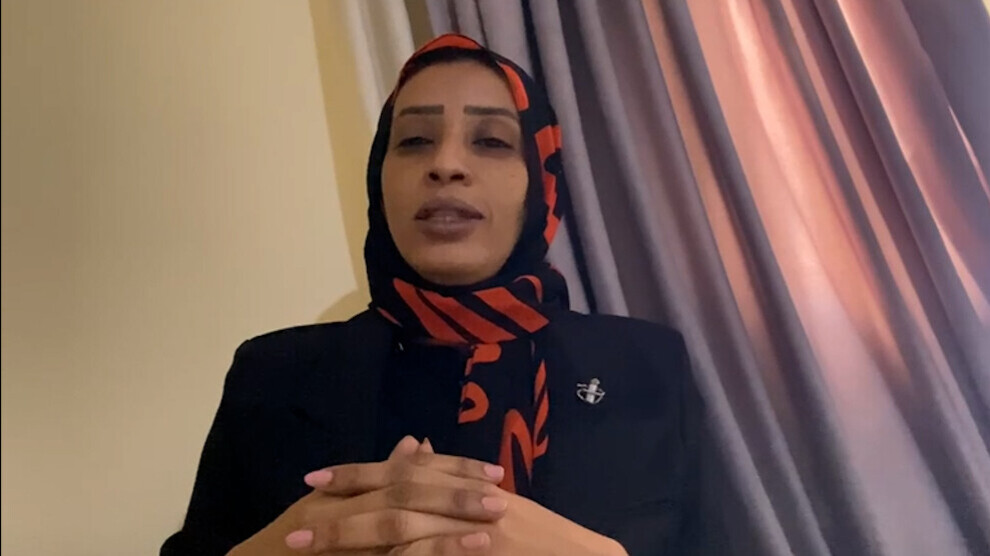
Salma Al-Rashid
Sudan — Women and girls in Sudan are among the most affected by food insecurity and escalating violence. This crisis has been described by UN Women as a “gender emergency.”
Coinciding with the 16 Days campaign, legal human rights defender Shaimaa Taj Al-Sir called on all national organizations and UN agencies to work toward ending all forms of violence against women and girls in Sudan and to provide legal and psychological support.
She explained that various forms of gender-based violence have been—and continue to be—committed against Sudanese women and underage girls throughout the conflict that erupted in April 2023 and is still ongoing.
Regarding the Darfur conflict that began in 2003, she stated that women and girls during those years were subjected to multiple forms of violence—sexual, economic, social, and political—pointing out that “violence against women and girls in Darfur was practiced everywhere, even in shelters.”
“Both Sides of the Conflict Practice Violence”
She noted that during the recent years of war, when the conflict moved to the capital Khartoum, both parties committed multiple violations, including extrajudicial killings, rape, sexual harassment, arbitrary detention, and enforced disappearance.
Shaimaa Taj Al-Sir explained that after the Rapid Support Forces stormed civilian homes in various Sudanese cities for the purpose of looting, their elements raped a number of women and girls. Meanwhile, in areas under the control of the Sudanese army, members of the security cell committed acts of violence against women and girls, accusing several women—who had been unable to flee—of collaboration.
These women were accused of cooperating with the Rapid Support Forces, despite the fact that poverty, restricted movement, and the presence of children and elderly people prevented them from fleeing.
Women’s Bodies Are Not Battlefields
On the pattern of rape used as a tool of humiliation and degradation—not only of the survivors but of society as a whole—she stressed that “women’s bodies are not battlefields.” She pointed to the pattern of forced displacement imposed by the conflict in both Khartoum and El Fasher, which forced most Sudanese families to flee collectively or individually out of fear of attacks on women and girls and of rape, due to the social stigma that haunts generations in Sudan’s complex social context. Forced displacement has also stripped most families of their means of dignified livelihood.
Legal Violence
She also pointed to a form of legal violence represented by arrests: “A number of women and girls face detention by both sides of the conflict. The security cell arrests women and girls when they go to communication centers to contact their families or receive money transfers.”
She added: “These women are accused by the Rapid Support Forces of sending coordinates to the Sudanese army, while the army accuses women of collaborating with the Rapid Support Forces.”
Sexual Violence
Regarding sexual violence at checkpoints, she explained that “while women and girls travel in search of safe areas, they are subjected to sexual harassment by members of the Sudanese army. Detainees are also subjected to torture in detention centers, as well as sexual violence and deprivation of freedom of movement.”
According to Shaimaa Taj Al-Sir, most Sudanese families have resorted to child marriage and forced marriage of minors out of fear of rape. Monitoring reports documented cases of sexual violence against women during the Khartoum war committed by army personnel, including several marriages that took place in Omdurman, as well as forced marriages inside displacement camps in Kampala.
Domestic Violence Against Rape Survivors
She added that some Sudanese families have also practiced violence against girls and women who survived rape, accusing them of bringing shame. As a result, survivors were prevented from moving freely and were unable to access post-rape health services, including medical protocols. This leads to newborns being deprived of registration, birth certificates, and access to health and education services.
In the same context, Shaimaa Taj Al-Sir revealed that many survivors have committed suicide due to overwhelming family and social pressure. She also pointed to the serious health and psychological risks facing children who accompany their mothers in detention: “Monitoring reports revealed the presence of a five-year-old child with his detained mother, who was tortured by burning for three months in front of her while she was unable to do anything to protect him.”
What Sudanese women and girls are facing today is not merely a series of isolated violations, but rather a systematic pattern of gender-based violence that threatens their present and future and undermines the very foundations of society. Women’s bodies are not battlefields, and their dignity must not be hostage to armed conflict or political calculations. Therefore, the responsibility to stop these violations lies with everyone.