
Refugee Camps: Miniature Images of Human Suffering
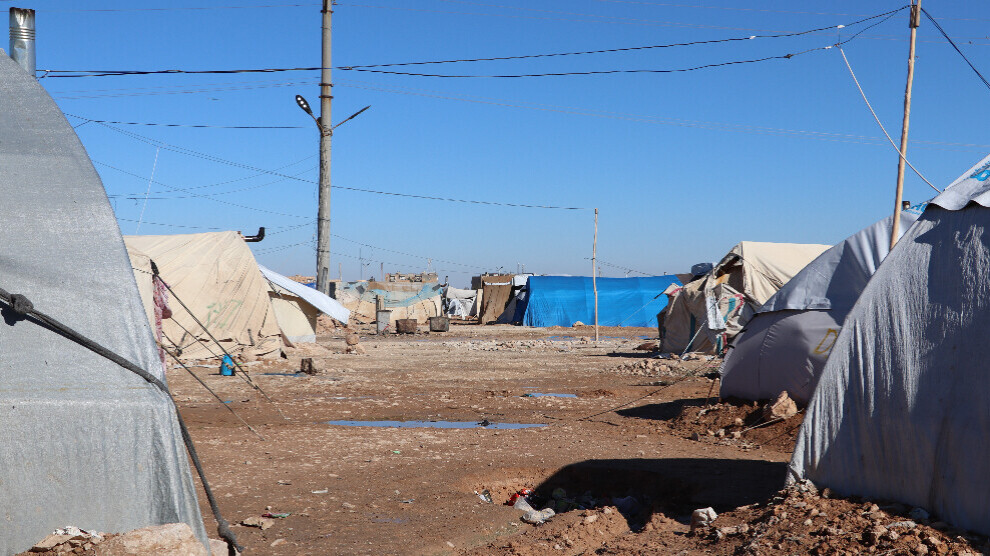
The worn-out tents look like refrigerators at night, offering no protection from the cold to their inhabitants. Hardships intensify into existential challenges that require the concerted efforts of humanitarian actors.
Tabarak Al-Ali
Raqqa —Refugee camps are considered miniature images of human suffering. In winter, these camps turn into a daily battlefield against biting cold and disease, becoming a story of endurance and patience for families forcibly displaced in search of safety.
Dozens of families from the cities of Afrin, al-Shahba, and Tel Rifaat are living in the Municipal Stadium Camp in the city of Tabqa, in the Autonomous Administration of North and East Syria. As winter reaches its midpoint, they endure a bitter reality, as the displaced live in tragic conditions, residing in dilapidated tents that lack even the most basic necessities of life.
These displaced people hope to return to their homes following the fall of the former regime and the agreement with the Syrian Interim Government. They are calling for the swift implementation of the provisions of the March 10 agreement and the securing of a safe return.
Hamida Habash, displaced from the city of Afrin, said:
“We were displaced from Afrin to al-Shahba and then came to Tabqa. The difficulties here are many. Rainfall has caused flooding in the tents, and there is not enough support to meet our needs. Diseases are spreading among children and the elderly. After taking children to hospitals, some survive while others lose their lives. There are no heating supplies—nothing at all.”
She called for an end to the suffering of the displaced, saying:
“I address my message to international organizations and the world to meet our material needs. Our suffering will not end except by returning safely to our homes.”
For her part, Farida Ahmed explained:
“We have been here in the Tabqa tents for a year. The situation is catastrophic in winter. When we first arrived, there was no place for us to stay, and the difficulties were many and severe. The situation has not improved; we now live in worn-out tents with no means to face this season. We suffer from harsh living conditions, and we ask the concerned authorities to meet our needs and improve our situation. We do not want war—we want to return to our homes and live in peace.”
Women spend most of their time outside the tents washing, cooking, and cleaning in full view of everyone. As a result, they do not feel safe or stable, and their fear for their children is constant due to the lack of hygiene, severe cold, and rain.
This is the reality faced by thousands of women in the camps—often unable to speak out. Some are forced to adapt to this way of life, while others dream of changing their circumstances for the better and returning to their homes.