
Physical Therapy in Rojava… Growing Need and Limited Centers
Amid the represussions of war and difficult health conditions in Rojava, the need for physical therapy services is increasing, while specialized centers remain limited.
SORKEL SHEIKHO
Amuda_Physical therapy is one of the important pillars of the medical field, aiming to restore movement, improve bodily functions, and alleviate pain, helping patients in many cases avoid surgery or excessive use of medication.
In a region worn down by years of war, the need for this type of therapy is multiplied, especially for those who have lost limbs or parts of their bodies, as well as those for whom war has left deep physical and psychological effects on their lives. Rehabilitation and restoring the ability to move are essential steps toward regaining daily life.
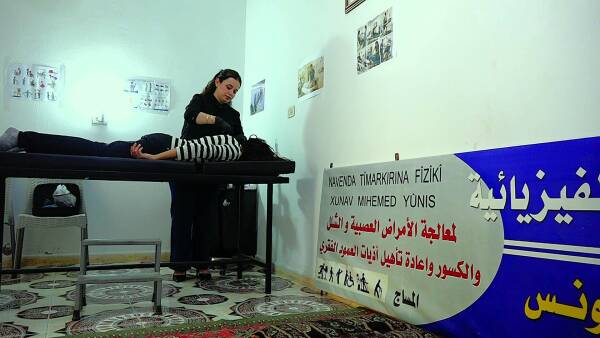
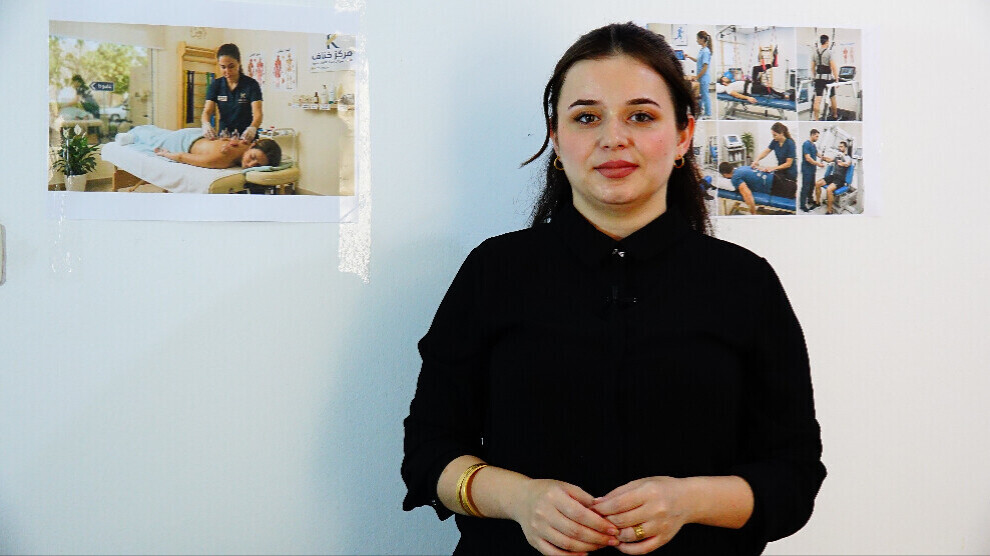
For this reason, Dr. Khanaf Younis has been providing treatment in Amuda since 2020. She does not leave the elderly who cannot reach her clinic without help, but goes to their homes to provide therapeutic services, also offering cupping therapy.
Dr. Khanaf Younis says that the difficulty she faced during her work was being a woman working in a society that had not yet understood what physical therapy is and its importance. These difficulties continue despite five years having passed, while her experience and specialization in this field grow year by year.
Her parents' support greatly influenced her success. She says: "I did not have major difficulties, because my mother and father were always my support, accompanying me through difficulties before successes. They would even come with me to the clinic and return with me, even though the clinic is next to the house."
Physical Therapy Compensates Patients for Surgery
Khanaf Younis explained the meaning of physical therapy and its foundation, saying: "Physical therapy helps a person suffering from illness or an accident to return to their previous life and profession. It also helps them avoid chemical medications that could cause many complications. Therefore, improving the patient's life is linked to exercise, movement, the treatment plan, and devices."
Each patient has a different treatment plan, as she says: "Physical therapy relieves the pain of disc patients. For patients after surgery, it is very useful for preventing calcification and degeneration, and to facilitate return to normal life. At the same time, for people suffering from fractures, physical therapy exercises can help them return to their previous profession."
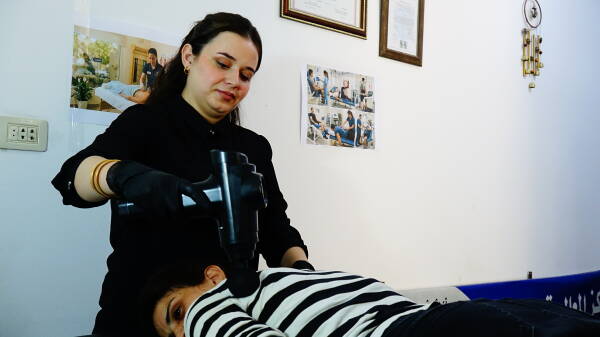
She explained that she initially uses manual techniques such as massage to improve body flexibility, but when the patient's condition is more severe, she uses devices: "We use physical means, such as heat, cold, ultrasound, or electrical currents to stimulate muscles after careful monitoring. At the same time, light is used as a non-invasive method to reduce pain and accelerate tissue healing, especially infrared radiation. Of course, this device does not suit all patients; each patient is treated with the appropriate device according to the extent of their pain and condition."
Rehabilitation for Those Who Have Lost Limbs
The most common diseases and conditions in the region requiring physical therapy are "herniated discs, neck pain, spasms, sports injuries, and fractures. But due to the wars that broke out in the region, we trained people who lost limbs to walk, and rehabilitated them for prosthetic fitting."
She added that physical therapy after paralysis, through stimulation of neuroplasticity, becomes the cornerstone for restoring movement and independence, noting that the patient needs about two months of treatment to return to their previous condition.
Physical Therapy and Mental Health
Physical therapy specialist Khanaf Younis said that physical therapy and mental health represent an important strategy for people living in areas that have suffered from war for years: "The number of patients is very large, while the number of these centers in our areas is small. My hope is that the number of physical therapy centers increases, and that health awareness about physical therapy is also provided to the community, so that its importance is known."
She added: "After many years of war, people want a place, a center, and a space where they can improve their mental state and find solutions to their psychological and health problems. Patients receiving treatment at my center also see their psychological state improve, and this is a good step that patients themselves express. Therefore, I hope the number of physical therapy and mental health centers in the region increases."