
"Orphans" Camp in Northern Gaza... The Last Shelter for Women Is Threatened with Eviction
Palestinian widows in Gaza face a harsh reality where poverty and lack of protection intersect, while the loss of shelter threatens to return families who have lost everything to the vortex of displacement once again.
NAGHAM KARAJA
Palestine — Dozens of women and their children residing in the "Orphans" camp in the northern Gaza Strip face the risk of losing shelter after the entity that was sponsoring the rent for the land on which the camp is built stopped funding it. Families who lost their homes and loved ones during the war itself now find themselves threatened with eviction, with no financial ability to rent another place.
The "Orphans Camp" is located in the northern Gaza Strip and is designated for widows and their children. It includes dozens of women and children whose families sought refuge there after losing their homes and husbands. A funding entity was covering the rent for the land on which the tents were pitched, but the recent halt in support has placed the camp's continuation before an unknown fate, burdening the women residing in it with a burden they cannot bear.
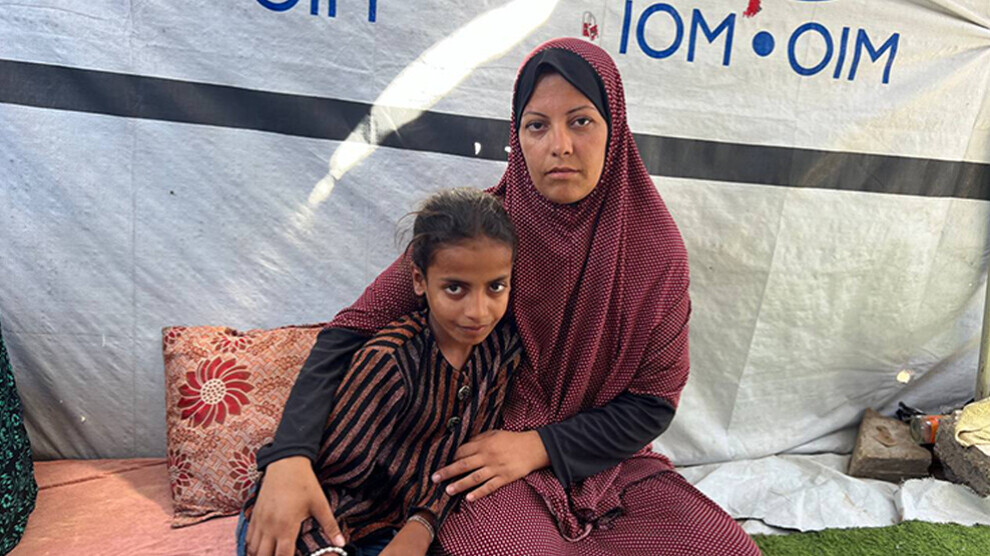
According to Sihad Saleh, a woman from the town of Beit Hanoun in the northern Gaza Strip and a mother of five children, the camp's residents are now threatened with eviction if no entity takes on paying the rent, while families possess no housing alternative or fixed income enabling them to face the cost.
Sihad Saleh has been living in the camp for nine months, after her home was destroyed and she was forced to undertake a displacement journey from the northern Strip, searching for a place that gathers her children and protects them from the street. She says: "I have been living in an orphans' camp for nine months. Life here is very difficult, and we face continuous suffering because of rodents and mice—so much so that I cannot sleep all night because of them. The mice have destroyed the food, drink, and clothes of my children, and have left us nothing."
For her, the camp was not merely a place of residence but the last shelter she could reach after losing her home. However, the halt in funding has made this very place threatened with disappearance. She explains: "We pay monthly rent for the camp, and there was an entity covering this amount, but it stopped paying. If no one pays on our behalf, we are asked to pay two hundred shekels per month. Where would we get this money? We can barely provide food and drink for our children." She notes that her five children suffer from malnutrition.
She says the problem is not related to housing alone; her family lives on aid reaching the camp, and if it does not arrive, she finds nothing to feed her children. She adds that the spread of rodents inside the tents increases the difficulty of life and threatens what remains of food, clothes, and supplies.
According to the latest data from the Palestinian Central Bureau of Statistics, 22,057 women in the Gaza Strip have lost their husbands since October 7, 2023. The Bureau stated in its March 8 issue that the percentage of households headed by women rose from 12 percent during the first nine months of 2023 to about 18 percent during the war period.
The suffering of women does not stop at the loss of a husband; the absence of income, repeated displacement, rising basic needs, destruction of homes, and declining support networks are all factors pushing female‑headed households into further vulnerability. In Sihad Saleh's case, these crises gather in one tent: five children suffering malnutrition, a shelter threatened with eviction, and unguaranteed aid.
Children Carrying the Memory of War
Sihad Saleh says the war left its mark on her children after the scenes of massacres: "My children suffer psychological trauma because of what they witnessed during the war. They saw their grandfather, grandmother, uncles, and father killed before their eyes. These scenes left a deep impact on their souls."
With the continuing effects of the Israeli war, the responsibility of women who have lost their husbands becomes more complex. A mother is required to care for children living through trauma and secure their needs in an environment lacking stability, while she herself faces loss, displacement, and anxiety about the future.
A Camp Threatened with Eviction
If the camp is evacuated, Sihad Saleh will not be alone in facing the risk of losing shelter; dozens of families residing in the place will search for new shelter in conditions that do not allow many of them to bear housing costs, while women need a place that gathers their children and protects them.
What families residing in the camp face touches the right to adequate housing, along with the right to food and social protection. Article 11 of the International Covenant on Economic, Social and Cultural Rights stipulates the right of everyone to an adequate standard of living for themselves and their family, including food, clothing, and adequate housing. The United Nations also affirms that adequate housing does not merely mean having a roof but requires security from forced eviction, affordability, and living in conditions suitable for health and safety.
Between malnutrition, psychological trauma, rodents, and fear of the street, Sihad Saleh summarizes her demand in a fundamental right: safe shelter, food for her children, and a dignified life in which she does not have to search for a new place every time a space of survival is closed before her.