
Motorcycle Driving Licenses for Women in Iran... A Postponed Promise and Ongoing Restrictions
Months after the announcement of the start of issuing motorcycle driving licenses for women in Iran, official promises remain stuck in the ambiguity of implementation, while women continue to face legal and social restrictions on the roads.
SARA POURKHAZRI
Kermashan — More than seven months have passed since the text messages announcing the start of procedures for issuing motorcycle driving licenses for women were sent—news published shortly after the bloody events that took place in January of this year. It became one of the topics that attracted media attention, but despite multiple statements by officials, the path of implementing the decision remains unclear.
The issue of women riding bicycles had previously witnessed changing positions of authorities and religious authorities toward this matter, and it now appears that the promise to issue driving licenses, instead of actually leading to lifting restrictions, was raised within the framework of the regime's efforts to rebuild its image and show limited changes.
But the fundamental question here is: Where do women stand in the midst of the conflict between the ban on motorcycle riding and the propaganda currently being raised about issuing motorcycle driving licenses for them?
In recent years, large numbers of women have lost their lives in motorcycle‑related accidents or sustained serious injuries that cannot be compensated. The absence of a driving license was not merely an obstacle to obtaining accident‑related insurance; in many cases, they were also deprived of the possibility of legal defense in accidents for which they were not responsible.
According to available data, approximately three thousand people died in 2024 as a result of motorcycle accidents, including more than 150 women. This figure, along with the increasing demand among women for motorcycle use, indicates the possibility of these numbers rising in the future.
In the same context, motorcycle manufacturers announced last week that over the past two years, more than 600,000 motorcycles of various types have been sold to women—a figure that clearly reflects the growing desire of women to use this means of transportation, even while bearing the legal risks resulting from not possessing a driving license.
From Daily Need to Breaking the Prohibition
Azadeh Th. recounts her experience—she previously rode a motorcycle for a period in Kermashan—saying: "I was involved several times in minor accidents for which I was not responsible, but as soon as the other driver knew I was a woman and did not have a driving license, he would threaten me, saying I had to pay compensation, otherwise he would call the police. Because I know that the police's presence means confiscation of the motorcycle and holding me accountable as well, and I would have to pay money to end the matter—but I was always afraid a more serious accident would happen. Therefore, I stopped riding the motorcycle until the legal conditions change."
This account shows that women find themselves in a double position: on one hand, there is the desire and need to use the motorcycle as a fast and economical means of transportation; on the other hand, there is the pressure of restrictive laws and the absence of legal protection.
Under such circumstances, the authorities' promises to issue driving licenses for women appear closer to a propaganda tool for rebuilding their image before public opinion than an actual solution.
Financial costs and the possibility of incurring losses represent only part of the pressures imposed on women who ride motorcycles. The larger part of these pressures relates to psychological and social aspects—pressures that have accompanied women's struggle for years to attain the right to ride motorcycles and continue to this day.
Sharareh R., who also has previous experience riding a motorcycle in Kermashan, says: "I used my son's motorcycle several times to practice riding in the streets. Once, a Peugeot car almost hit me. When I objected, a man with a long beard suddenly got out of the car and began threatening me. In the end, he directed several kicks at my motorcycle, scolded me, then returned to the car and left."
This experience is only one example of the violence and insults women face on their path to breaking the prohibition on motorcycle riding. Many women in recent years have been subjected to various forms of harm and pressure from society or even from family—from blaming looks and threats in the streets to family pressure to give up riding motorcycles.
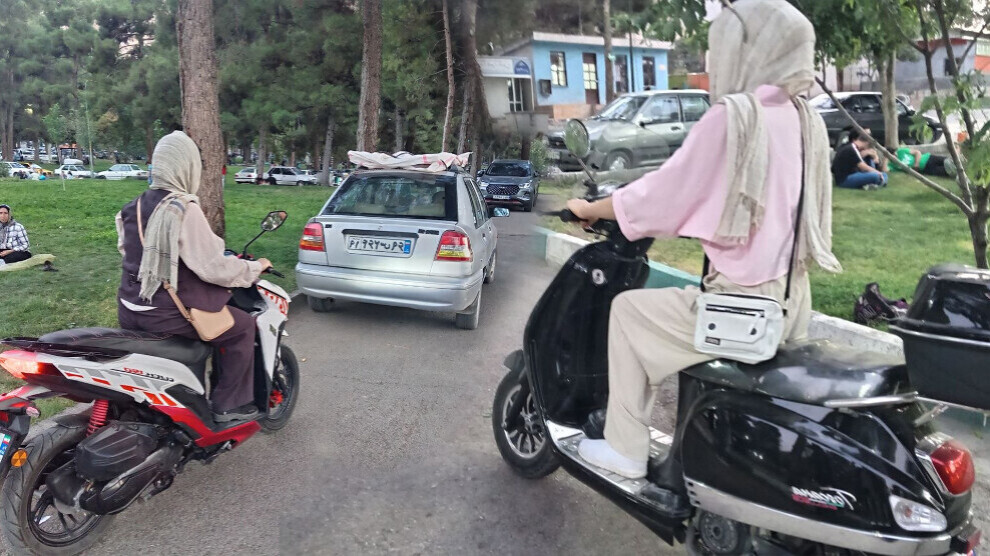
Nevertheless, through insistence and demanding this right, women have managed to practically ride motorcycles without the need for official permission, effectively succeeding in transcending the limits of prohibition on the ground.
This insistence indicates that motorcycle riding for women is not merely a means of transportation but has become a symbol of the struggle for individual and social freedoms—a struggle that continues daily in the streets, in the face of judging looks and restrictive laws.
Experiences such as changing the name of the "Guidance Patrol" and activating the same structure under the name "Nour Plan" show that announced changes do not necessarily lead to lifting restrictions. From this perspective, implementing the motorcycle driving license system for women may also be, within the framework of the Islamic Republic's restrictive laws and structures, accompanied by new restrictions—restrictions that still target women's social presence and individual freedoms.