
Maryam Al-Hasayna turns the experience of loss into an initiative to care for orphaned children in Gaza
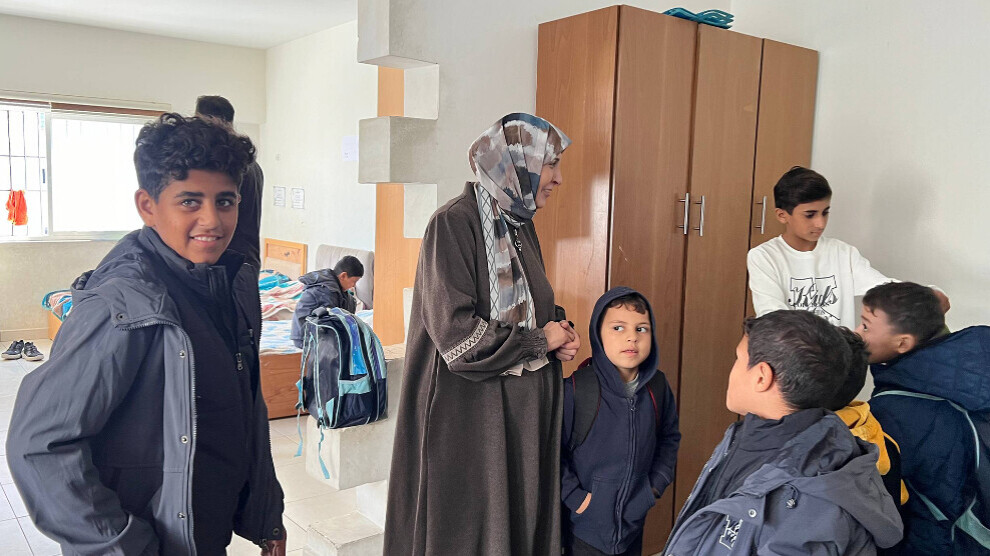
Maryam Al-Hasayna founded Gaza's "Al-Rahma" orphanage to provide dignified lives for children who lost both parents, helping them continue education and plan their future until self-reliance.
RAFIF ESLIM
PALESTINE— With the outbreak of the Israeli war on Palestine in 2023, and the children it left behind who lost their parents, the need emerged for initiatives that provide them with care and protection under difficult humanitarian conditions.
In this context, Maryam Al-Hasayna launched the "Al-Rahma" orphanage project in the Gaza Strip in Palestine, with the aim of embracing children who lost their parents, and securing living conditions that preserve their dignity.
Regarding the idea of founding the house, Maryam Al-Hasayna, director of the "Al-Rahma" orphanage, explains that it crystallized in the context of the war on Gaza, and the harsh humanitarian repercussions it left that affected children and families. She adds that the most prominent motive behind launching the initiative was the massacre that targeted her family, Abu Shreia Al-Hasayna, and resulted in the loss of a large number of her family members, including her sons, grandchildren, and relatives — an experience that made her more aware of the scale of suffering that children live under war.
She points out that the number of orphans in the Gaza Strip exceeds, according to what she mentions, 67,000 children, including about 38,000 who lost both father and mother, affirming that these children need homes and institutions that embrace them and provide them with food, treatment, education, clothing, and shelter, in addition to psychological support to help them deal with the effects of the traumas left by the war.
The place was looted
Maryam Al-Hasayna says that work on implementing the idea of the house began after the first truce, by preparing a place to receive children. However, the place was subjected to looting and the theft of all its contents with the announcement of the start of the latest ground operation in Gaza, which forced her to rebuild the project anew.
She adds that when she returned during October 2024 in the last truce, she found nothing of what had been prepared, to face great difficulty in reopening the house amid high prices and the unavailability of raw materials needed to manufacture furniture. Despite this, after arduous efforts, she was able to restore the house to its original form, and began receiving children based on lists she obtained from official authorities.
She explains that she communicated by phone with the families of the orphaned children, and asked them to host them in the house, especially in cases where grandparents take care of them and their health conditions or capabilities do not allow them to provide the necessary care. She also roamed the camps and roads in search of children who lost their parents, and opened the doors of the house to everyone who could lead her to an orphaned child in need of help, to become after months of work a mother to about 150 children.
She points out that one of the biggest obstacles she faced was the refusal of some family members — grandparents, paternal uncles, and maternal uncles — to hand over the children to the house, despite their inability in some cases to provide them with a dignified life, due to the social view that sees a child's upbringing in an orphanage as unacceptable.
She says that she tried to change this view, and from this standpoint she created the external care program, which provides assistance to children who do not join the residency program, because their families insist on keeping them with them.
She explains that the house receives two categories of children. The first includes those who lost family support, including those who lost their fathers during the war, then their mothers married and left their care to the grandparents, so the house includes them in the residency program to contribute to their upbringing and care. As for the second category, it includes children who lost both father and mother together, and the house provides them with the same services.
In contrast, children who remain with their mothers and families benefit from the services provided by the house within the external care program, allowing them to obtain assistance without separating them from their family environment.
She affirms that the house does not sever the children's connection with their families in the case of residency, as it is keen on the continuation of communication between them and the remaining members of their families. She explains that the children leave the house every Thursday evening to visit their relatives, and return on Saturday to resume their studies, while psychologists and substitute mothers work to address any problem that may appear during this period, through communication with the families and trying to correct the situation.
Dealing with psychological and behavioral effects
On the level of education and rehabilitation, Maryam Al-Hasayna explains that the children began learning to read and write through the "Jusour Al-Rahma" school affiliated with the house, and also learned a set of life skills that help them rely on themselves. She adds that the house dealt with some of the psychological and behavioral effects left by the war, including introversion and involuntary urination, and also worked to integrate the children with one another until they came to feel that they are one family, calling one another brother and sister.
She points out that 89 children benefit from the daily care service, which includes the various services provided by the house, but they return to sleep with their families.
In contrast to the growing needs of children, the house faces increasing operating costs, including electricity, gas, children's clothing, and the salaries of substitute mothers, which increases the size of the responsibility placed on its shoulders. She says that her attachment to the children increases with the passage of time, for they, as she puts it, resemble her sons and grandchildren who were killed before her eyes during the Israeli attacks.
At the conclusion of her talk, Maryam Al-Hasayna affirms that she will continue to support them until they complete their university studies, and she looks forward to seeing them as teachers and doctors capable of serving their communities and contributing to rebuilding their country.