
How Does Geographic Culture Shape Women’s Lives in Jordan?
Government policies, services, and unequal development across cities and peripheral areas shape women’s lives in Jordan, making opportunities vary by location and turning residential address into a decisive factor in work, safety, and mobility.
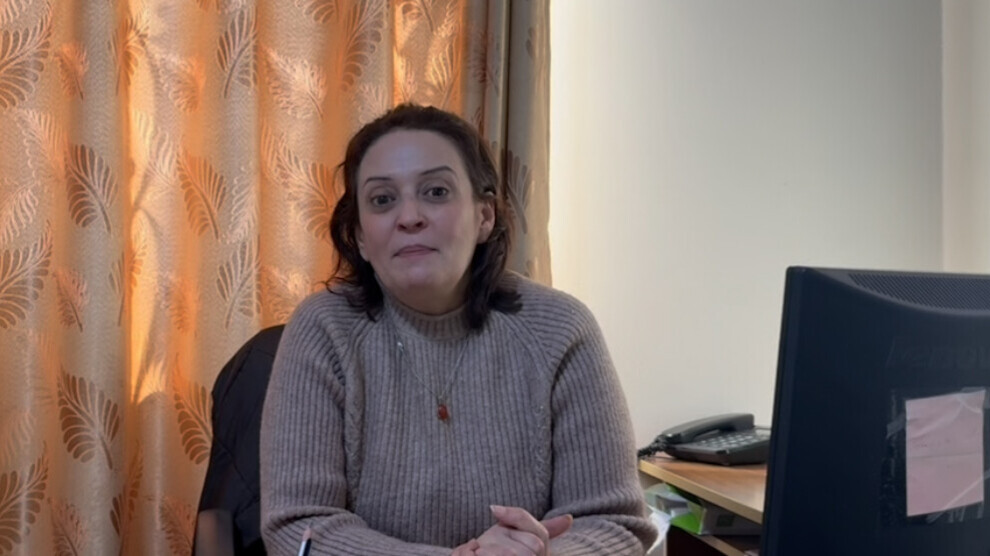
Bara’a Maayeh
Jordan — In Jordan, place is not a neutral element in women’s lives, but rather a structuring framework for relationships, opportunities, and boundaries. Neighborhoods, cities, and governorates do not only determine the availability of services; they also define the limits of movement, work, and safety, producing diverse female experiences across the country. Geography thus becomes a social and political factor that intersects with gender, redistributing opportunities in unequal ways.
Despite official discourse promoting women’s empowerment and participation in public life, a wide gap persists between declared policies and everyday reality. The absence of fair transportation infrastructure, unequal regional development, and the persistence of restrictive social norms force women into complex daily calculations before making even the simplest decisions—such as going to work, continuing education, or moving safely. In this context, women’s choices cannot be separated from governmental and societal conditions that continuously reshape those choices.
Geography therefore becomes central to understanding women’s realities in Jordan, as it reveals how power operates beyond written laws—through place, services, reputation, and surveillance. Traditions do not confront change directly; instead, they seep into daily details and impose their cost silently. Between what exists and what is supposed to change, women live an ongoing struggle with place—as both a space of life and a testing ground.
Low Participation Reveals Structural Imbalances
Despite repeated official rhetoric on women’s empowerment, women’s economic participation in Jordan remains among the lowest regionally. Labor Force Survey data indicate that women’s participation rate reached 14.9% in 2024, compared to 53.4% for men.
This gap does not reflect women’s “reluctance” as much as it exposes structural imbalances—beginning with transportation and labor policies and extending to social norms that restrict women’s mobility and impose additional costs simply for entering public space.
A Social Model
In this context, the story of Muntaha is not an individual case, but a living reflection of how place functions as an invisible authority over women, defining what is “possible” and what is “permitted.”
Muntaha says: “I am the youngest of my siblings, 52 years old. My mother had a sharp awareness of the importance of women’s economic independence. She always told me: a woman who cannot manage her own affairs is not a woman. That sentence summarizes an entire philosophy of survival in a society that does not guarantee lasting safety for women.”
Education as a Tool of Resistance, Not a Privilege
Adequate protection for women after divorce or loss is lacking at the local level, turning education from a right into a tool of resistance. This is what Muntaha realized when she decided to sell her gold to complete her university education after marriage.
“My mother told me: sell your gold—the degree will compensate you, but gold will never bring you a certificate.”
This decision was not a luxury, but an investment in an uncertain future, and a clear message that the government may not be a safety net, and that women are required to build their own security.
Work and the Road: When Distance Becomes a Burden
In public policy, work is viewed as an opportunity. In women’s lives, however, the journey to work becomes a daily battle. Muntaha worked for more than 31 years, and her first appointment was in Baqaa Camp, forcing her to leave home before dawn every day.
“I used to leave the house at around 5 a.m. to be at school by 7:30.”
These details reveal how distance, in the absence of safe and efficient public transportation, becomes a double cost borne by women alone.
World Bank estimates confirm that 47% of women in Jordan have rejected job opportunities due to transportation issues related to availability, cost, safety, and harassment—a figure that places responsibility squarely on government policy, not women’s choices.
Harassment as a Tool of Exclusion
In public spaces, women face not only service shortages but also a lack of safety. Muntaha states clearly: “The harasser doesn’t care whether you wear hijab or not… he sees you as a woman and harasses you.”
In the absence of effective protection mechanisms, harassment becomes an unspoken tool of exclusion, pushing women to withdraw, limit their movement, and renegotiate daily their right to exist outside the home.
When Choices Shrink and Surveillance Expands
Unequal development between the capital and the governorates affects not only services, but social life itself. Muntaha describes her move to Irbid by saying: “A city… but it felt like a big village.”
Curiosity, surveillance, and stigma become part of daily life. Muntaha recounts being labeled “immodest” because she does not wear the hijab, and having her appearance linked to her religion: “They said I was Christian even though I’m Muslim.” Here, society does not merely monitor women—it redefines them and punishes them based on that definition.
The Uncounted Burden of Domestic Labor
Even when women manage to enter the labor market, domestic burdens remain decisive. Unpaid care work, lack of childcare facilities, and unequal division of roles all undermine women’s ability to remain employed.
In this context, a woman’s “choice” cannot be separated from her surrounding environment, nor can she be blamed for decisions imposed by policy and social reality.
In Irbid, Muntaha describes internal transportation as ineffective, forcing her to rely on taxis: “Four dinars a day. I pay 120 dinars a month from my salary.”
These figures illustrate how place becomes a constant economic burden, forcing women to choose between work and exhaustion—or complete withdrawal.
Slow Change and Deferred Responsibility
Despite a slight increase in women’s economic participation compared to the previous year, progress remains slow. Real change does not come through rhetoric, but through fair transportation policies, flexible work environments, and genuine protection from violence and stigma.
Muntaha’s story is not an exception, but a mirror of the reality lived by thousands of women in Jordan. Place—with its inadequate services, rigid norms, and unsafe transportation—becomes a feminist issue par excellence, acting as a silent regulator that controls women’s movement, determining who leaves, who works, and who quietly withdraws.
When the details of place change, women’s destinies change as well: work becomes a right rather than a risk, movement becomes natural rather than dangerous, and geography transforms from a constraint into a space for life.