
"Khnata Al-Rounda": preserving national resistance memory and supporting Moroccan women
In loyaly to her grandmother Khnata Al-Rounda’s legacy resisting French colonialism, Moroccan activist Khawla Alaoui founded an association bearing her name to continue empowering women economically and socially against marginalization.
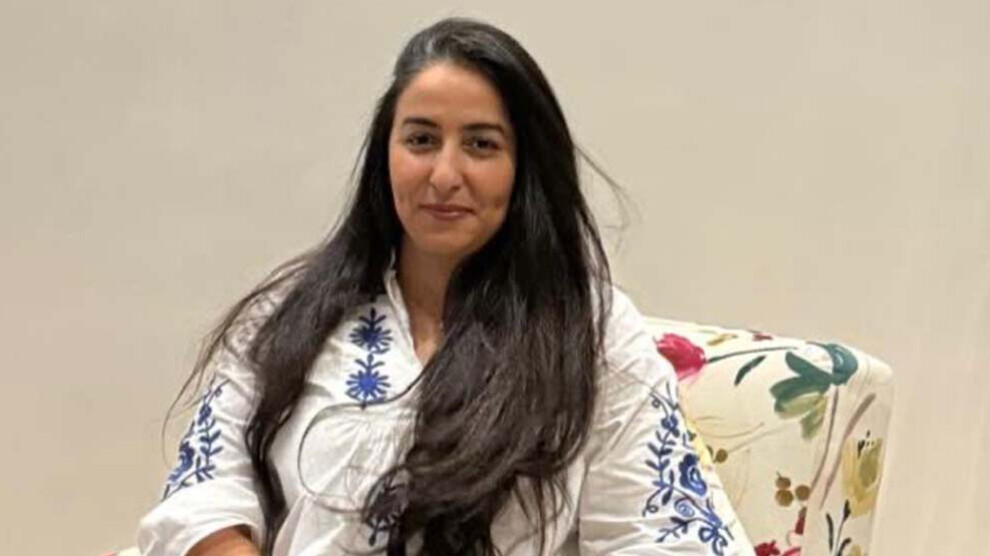
MORROCO— Driven by a sense of loyalty to the collective memory of Moroccan women who gave their lives in sacrifice for the homeland, and the right of future generations to preserve this memory, came the initiative of Moroccan activist Khawla Alaoui to found the "Khnata Al-Rounda" association, the woman whose name is linked to the memory of Moroccan national resistance against French colonialism.
Khnata Al-Rounda is considered one of the symbols of national resistance against French colonialism, as she lost her life while participating in a demonstration that set out from the Moroccan city of Salé on January 29, 1944, following the submission by the leaders of the national movement of the document demanding independence on January 11 of the same year.
Reviving the memory of Khnata Al-Rounda, who was killed by the French occupation, was for her granddaughter Khawla Alaoui not merely a recognition and loyalty to the spirit of the grandmother, but a humanitarian message stemming from a firm belief that the path of struggle is still long and arduous, and that the liberation for which the grandmother paid with her life has not yet been achieved, at least in its social, economic, and cultural aspect.
The torch of struggle and continuing the march
In a society like Moroccan society, where women still languish under the weight of vulnerability, exclusion, and discrimination, despite all the gains achieved, Khawla Alaoui took from the biography of her grandmother, which was erased due to the threats that pursued the family after her killing, a torch that lights her path in continuing the struggle her grandmother waged and paid her life as a price for, so that her country could enjoy independence.
Khawla Alaoui explains this by saying: "I inherited these genes from my grandmother; her rebellious spirit dwells in me. I have always risen up against injustice and do not accept that anyone be wronged before me. Her biography awakened within me the spirit of struggle, and I became certain that I have an important role in this life and a message I must complete — a humanitarian message to defend women and support them in order to change their conditions."
She considers that the "genes" she inherited from her grandmother were awakened within her and pushed her to think about taking up the torch — the torch of struggle and resistance, but this time not resistance to colonialism, but struggle against the vulnerability, poverty, marginalization, and exclusion that Moroccan women suffer from.
Despite the colonizer's attempts to erase her struggling biography, the legacy left by Khnata Al-Rounda awakened in her granddaughter the desire to continue the march with a new vision, in a historical and political context different from what the grandmother experienced. Among the remarkable paradoxes the granddaughter pauses at is her saying: "It is strange that my grandmother was martyred at the same age at which I learned about her biography and decided to continue her path so that the women of my country could be liberated, as if nothing happened by coincidence, but everything was destined and arranged in advance."
She adds: "A strong and courageous woman who struggled so that her country and people could enjoy freedom and independence cannot have her memory erased in this way. Rather, this memory should be revived in loyalty and gratitude for what this woman and her counterparts, the women resisters, offered of grave sacrifices for the sake of the homeland."
The "Khnata Al-Rounda" association to support women
Khawla Alaoui founded an association concerned with supporting women, caring for their issues, and defending their economic, social, political, and cultural rights, accompanied by an elite of women in this experience. This association, which bears the name "Khnata Al-Rounda," she considered a loyalty to the spirit of the grandmother, and a continuation of her struggling path through defending women and their issues. Regarding this, she says: "Inside every Moroccan woman there is a 'Khnata Al-Rounda.'"
Regarding the founding of the association, she says: "Not all names immortalized by history are mere tales of the past; some of them are present in the values they carry, the impact they leave on souls, and the initiatives they inspire that look toward the future."
For Khawla Alaoui, the matter is not merely about immortalizing a family name, but an attempt to preserve the memory of a Moroccan woman whose biography was linked to courage and sacrifice, and to reconnect this memory with the present, so that the values it carries remain a source of inspiration for new generations.
Therefore, the "Khnata Al-Rounda" association carries meanings that go beyond evoking the past; it is an initiative that proceeds from loyalty to a woman from the memory of national resistance, and aspires to make this legacy a starting point for rights action that keeps pace with the issues of society and women, and grants Moroccan women an essential place in the path of development, participation, and independence.
A memory worthy of being transmitted to future generations
The name of Khnata Al-Rounda, according to family memory and narratives related to her biography, is linked to the events of January 29, 1944, in the city of Salé, where it is recounted that she was at the forefront of the peaceful demonstration carrying the Moroccan flag, in a scene that embodies the struggle of Moroccan women and their engagement in the national movement for independence.
Khawla Alaoui Madghari indicates that she seeks to contribute to preserving the memory and transmitting it to younger generations, while enhancing interest in the national historical heritage, and encouraging educational, cultural, and documentary initiatives that give this legacy a renewed life.
The initiative is headquartered in the city of Marrakech, and carries a vision based on linking national memory with social work, from a firm conviction that believes that honoring the women who contributed to making the history of national resistance is not complete merely by evoking their biographies and names, but extends to continuing work for women's dignity and expanding their opportunities in education, health, and economic and social independence.
Regarding these goals, Khawla Alaoui affirms that the association aspires to develop initiatives that respond to women's needs, with particular attention to girls and women in situations of vulnerability, as well as women seeking to regain their opportunities for learning or building a new career path.
The association aims to support economic initiatives and women's cooperatives, work to valorize local products, and encourage income-generating projects. It also seeks to spread health and preventive awareness, in addition to building self-confidence, developing capabilities, and developing skills.
Khawla Alaoui concluded her talk by saying that "homelands do not preserve their memory through forgetfulness, nor honor their women with slogans alone, but when they make the stories of courage and sacrifice living values, and make recognition of the past a motive for responsible action in the present."