
In Defiance of Those Who Ignored Her Voice… Sibel Avag Turns from Survivor into a Voice for Many Women
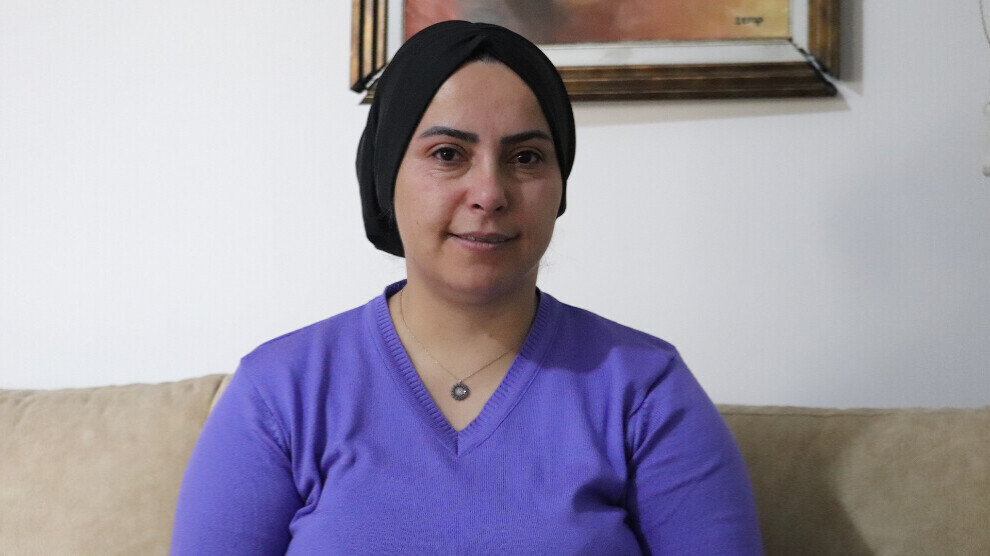
Sibel Avag from Northern Kurdistan survived a stolen childhood, forced marriage, and violence, emerging stronger to become a powerful vioce for women whose vioce were ignored.
Mîmehan Helbîn Zîdan
Van — Violence against women in Turkey and Northern Kurdistan has taken on alarming dimensions. This phenomenon has become a deeply rooted social pattern that worsens with weak legal protection and the absence of effective deterrence. Recent data reveal a dangerous rise in femicide rates, reflecting an environment that enables the continuation of violence rather than limiting it.
Women who come to understand the underlying causes of violence often realize that, over time, they must struggle not only for themselves but for all women exposed to violence or at risk of it. Among these women is Sibel Avag.
Sibel Avag, now 34 years old, was born into a family that decided to marry her off when she was only thirteen. She was a seventh-grade student dreaming of an ordinary childhood when one day she returned home to hear an irreversible decision: “We have married you off.”
No one asked for her opinion. She was given no choice. The man chosen by her family was eleven years older than her and the brother of her sister’s husband. From that moment, her life began descending into a long nightmare.
She remained engaged for three and a half months without ever seeing her fiancé once. After the wedding, she spent the entire first month running away from him inside the house—hiding in corners and rooms, trying to protect the childhood that was being forcibly taken from her.
A Stolen Childhood
Recalling those days with bitterness, Sibel says:
“I was a child. I couldn’t accept him coming near me. My mental state collapsed completely. I was still discovering my body and had just started menstruating.”
She was living a painful conflict between a small body still developing and a harsh reality forcing her into the role of a woman she had not yet become.
Sibel continues her story into an even harsher phase that reveals the depth of the violations she endured from early childhood. After being married at thirteen, she found herself pregnant with her first child at fourteen, trapped in a reality where she had never been given the chance to choose or understand.
In 2007, when she was not yet fifteen, she entered the hospital to give birth using a fake identity card. She remembers that moment clearly. As she explains, the doctors noticed that the ID was not hers, but the village head intervened to conceal the truth, allowing the cycle that had trapped her from the beginning to continue.
Sibel says with sorrow:
“If they hadn’t stayed silent then, maybe I would have had my second child later. But after only a year and a half, I became pregnant again.”
That first birth marked the beginning of a long journey of pain—and an even longer path toward escaping the cycle of violence that surrounded her since childhood. Yet Sibel remained a witness to her own story and to every girl deprived of the right to grow up safely.
Life in the Family Home: An Endless Cycle of Violence
Sibel lived with her husband and two children in her husband’s family home, where psychological and social violence against women intertwined within the closed space of the household.
After the Van earthquake, the family moved to Istanbul. However, the continuous pressure from her husband forced them to return to the village, placing her once again in the same environment that had entrenched her suffering.
She endured constant psychological pressure from both her husband and her own family. After twelve years of marriage, she finally decided to divorce. Yet the absence of real support forced her back into what she describes as “spaces of violence,” as if she had never left them.
Attempt to Escape and Forced Return
Sibel recounts:
“I took my two children and went with my niece to Istanbul. After I left, they said I had run away with a lover. I stayed two days with my sister and then returned to my family’s home. I remained in Istanbul for about seven or eight months, but my family did not want the children. My husband’s family kept calling and saying, ‘Send us our children.’ I had to send them.”
Because she missed her children and faced constant pressure from her husband’s family, she returned to their house once again.
“They were turning my children against me,” she says. “Shortly after I returned, I became pregnant with my third child. My pregnancy was extremely difficult. I didn’t even realize I was pregnant until the fetus was already six months old.”
Separation and Seeking Shelter
Tensions within the household intensified when Sibel’s daughter was diagnosed with celiac disease, making daily conflicts even harsher.
“I was twenty-four years old,” she says. “We argued every day about my daughter’s treatment. One day I couldn’t take it anymore, so I reported my husband to the police.”
She described everything in her testimony: years of physical and psychological violence, with visible marks still on her face. After giving her statement, she learned about shelters for women experiencing violence.
“Since I was also angry with my own family, I went with my children to a shelter. They did not accept my son because he was twelve, so he stayed with his father. I stayed in the shelter for three and a half months.”
A Difficult Legal Path to Custody
Sibel continues recounting the stages of her struggle after divorce. During the COVID-19 pandemic, she managed to rent her own house through her own efforts.
“I worked extra jobs at the time. I worked constantly,” she says.
Her son remained with his father, and she was not granted custody of her three children. During the divorce proceedings, she demanded alimony, compensation, and custody.
The case continued as a contentious legal dispute. During that period, her son fell ill and was taken to the hospital. From there he came to live with her, and she refused to send him back to the village.
“They told me the case would turn into a mutual divorce if I gave up compensation, alimony, and my complaint,” she explains. “So I gave them up.”
She divorced at the age of twenty-seven and obtained custody of her children.
Sibel also notes that her family cut ties with her for seven years after the divorce, making her journey even harder. Yet she never gave up. She clung to life with all her strength and continued working without stopping.
“I worked until the divorce case ended, and I’m still working today. Two of my children are studying. My son is at high school age but doesn’t study—he works in a sweets shop.”
Despite everything she went through, Sibel managed to rebuild her life and give her children a sense of security she herself had never experienced in childhood.
“Finally,” she says, “we were able to build our own life system.”
Joining the Women’s Struggle
Sibel believes that solidarity among women is not simply a choice but “a matter of life or death.”
From this realization began her journey into feminist activism, hoping to give other women the support she once wished she had during the hardest stages of her life.
After becoming acquainted with the Free Women’s Movement (TJA), Sibel began actively participating in women’s activities. In this space, she found the opportunity to express herself in her mother tongue and to support women living through the same circumstances she once faced.
Later, she continued her work with the Star Women’s Association, where she felt for the first time that her voice was truly heard—and that her experience could become a source of strength for others.
Reflecting on her journey, she says:
“I am here today because I trusted myself. I can stand on my own feet, and I want to support all women who have been oppressed like me. If I had known about such associations in the past, I would have turned to them first.”
She adds:
“I want the name of the Star Women’s Association to reach everyone. As women who have experienced violence, we understand each other more deeply. Here we speak in our mother tongue and truly understand. Before, I didn’t know there was a place where I could explain my pain in my own language.”
Sibel Avag is not just a survivor of violence. She is a woman from Kurdistan who carried her painful experience and transformed it into strength. She faced a life full of violations, yet held on to hope and built her path step by step until she became a voice for many women who have no one to listen to them.
“No one listened to me… and today I am here to be a voice for others.”