
From School Desks ot Forced Marriage…A Woman’s Story Under Taliban Rule
Five years after Taliban rule,millions of Afghan women and girls are excluded from education and work.Shamsia Safi’s story embodies a generation lost to forced marriage.
BAHARAN LAHIB
Parwan_August 15 marks the fifth anniversary of the Taliban’s return to power,an occasion to reconsider the lives of women who have been not only deprived of education and work but also stripped of their right to choose their future and personal lives.
According to a recent UNESCO report, an estimated 2.4million Afghan girls are deprived of secondary education,a situation that may exacerbate poverty,early marriage,and the shortage of skilled female workers.At the same time, the “Marriage Law” sets the marriage age at nine years,while the “Courts Law” permits the beating of women_two laws that have heightened fears regarding the rise of child marriage and violence against women.This situation is also attributed to other factors,including poverty,unemployment,and efforts by some families to save their daughters from forced marriage to Taliban members. In some cases,the ban on girls’ education beyond the sixth grade has also led to early marriage.
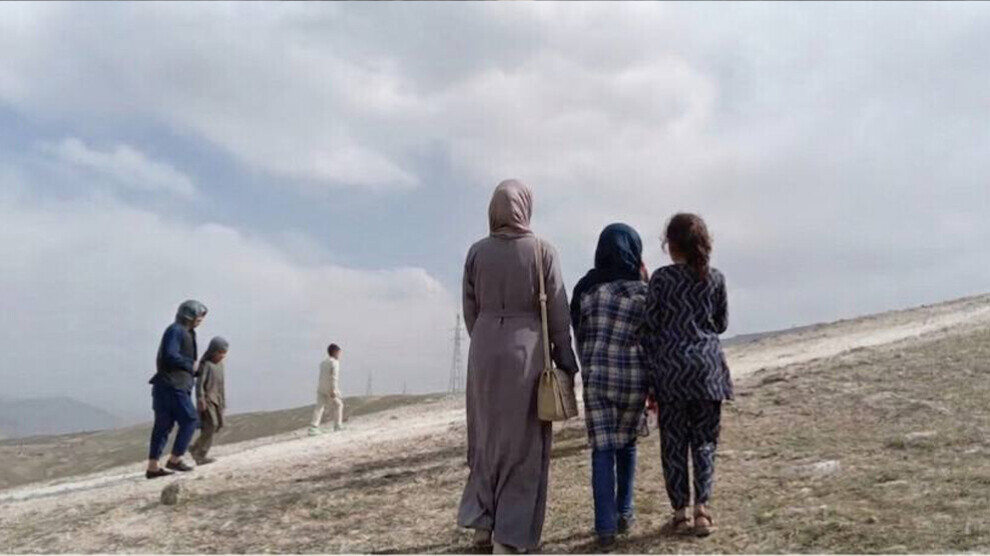
Among these women,the story of Shamsia Safi,21 years old,stands out.Her face carries features heavier than her years. She was once an outstanding student,achieving the highest grades and dreaming of becoming a pilot.However,her father’s killing and the Taliban’s restrictions completely altered her life’s path.
Shamsia Safi says: “ I achieved the highest grades from first grade to tenth grade,before the Taliban took power.My father was killed in an ambush set by the movement.After that day,my mother,my three younger brothers,and I began to suffer.”
According to her account, her uncle forced her mother to remarry after her father's death, then married Shamsia off to a man who already had two wives and children older than her. Thus, her dream of flying turned into a reality weighed down by forced marriage and deprivation of education, finding herself in a life she did not choose. "My uncle's goal was not to take care of us; he seized the house and land we inherited from my father and married me off to a man with two wives. I attempted suicide twice, but my family saved me."
About her unfulfilled dreams, she said: "One of my dreams was to become a pilot, but today I sit at home, and every day I have to endure the pain of a life I did not choose."
Despite all these difficulties, Shamsia Safi has not lost hope. She believes that the women deprived of education and work today will one day regain their place in society. "It is true that millions of girls like me are deprived of education and work, but I am certain that these very women will one day achieve freedom for us."
Shamsia Safi's story is not the tale of one woman but a mirror of the reality lived by millions of women and girls in Afghanistan. Five years after the Taliban's return to power, the severe restrictions on women's education and work, along with poverty and unemployment, have exacerbated the phenomenon of forced and child marriage across the country.
In this context, Shamsia Safi represents a model of a generation deprived of the right to education and choice. Her story, alongside the statistics of millions of girls deprived of schooling, reveals a picture of a generation for whom opportunities have narrowed but who still cling to the hope of reclaiming their right to learning, work, and self-determination.