
Conflict and economic crisis multiply the suffering of female university students in Yemen
Yemeni female students face conflict, economic collapse, and social pressures, making university a daily survival battle, especially rural students bearing housing and alienation amid unequal opportunities.
Rahma Shanzour
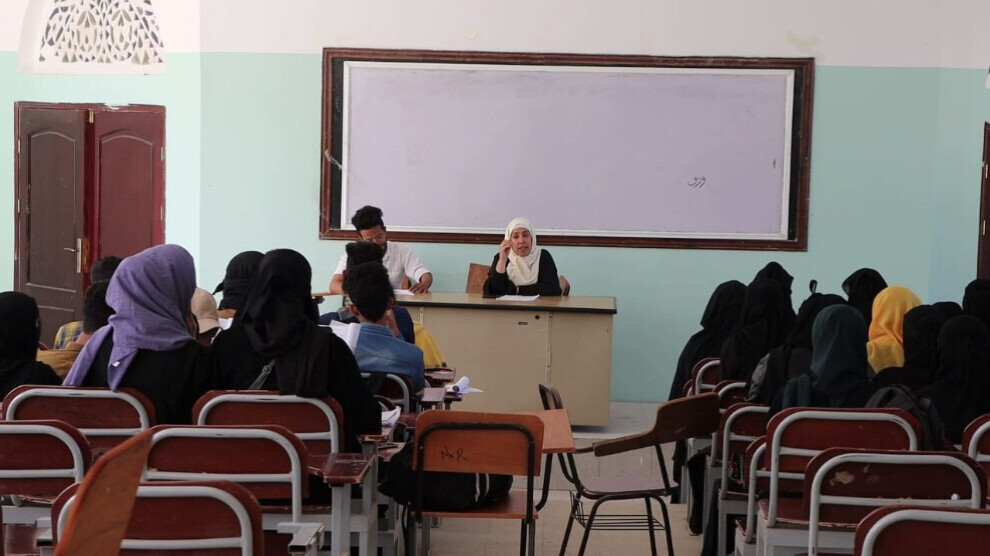
Yemen – In a country exhausted by years of ongoing conflict, the suffering of female university students in Yemen is no longer limited to the usual educational challenges. University life has turned into a daily journey burdened with economic, social, and psychological pressures, in a deteriorating living reality that imposes on Yemeni girls responsibilities beyond their age and psychological capacity.
Female students in Yemen, whether in public or private universities, face increasing pressures due to economic collapse and rising living costs, in addition to the repercussions of the conflict that have cast their shadows over every detail of life. University education, which was once a dream for many, has become a daily challenge for survival and continuity.
Urban‑rural gap of 7 times
According to Yemen's National Strategy for Higher Education, the distribution between the two educational sectors shows a clear disparity, with public universities accommodating 75% of total students, compared to only 25% in private universities.
But what is more alarming is the enrollment rates by gender and region. The percentage of female students enrolled in universities does not exceed 26% of total students – a figure reflecting the low opportunities for Yemeni women to complete their higher education compared to their male counterparts.
The gap widens when it comes to geographical region, as the strategy reveals that the percentage of those who obtain higher education opportunities from urban areas exceeds seven times the opportunities available to rural residents.
Unprecedented decline in just two years
The repercussions of the conflict and economic collapse did not stop at the traditional disparities between urban and rural areas or between males and females; they extended to create a deep rift in the entire educational landscape.
According to recent official statistics, major universities in Yemen, led by Sana'a University, have recorded an unprecedented decline in applicants of up to 80% in some departments over the past two years.
This quantitative collapse in the demand for higher education, which affects female students before male students, turns the dreams of thousands of Yemeni girls into an annual mirage, as their families find themselves unable to afford even the most basic study costs amid the spiral of inflation, salary suspensions, and continuing conflict.
Student Maali Ahmed, from the Media Department of the Faculty of Arts in Taiz, says that Yemeni girls have been bearing double burdens in recent years, affirming that many female students continue their studies despite shouldering family responsibilities.
With the continuing deterioration of the local currency and rising inflation, the costs of education, transportation, and housing have become a heavy burden on students and their families, with no real difference between studying in public or private universities.
Rural students... alienation, housing, and daily anxiety
The difficulties do not stop there. Female students coming from rural areas face even more complex challenges, starting from housing and alienation costs and not ending with psychological pressures and feelings of instability. Maali Ahmed explains: "For female students coming from rural areas, their difficulties are often much greater, whether in terms of housing or the subject matter itself."
Conflict and the labor market... a girl between study and survival needs
For her part, student Waad Al‑Kouri believes that the conflict has pushed many girls to take on responsibilities beyond their traditional roles, explaining that a number of female students are no longer content with studying or housework; they have been forced to enter the labor market to help their families cope with difficult living conditions.
She points out that trying to balance study, work, and household responsibilities places the girl under continuous psychological and physical pressure, even with attempts to organize time. Regarding transportation, she says: "Mobility and transportation here, especially in Taiz with the congestion, may force a student to pay more just to reach the university."
Society's view
In addition to economic challenges, female university students face social obstacles related to the view of some segments of society toward women's education. Student Baraa Al‑Wajbah says: "Society's view of the female university student has changed greatly from what it was in the past. In the past, a female university student received education normally, but now the picture is different."
She adds that some families now consider allowing a girl to pursue university education as a kind of "liberalism" or being influenced by Western ideas. She believes that this view creates additional psychological pressure on the girl and her family, especially in conservative environments.
The issue of housing stands out as one of the most prominent challenges facing female students coming from rural areas, amid growing concerns among families about sending their daughters to cities for study.
Despite the scale of the challenges, thousands of Yemeni female students continue their educational journey with remarkable determination, trying to hold onto their right to education and build a better future, amid a reality that grows more complex with the continuation of conflict and the worsening economic and social crises, in a country where women and girls pay a heavy price.