
'Children with Down Syndrome Have Capabilities That Deserve a Chance'
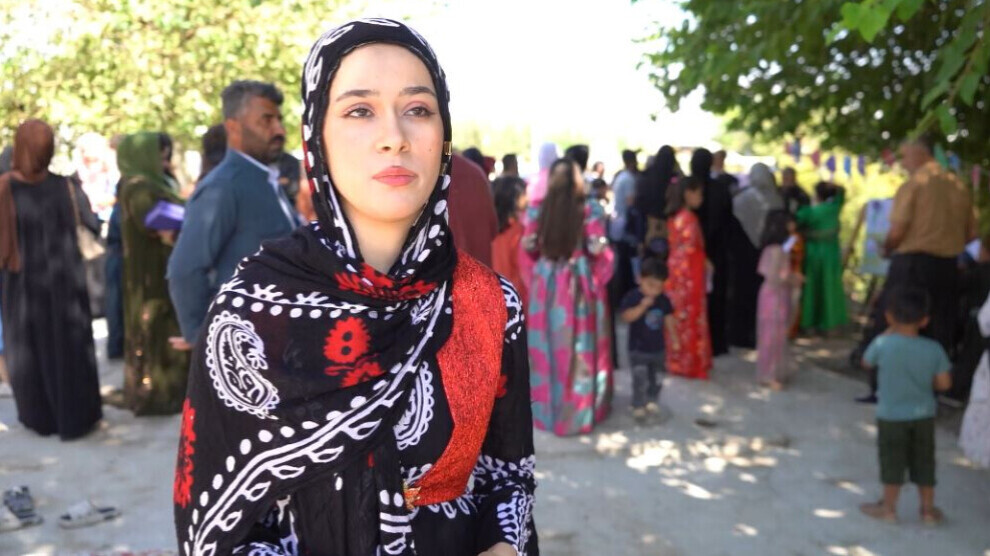
Arina Soran conveys the needs of people with Down syndrome through daily life with her sister, confirming care alone is insufficient; specialized environments and continuous support open opportunities for learning and integration.
MEHRBAN SALAM
Halabja – Families of people with Down syndrome face daily challenges that are not limited to healthcare, but extend to education, rehabilitation, psychological and social support, and providing a suitable environment that helps them develop their abilities and integrate into society.
In the life of Arina Soran, Arya is no longer just a sister; she has become an essential part of her daily details, responsibilities, and concerns. Arya, who lives with Down syndrome, needs more than medical care; she needs a specialized environment that embraces her needs and provides her with the medical, educational, and social services that help her learn, grow, and integrate into society.
Through her daily experience with her sister, Arina Soran tries to convey the voice of Arya and the voice of dozens of families facing similar challenges, and demands the provision of specialized services and centers for people with Down syndrome in the Kurdistan Region.
Demand for Establishing a Specialized Center
Arina Soran says: "My sister has Down syndrome. We face many difficulties and needs at home; she needs a special place. In the Kurdistan Region, there is not, as required, a specialized center that provides special services for people with Down syndrome."
She explained that the need is not limited to a center that receives children with Down syndrome, but to a specialized institution capable of providing diverse services to children according to their different needs. "We need a center or institution that receives these children and provides them with appropriate services. There are centers for autism, but they are dedicated only to children with autism."
"We Need Understanding and Appropriate Treatment"
Arina Soran believes that the suffering of families does not stop at the absence of services, but also extends to the need to understand the nature of people with Down syndrome and deal with them in a way that suits their needs and abilities, confirming that these needs differ from one person to another.
She says: "This is a difficult situation, and the demands are many. We must take into account all their needs and peculiarities. They should not be treated with anger or neglect, because we sometimes feel that they do not receive the attention they deserve."
Arina Soran demands that the Ministry of Education and the Kurdistan Regional Government establish a specialized center or institution capable of receiving these children and providing services to them throughout the year, including the summer and winter seasons, which would relieve some of the burdens borne by families.
"School Alone Is Not Enough"
For Arina Soran, enrolling children with Down syndrome in school is an important step, but it does not represent the complete solution. Their educational and developmental needs are broader than merely receiving lessons and learning numbers. "Even if they are in school, that alone is not enough. They do not only need to learn numbers, but also need games that help develop attention and thinking, and drawing, playing, and learning new things."
She believes that providing an appropriate educational and recreational environment can open greater opportunities for these children to learn and develop, especially when the educational process is accompanied by activities that suit their abilities and individual needs.
Attention Must Be Paid to Their Capabilities and Potential
She emphasized that people with Down syndrome should not be viewed only from the angle of their needs, but attention must also be paid to their capabilities and potential, which can develop clearly when they receive appropriate support.
She pointed out that these children with Down syndrome have a good ability to focus, learn things quickly, and if you talk to them a lot, they can learn to speak quickly. Arina Soran's demand does not stop at the limits of her sister Arya; she also expresses the suffering of many families who live daily with the needs of people with Down syndrome and at the same time face difficulty in accessing specialized and appropriate services.
Arina Soran tries to make her sister's voice heard; the voice of people who need more than temporary care, and who deserve a safe and specialized place, continuous support, and real opportunities to learn, develop, and live with dignity.
For her, the issue is not just a center or an additional service, but the right of her sister and others like her to find a place that understands them, embraces their needs, and helps them be an active part of society.