
Between Rubble and Memories…Two Stories That Sum Up the Pain Of Weatern Zawtar
In Western Zawtar,the rubble does not only teel a story of destruction_it documents the details of lives torn away by from homes and fields.Amid Scattered memories,women cling to their land,hoping to return and rebuild what was destroyed.
RANA JOUNI
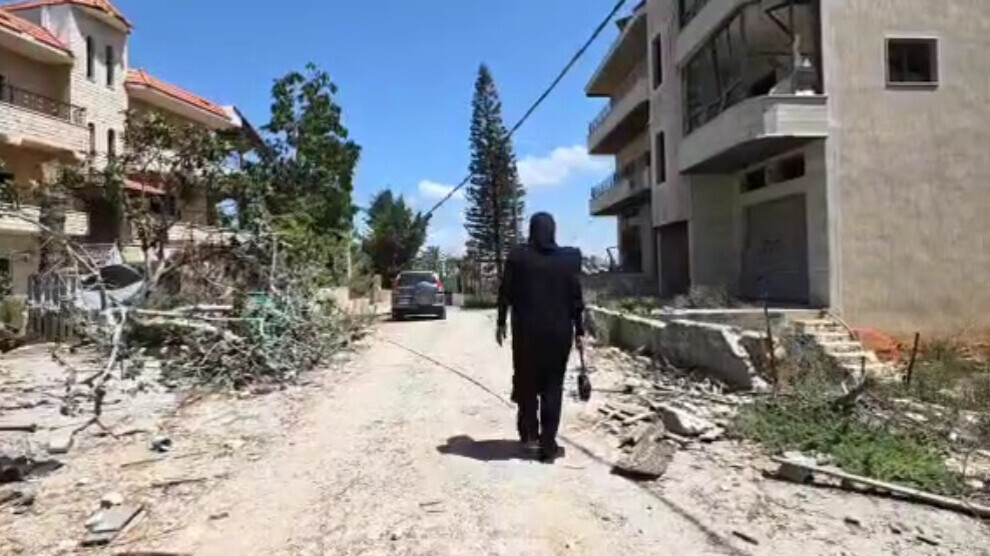
Lebanon_Retruning to Western Zawtar was not merely a return to homes;it was a return to memory, to a town whose features war has altered.Under the agreement brokered by the Lebanese government,Western Zawtar was among the areas where the Lebanese army entered first,before residents were allowed to return.
During the last war on Lebanon, Israeli forces advanced into Western Zawtar from neighboring Eastern Zawtar—where they remain—blowing up homes, ransacking their contents, stealing from some, and burning others, leaving widespread destruction that transformed a town that had once been full of life.
Western Zawtar, adjacent to the Litani River, was considered one of the tourist villages in southern Lebanon, visited by tourists from various regions to relax on the riverbanks or buy the local produce for which its women were renowned. Today, its neighborhoods have turned to rubble, and the details of life that distinguished it for decades have vanished.
Despite the scale of destruction, residents have returned—not because the necessities of life have been restored, but to reclaim what remains of their souls and memories among the ruins, and to affirm their attachment to their land.
Among them are Mukhtara Ihsan Yaghi and farmer Dunia Zahour, who hold in their memory a part of Western Zawtar's history, recounting the story of a town that resisted through life, clung to its land, and carried—despite all it endured—a legacy of resilience and defiance.
Amid the Rubble of Her Home, She Clings to the Land
Mukhtara Ihsan Yaghi says that five months ago, she used to sit in her fully furnished room, enjoying comfort and tranquility in her home—before war came and tore that joy away from her. She notes that her home and room were completely destroyed, and that everything that held her most beautiful memories—photos of her children and all family belongings—disappeared overnight, without her knowing why.
She believes their only fault is their attachment to their land and their resistance against those who seek to occupy it, noting that today she sits atop the rubble of her home after her life turned to ruins, describing what happened as a crime whose magnitude words cannot capture.
She points out that the destruction was not limited to homes but extended to people, stone, and trees, explaining that a field of three and a half dunams, containing about 125 olive trees—most over forty years old—has been turned into scorched, swept-away land.
She recalls the daily life she shared with her neighbors, sitting together drinking coffee, before war deprived them of those simple moments. Her only wish, she says, is for calm to return to the town, for homes to be rebuilt and lands replanted, and for the people of the south to live in safety.
She believes that burning homes and razing lands contradict any talk of peace, affirming that true peace is not imposed by force, and that the people of the south, through their sacrifices, are the ones with the right to determine their land's future.
Ihsan Yaghi emphasizes that the people of the south are attached to their land and will not leave it, rejecting all calls for them to abandon their homeland. She extends an invitation to all Lebanese, from all regions and sects, to visit Western Zawtar, witness the scale of destruction inflicted upon it, and learn of its people's suffering, expressing hope that the town will reclaim its life once more.
Destroyed Homes and Memories Searching for a Place to Survive
Farmer Dunia Zahour returned to her home after an absence of five months, only to find every corner bearing witness to ruin. She says that the house once filled with life and laughter has lost its joy, yet she still believes that homes will be rebuilt and the land will sprout anew.
She notes that she found the bedroom vandalized, with the home's contents scattered everywhere, wondering what those who entered her house had been looking for, after noticing signs of tampering and breakage in various rooms.
She explains that what pained her most was what happened to the pantry room, which contained everything she had prepared throughout the year—thyme, dried yogurt, mulled preserves, jams, compotes, stuffed vegetables, olives, olive oil, and pickles. She notes that dozens of jars were smashed and scattered on the ground, with oil mixing into the provisions that had cost her much effort and money to prepare.
She continues her tour of the house, pointing to her daughter's room, where books and notebooks were scattered and her bed was smashed, while her daughter searched among the rubble for any item that could be salvaged. She notes that her joy upon returning remained incomplete, because her neighbors—who had shared the details of daily life with her—also lost their homes.
Amid the rubble of Western Zawtar, residents have spread out their stories and memories, reclaiming the details of a life buried under debris. They sit atop the ruins of their homes, hoping that war will end, and that they will be able to clear the rubble and restore life to the town.