
Barâa Al-Halh, head of the Melh municipality... breaking stereotypes and enhancing women's role
With confident steps and societal vision, Barâa Al-Halh breaks stereotypes as Melh municipality head—a unique experience enhancing women's presence in decision-making and supporting community solidarity beyond administration and services.
ROCHELLE JUNIOR
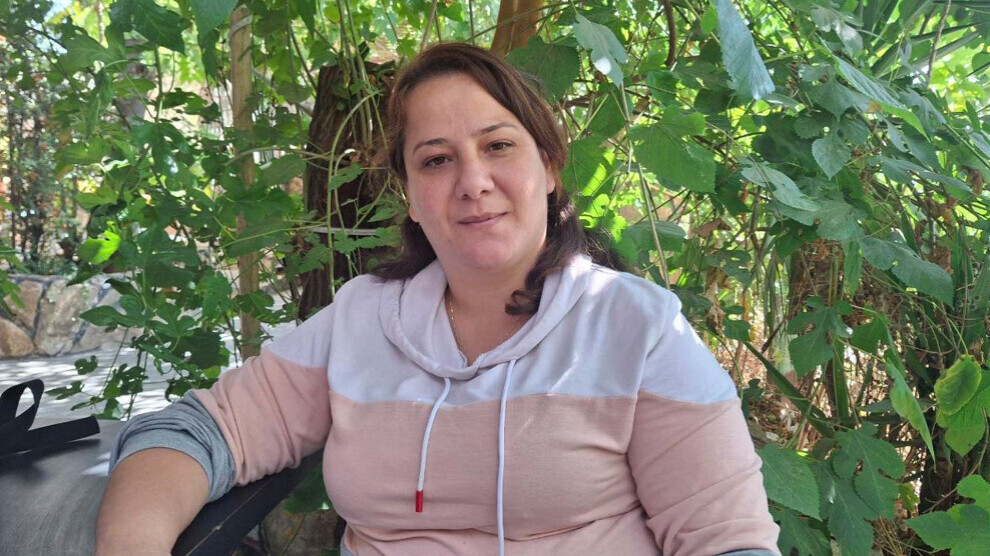
AS-SWEIDA_In an experience that carries social and service dimensions beyond the limits of municipal work, Barâa Al-Halh assumes the presidency of the Melh municipality in the Syrian city of Sweida, becoming the first woman to hold this position in the town, in a step that constitutes a remarkable shift in the reality of women's participation in leadership and decision-making positions at the local level.
This experience did not come from a vacuum, but was the fruit of her closeness to society and her knowledge of its needs, in addition to previous experiences in community work, including her participation in a previous course in 2018, and her work with an organization. Her previous work as an employee at the "Salkhad" hospital also contributed to enhancing her experience in dealing with people and understanding their needs, crystallizing in her a conviction that she possesses the capabilities and ability to assume the responsibility of municipal work.
Barâa Al-Halh says that the idea of assuming the municipality presidency started from her belief in her ability to offer something to her community, and from her desire for women to be present in positions of responsibility, not only as participants, but as partners in leadership and decision-making.
Challenges beyond the nature of municipal work
Barâa Al-Halh believes that women's experience in municipal presidency carries positives and challenges at the same time. Among the most prominent positives is the existence of acceptance of this experience from segments of society, while the most prominent difficulties are that a woman assuming the position of municipality president is still unfamiliar, especially in a town whose people are accustomed to men assuming this position.
She points out that the real challenge is not related to women's ability to perform tasks, as much as it is related to society's view of women when they move from positions of providing services and knowledge to positions of decision-making.
Society has become more accepting of women's presence as a doctor, engineer, or teacher, and recognizes their competence in these fields, but the view changes when a woman becomes a decision-maker responsible for issuing instructions and leading work. Here some manifestations of non-acceptance appear, even when the woman's opinion is correct or serves the interest of society.
She affirms that this challenge reflects the continuation of some stereotypes associated with patriarchal society, which confine leadership and decision-making to men, despite women possessing the necessary capability and competence to assume these responsibilities.
Women's presence enhances women's confidence in participation
The impact of a woman's presence at the head of the municipality is not limited to the administrative and leadership aspect, but extends to the nature of the relationship between the local institution and society. Barâa Al-Halh points out that she has begun to notice the presence of women's inquiries to the municipality, in an indication of the importance of a woman's presence in a position of responsibility, and what that can provide in terms of greater space for women to communicate and present their needs and demands.
This presence reflects an important aspect of the experience, represented in enhancing women's confidence in local institutions and encouraging them to participate in public affairs, and to feel that they have a voice and a place in decision-making positions.
Doubled responsibility to prove competence
Barâa Al-Halh does not view the municipality presidency as merely an administrative position, but sees it as a responsibility requiring her to exert doubled effort, not only to accomplish the tasks assigned to her, but also to prove that women are capable of succeeding in this position.
She explains that she must be up to the responsibility, and work efficiently within the available capabilities and data, affirming that her success in this experience can constitute an important step to open the way for other women to participate in local council elections and assume positions of responsibility.
She adds that the municipality is not exclusive to men, and that women's ability to assume these tasks represents a challenge she undertakes with herself first, before it is a challenge before society, for giving women the space to prove their capabilities begins with their belief in their ability to reach and succeed.
Service needs and a spirit of community solidarity
On the service reality level, Barâa Al-Halh affirms that the town of Melh, like many towns, faces a shortage in a number of services and needs, in addition to its need for more assistance and support to meet the requirements of its people.
But she sees that what the town possesses of social capital and a spirit of cooperation and solidarity constitutes a point of strength that can be built upon, pointing out that society has been accustomed to standing by one another through funds, associations, events, and community initiatives.
Barâa Al-Halh counts on this collective spirit, and on society's acceptance of the idea of joint work, considering that accomplishing many service initiatives and projects cannot be achieved by individual effort, but needs the cooperation of the residents and the joining of their efforts.