
After Deterioration of Her Health in Prison... Demands to Save the Life of Journalist Chahd Haj Mbarek
Medical tests have confirmed that journalist Chahd Haj Mbarek has been diagnosed with cancer in prison, causing her health condition to worsen significantly, especially as she suffers from diabetes and hearing loss.
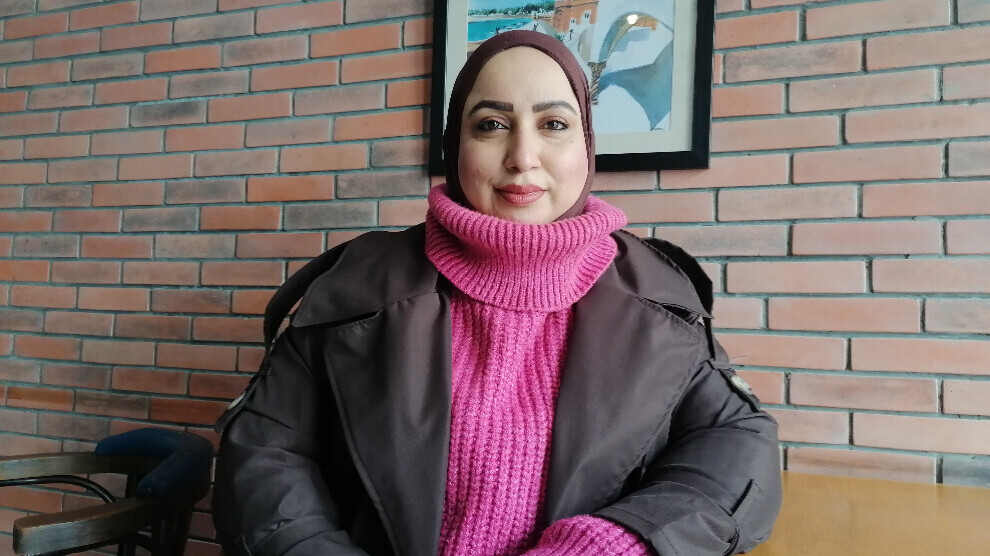
Neziha Bousaidi
Tunisia – Tunisian journalist Chahd Haj Mbarek is living in an extremely dangerous health and humanitarian situation inside prison, where her suffering has intensified due to medical neglect and the appearance of cancerous tumors that require urgent intervention. Journalists and the National Union of Tunisian Journalists have engaged with the case, considering it a symbol of the regression of freedoms and the restriction of journalistic work in Tunisia, asserting that her continued imprisonment represents compounded pain and a violation of a fundamental right: the right to health and life.
Calls from organizations and human rights activists demanding the salvation of journalist Chahd Haj Mbarek's life have risen in response to the family statement published by our agency on Wednesday, January 7th, which confirmed her cancer diagnosis and the prison's failure to respond to the request for her treatment and tumor removal.
Her mother, Cherifa Haj Mbarek, told our agency: "Several diseases have crept into Chahd's body inside prison, and her hearing has deteriorated to a minimum after she had a hearing level that allowed her to interact socially and professionally successfully. Now she can barely hear. Additionally, another inmate injured her hand, forcing her to use a prosthesis to this day, which has hindered her from writing properly."
She explained that her daughter "has begun suffering from pains in her shoulder and spine, and we are awaiting her release and the closure of this case, believing in her innocence and ours." She clarified that "during her time in M'saadine prison, she started complaining of severe pains in her abdomen and sometimes feels dizzy, which made the medical staff treat her with painkillers to alleviate the pain. However, her inability to overcome the severe pains led her to continuous moaning, which alarmed the female inmates."
She indicated that after going on a hunger strike demanding to see a doctor, she was transferred to "Belli" prison, where a medical scan revealed the presence of an abdominal tumor requiring removal. However, the operation has not been performed to date, and her condition remains unchanged.
She explained that the prolonged period of the illness could lead to the disease progressing to a more dangerous stage, noting that she was recently transferred to "Salah Aziz" hospital, specialized in treating cancer, where another cancerous tumor requiring removal was discovered.
She confirmed that the word "tumor" instills terror and panic, necessitating urgent intervention to save her health condition before it worsens further. She called on the authorities for the immediate release of Chahd Haj Mbarek to enable her to follow up on her treatment quickly and accurately, in the hope that she may survive, especially as she also suffers from high eye pressure.
Pain and Neglect
Many journalists engaged with the family statement, sharing it across their pages and publishing it in some media outlets. In this context, Jihan Laouati, a member of the National Union of Tunisian Journalists, said: "We find ourselves facing a case that represents immense pain for journalists, which is the case of our colleague Chahd Haj Mbarek in the so-called 'Instalingo' case, this terrifying case in public circles."
She explained that Chahd Haj Mbarek's health condition has deteriorated seriously after being diagnosed with cancer, and her situation has become extremely critical. She pointed out that healthcare is a constitutional right guaranteed to every prisoner: "We are today facing a painful reality represented by clear neglect of her health condition, raising serious questions about whether criminal punishment also includes depriving prisoners of their right to treatment."
The Tunisian Journalists' Syndicate had called on the Ministry of Justice more than once to release their colleague because she does not pose a danger to the Tunisian citizen, and one cannot speak of abandoning her in her critical condition. It also called for organizing solidarity protest vigils because, in this case, her only fault is being a journalist.
She indicated that the state of freedoms in Tunisia is witnessing a significant decline, where a battery of laws restricts the work of journalists, while economic and social conditions have suffered from clear difficulties in recent years.
She added, "We still, to this day, lack an official document proving journalistic status," considering that the reality of freedoms is not sound, especially concerning the right of journalists to access information, which is an inherent right for citizens as well.
Jihan Laouati said that the reality of freedoms in Tunisia is witnessing a noticeable decline, where Decree Law No. 54 has become a sword hanging over journalists, pushing some colleagues to practice self-censorship.
She explained that female journalists are exposed to multiple forms of violence, especially through virtual communication means, stressing that the imprisonment of their colleague Chahd Haj Mbarek represents gender-based violence. She noted that artificial intelligence, despite its positives, is sometimes used as a tool of threat against female journalists.