
A Thousand Killed Since the Beginning of the Year… Sudanese Women Recount Chapters of Terror Under Drone Fire
Testimonies from Sudanese women reveal a humanitarian tragedy endured by civilians amid the conflict and escalating drone attacks, where homes become targets and civilians become victims with no option but to wait.
MERVAT ABDEL ALQADER
Sudan — The conflict in Sudan has entered a new and more complex phase, shifting from direct military confrontations on the ground to a war of suicide and reconnaissance drones—a war for which the Sudanese citizen pays the price, first and last. Attacks have come to target vital civilian facilities such as hospitals, factories, and schools, in addition to directly targeting homes with the aim of displacing residents and emptying areas of their populations.
As the war enters its fourth year, various estimates speak of tens of thousands of victims, with some sources indicating that the number may have exceeded 200,000 dead, alongside the displacement and asylum of millions of Sudanese within and outside the country. Humanitarian conditions have also deteriorated to the point of famine reaching vast areas in Darfur and Kordofan, making the scene even darker and increasing civilian suffering in the absence of a clear horizon for a solution.
El Obeid City... Between Drone Whirs and Burning Buildings
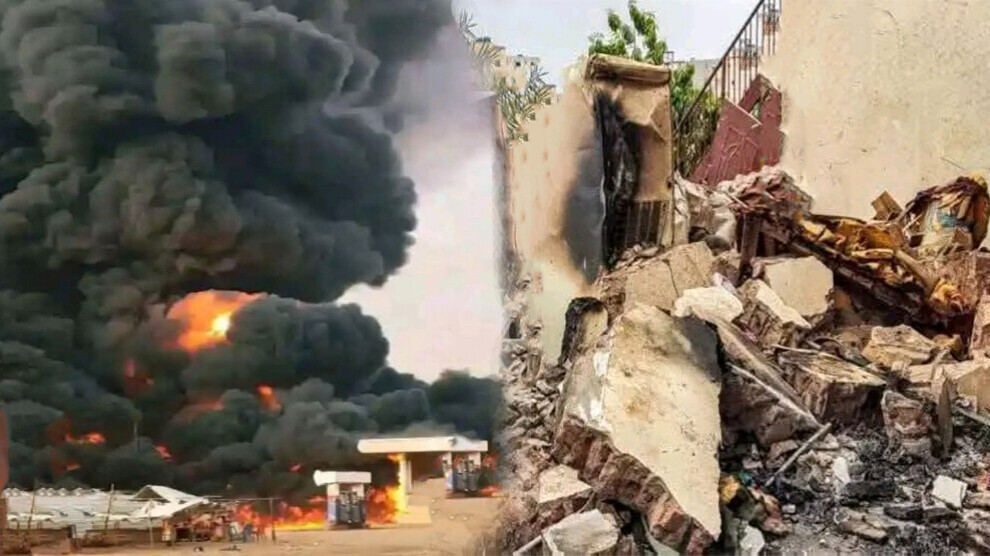
In El Obeid, the capital of North Kordofan State, drones fall on citizens' homes like raindrops, one after another—drones that have destroyed hospitals and health centers, burned service facilities, killed large numbers of citizens, and displaced others.
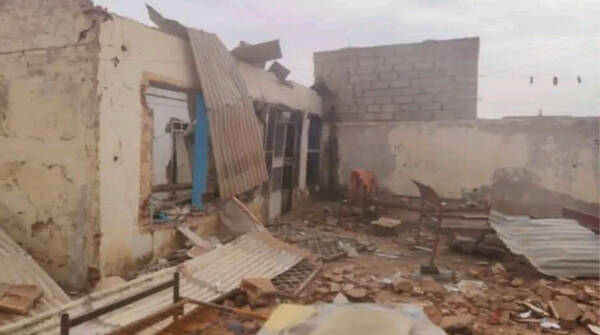
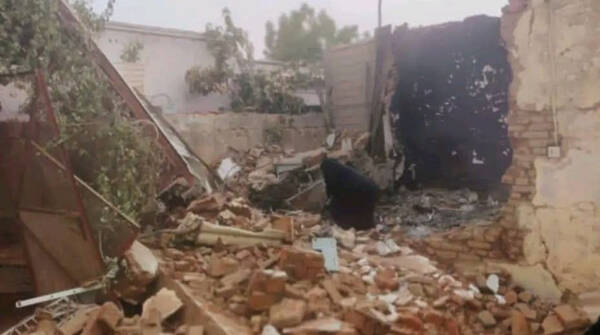
In a scene that encapsulates the scale of the tragedy, Badour Musa from El Obeid stood atop the rubble of her home, which was leveled by a suicide drone. She said that the city has witnessed a series of drone attacks in recent days, which destroyed her home and the homes of several residents in the neighborhood, and caused the deaths of three of her neighbors' children.
She described the state of her home and her family members, affirming that their survival was purely coincidental, as their haste in leaving the home and their quick attempts to save the children prevented them from becoming victims of that strike. She noted that the attacks targeted the "Employees' Neighborhood," one of the most densely populated areas of the city.
She views this as a clear attempt to displace civilians and create a state of terror that drives residents to leave their homes, appealing for intervention to protect them from the drones that have burned their homes, leaving them and their children in the open, while the city remains under siege by the Rapid Support Forces (RSF).
A Child Carrying Shrapnel
Young Arwa Mansour lives in one of El Obeid's neighborhoods, carrying inside her body shrapnel from a drone that fell on her family's home some time ago. The shrapnel continues to move inside her small body, while her family is unable to treat her due to the deteriorating economic conditions.
Arwa's mother refused to appear on camera for fear of violations if she attempted to leave the city. However, she spoke in a voice mixing pain with caution, saying that the drone fell directly on their home, instantly killing her husband and injuring her daughter with shrapnel that remains lodged inside her body—while Arwa moves about, unaware of the danger threatening her life.
Several local organizations, including the "Emergency Lawyers Group," had directly accused the Rapid Support Forces of carrying out these attacks, stating that one of the drones later targeted a gathering of citizens during the funeral procession of victims of the first attack at the "Dalil Cemeteries," killing four people and injuring seven others.
In a press statement, the UN Human Rights Commission condemned the use of drones in Sudan, whose attacks have claimed the lives of more than 1,000 civilians in the first five months of 2026.
The attacks on El Obeid come at a time when the Kordofan fronts are witnessing increasing escalation, as the region has become one of the most active conflict zones in recent months due to its geographical location linking Kordofan and Darfur. The RSF is therefore desperate to seize it and to enter the city of Bara, whose road connects Kordofan with Omdurman in the heart of the capital Khartoum.
Targeting Vital Facilities
White Nile State in central Sudan has not escaped drone raids. During this period, several drones have fallen there, particularly in the cities of Kosti and Tandalti, where drones targeted fuel stations and power plants, leaving the entire state without electricity for several days. The drones also targeted vital facilities and a university student dormitory in Kosti, killing three students and injuring seven others.
In Omdurman, the largest city of Khartoum State, this period has witnessed a notable escalation in the use of drones, targeting Khartoum Airport, power stations, and bridges. The "Emergency Lawyers Group" documented the killing of five civilians in southern Omdurman as a result of a drone strike on a civilian vehicle.
Concurrently with the continued violations against citizens and the targeting of civilians by drones, the Chairperson of the National Committee for the Investigation of Crimes and Violations of National Law and International Humanitarian Law, Intisar Ahmed Abdal, revealed the findings of the committee's fifth interim report.
The committee documented 2,200 cases of rape, 14,999 cases of detention and enforced disappearance, 30,971 murders, and 44,617 injuries of varying degrees.
The committee also announced that 149,860 criminal cases related to violations committed during the conflict have been filed, including 385 cases against elements of the regime forces from whom immunity has been lifted.
According to official data, the value of losses resulting from the destruction of infrastructure, institutions, and public facilities has reached approximately $771 billion—a figure reflecting the scale of destruction that has affected the transport, energy, telecommunications, and essential services sectors.