
Tales from the era of concealment... How was Kurdish consciousness shaped
April 4 holds symbolic significance for the Kurds, as they evoke the ideas of leader Öcalan and their impact on their journey, drawing on personal experiences and memories that reflect the intertwining of struggle with identity.
Silva Ibrahim
Kobani — Neamat Alloush recounts her experience with leader Abdullah Öcalan, remembering his meetings and ideas that left a profound impact on their lives, affirming that this anniversary is linked to the meanings of struggle, rights, and adherence to identity.
April 4 is a symbolic milestone for the Kurdish people, as it is associated with the birthday of leader Abdullah Öcalan and the presence of his ideas in the consciousness of many. His political and social philosophy has left a clear impact on the lives of families who knew him closely, blending personal memories with intellectual convictions, forming a human and political experience that continues to be passed down through generations, from which they derive the meaning of struggle and identity.
"Our identity was exiled and our language forbidden"
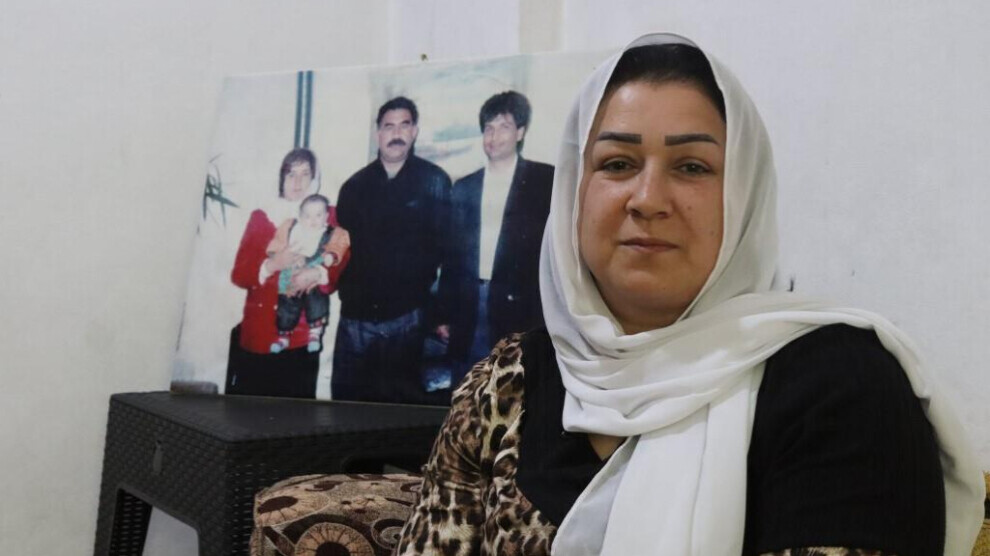
Neamat Alloush, 47, from the city of Kobani, is one of those who had the opportunity to meet leader Abdullah Öcalan. At the beginning of her speech, she touched upon how she first came to know Öcalan: "Leader Öcalan entered Syrian territory accompanied by my cousin, as they were both engaged in political struggle together in North Kurdistan. He visited us many times and lived with us for many days. My parents used to warn us not to talk about this in public because, at that time, the struggle in Syria was secret due to the oppressive Ba'ath regime's policies at the time." She added, "I remember they used to read books and hold meetings with the people secretly."
Regarding why they trusted Öcalan's philosophy, she affirmed that "Leader Öcalan was the first to present us with liberational thought at a time when we were subjected to injustice and oppression by the Ba'ath regime. Our identity was exiled and our language was forbidden to speak. This is what made us believe in his approach and become fidayeen (self-sacrificing fighters) for his sake." She explained, "The leader did not work for his own sake nor for his family's sake; rather, he did and gave everything for his people and community."
She added, "When we see the house of Leader Öcalan's family, built of mud, we realize the truth of his struggle, unlike presidents and leaders who live in palaces and luxurious homes while claiming they work for their people." She noted that "my brother followed this path and was martyred in the 1990s."
She pointed out that their meetings with the leader were not limited to his visits to their home, but they also visited him every year, whether in Aleppo or in Lebanon. She still keeps the photo taken with Leader Öcalan alongside her husband and child, and she remembers his words to them: "He always spoke about peace and democracy. He never favored military methods to achieve solutions and rights, but the other parties did not respond to him."
"We would not have been able to enjoy self-protection without the leader's thought"
Neamat Alloush praised the struggle of leader Abdullah Öcalan: "Previously, we could not speak our language, but now we enjoy self-administration, self-protection, and learning in our language. This is a gain and an achievement for us after the great sacrifices we made as the price for that."
She also touched upon the arrest of leader Öcalan with tears choking her voice: "The news of his arrest was like a thunderbolt for us." She considers that this conspiracy targeted Öcalan's philosophy, his struggle, the rights of the Kurdish people, and preventing them from fraternizing with other peoples.
She believes that the call for peace and a democratic society is the essence of the Kurdish issue and the peoples living alongside it, and that everyone must engage in this process to ensure its success. She affirmed, "After this struggle and these sacrifices, the Kurds deserve to obtain their legal and constitutional rights, and our leader deserves to be released and live freely among his people."
In conclusion, Neamat Alloush affirmed that the birth of leader Öcalan is a "new dawn" for oppressed peoples, which is why everyone celebrates this day. In light of this legacy, his birthday remains for many more than just an occasion; it is an expression of clinging to the idea of freedom and dignity and striving for a more just future.
Between memory and sacrifices, hope continues that legitimate rights will be achieved, and that calls for peace and democracy will become a reality lived by all, making this day a symbol of a renewed beginning for all peoples seeking liberation.