
Tunisian Southern Poetesses... Creativity Amidst Constraints
Despite the social constraints and publishing difficulties faced by poetesses in southern Tunisia, they are carving out a space for creativity and resistance.
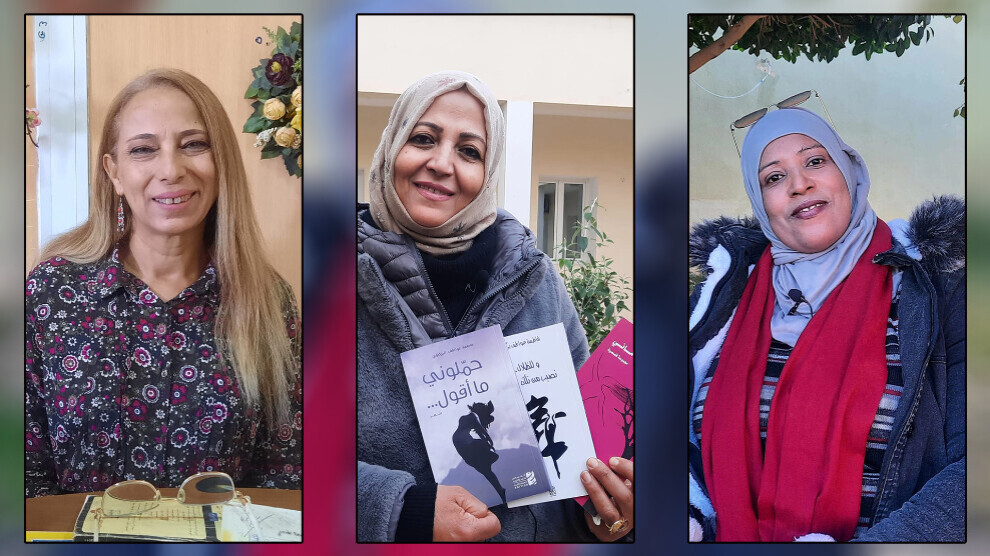
Ikhlas Hamrouni
Tunis_In southern Tunisia,women,whether poets or short story writers, face dual challenges
They struggle to write and express themselves in a society that remains somewhat conservative,while simultaneously encountering difficulties in publishing their work and gaining recognition.
Between limited social acceptance and insufficient opportunities to promote their literary productions, women poets carve out a space for their creativity with resilience and determination.
The testimonies of several women poets reflect the true reality of women's writing experiences, revealing the daily struggle between the desire for self-expression and societal/material challenges, while also highlighting the new opportunities offered by technology and cultural movements, albeit to a limited extent.
Liberation Amidst Traditional Constraints
Poet and short story writer Zubaida Arfaoui from the Tunisian governorate of Tozeur asserts that social traditions significantly impact women in general, and female poets in particular. She believes that freedom and writing are two parallel lines that cannot be separated, as there is no creativity without freedom. She clarifies that "women in our society think a thousand times before unleashing their imagination and freedom in writing."
She points out that readers often fail to separate the text from the poetess: "Whenever I write a text, they see me in it." They assume she is expressing her own self and narrating her personal story, unable to distinguish between creativity and personal life.
She discusses the social difficulties when addressing sensitive topics like the body, explaining: "When a man writes about the body, it is read normally. But when a woman does, her text faces rejection, astonishment, and criticism, and is labeled with inappropriate epithets like 'shameless' or 'reckless'." These pressures affected her in her early career, but she later overcame them: "I became unconcerned with such opinions."
Regarding publishing and distribution, Zubaida Arfaoui clarifies that the primary challenge is publishing itself, as printing and publishing poetry is not easy, especially with publishing houses leaning towards novels for profit. She shares her personal experience, stating: "Personally, I distributed my first book myself. I visited cultural centers, schools, and institutes, and faced situations of mockery and ridicule."
She indicated that support exists from the cultural community and local institutions but is insufficient, emphasizing that the feminist literary movement in inland regions needs more appreciation, support, and promotion. She believes women's poetry is capable of changing stereotypes about women and granting them an active and independent role.
A Continuous Struggle
As for poet Najwa Al-Nawi from the Kebili Governorate, she confirms that female poets face difficulties in bringing forth their literary, poetic, or artistic productions for several reasons: "First, women face social criticism, starting from the family, and there are women who experience rejection because of this endeavor. Some societies accept women being writers but do not permit them to publish what they write."
She believes that society is witnessing somewhat positive changes, especially in women's relationship with technology, which has facilitated, firstly, publishing for women; secondly, gaining prominence; thirdly, participation; and it has served as the widest door for introducing women and their experiences in the media.
However, Najwa Al-Nawi warns of the negative aspect of technology, which lies in harassment and negative criticism, explaining that women face much criticism from people who have no experience or knowledge of women as creators or poets.
In this regard, she says: "The poetess deals with this reality with cultural and social awareness, avoids confrontation with harassment, and tries to highlight what she offers in a positive way." She emphasizes that everything a woman presents must be close to the society she lives in, and that she must reach a degree of persuasion, because persuasion is the way to overcome obstacles.
She believes that sacrifice is an essential part of the journey to success, because the path is not easy, whether culturally, creatively, or in life, and whoever wants to reach their goal must endure harassment, obstacles, and setbacks, and challenge themselves to become the person they want to be. As for publishing challenges, they start with financial difficulties.
Najwa Al-Nawi considers encouragement from family to be real support: "I enjoy my husband's support to complete my experience and prepare my third poetry collection entitled The Falling of Mirrors."
Continuous Creativity Despite Constraints
Regarding her personal experience, poet and short story writer Fatima Barkawi from the Kasserine Governorate confirms that her literary texts are divided between poetry and short stories. She published her poetry collection They Burden Me with What to Say in 2023, and two short story collections: the first titled Hardly Does One Forget the Trust in 2015, and the second titled Shadows Have a Share of That Sun in 2020.
She says: "The situation of a poetess differs according to the social environment. There are regions that make things easier for women, especially some major governorates, and others that make the path difficult, as there is still a view that says writing is not beneficial for society."
She believes poetry is more challenging than short stories, pointing out that "in story writing, we can hide behind it, while poetry is a discourse emanating from the creative self, and may sometimes be confused with personal experience. But the challenge lies in maintaining the continuity of the experience."
She points to the difficulties of publishing and self-promotion, especially with the spread of virtual communication means, explaining that it requires skill and perseverance to communicate with literary groups and participate in forums. Opportunities exist but are insufficient, and there is activity and cultural movement in the Kasserine region, with literary salons, forums, and radio programs, but the literary climate needs a new breath that encourages everyone.
Fatima Barkawi adds that "women's poetry is capable of changing the stereotype of women. It is a declaration of a woman's voice, a voice seeking change, a voice rebelling against society, expressing her pains, sufferings, hopes, and expectations."
The three poets agree on the existence of social, cultural, and financial difficulties in all regions. Nevertheless, they create a space for creativity and resistance. Between social constraints, publishing and distribution difficulties, and criticism, writing, in their opinion, remains a tool for rebellion, a space for liberation, and for redefining women's role in society.