
The Book in Iran…A Reading Weighed Down by the Burdens of Inflation
Iran's publishing and printing industry is facing sharp economic stagnation akin to crises in other sectors, while ongoing writing and efforts to overcome censorship, gender-based restrictions, and inflation pressures continue.
JWAN SHAEIFZADEN
Bukan_Updated prices,which exceed the price printed on the book cover,no longer surprise customers at the time of purchase, as for a long time,the book market,like all other products in Iran,has been experiencing a state of instability.
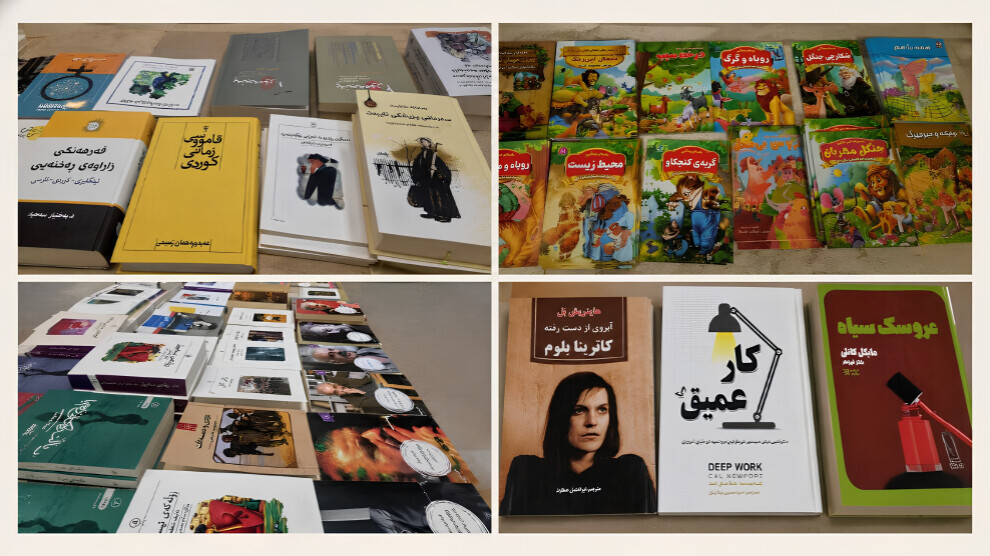
Book fairs have long been a place to promote reading and spread it on a wider scale,and the summer book fair In Mahabad, eastern Kurdistan, is an example of such events. However,this time it was held with more frank language amid price chaos.
A red sign on both sides of the fair indicates that the prices printed on book covers are no longer valid. Nevertheless, the exchange of used paper for books, along with discounts ranging between 10 and 30 percent, are among the options that fair organizations have resorted to in order attract readers,who appear to be fewer than in previous fairs.
Among the displayed books,duplicate titles and empty spaces on the shelves catch visitors’ attention. Many of the books on display are translated works,printed outside Iran,or editions dating back several years.
Data from the Iranian Book and Literature House indicates that despite the increase in the number of published titles in recent years, the number of copies produced has decreased,and book prices have continuously risen. The total value of prices printed on the covers of books published in December 2025 increased by approximately 76.3 percent compared to the same period in 2024.
The rising cost of paper and printing is among the factors that have affected publishers,writers, magazines, and others, leading to a decline in the volume of publishers works.On the other hand,the escalating pressure on writers and publishers,often for political reasons,has driven them under these circumstances to reasort to printing in other countries,translation,or publishing electronic copies.
One female employee of a magazine pubished in eastern Kurdistan,who declined to be identified,said:”Within just three months,the coat of printing the magazine increased about fivefold.Due to the economic situation,books and magazines have been removed from households”shopping baskets.Now,with prices continuing to rise in the publishing and printing sector,and with no government support,we have been forced to attract sponsors and design an electronic version of the barriers in her path. “My works are in Kurdish and aimed at Kurdish children.In this field, I have tried to present Kurdish symbols, history, and culture through imagery and an authentic style. However, as a woman within this political and social structure, and given the economic situation, I am unable even to print my book in another country."
Despite the existing challenges and problems, the Mahabad Summer Book Fair still features works that attract public interest. The children's and adolescents' section, in both Kurdish and Persian, can be considered among the best-selling sections. Many parents, even if they cannot buy books for themselves, prefer to buy books for their children, hoping to bring about change in their future through books and reading.