
Rana and Reem Al-Amine… A Hook and a Brush Crafting the Resilience of Southern Lebanese Women
In Chaqra, a border town, Rana and daughter Reem Al-Amine embody southern Lebanese women's resilience, their knitting and drawing turning from environmental-artistic projects into tools of resistance, survival, and defiance against attacks.
RANA JONY
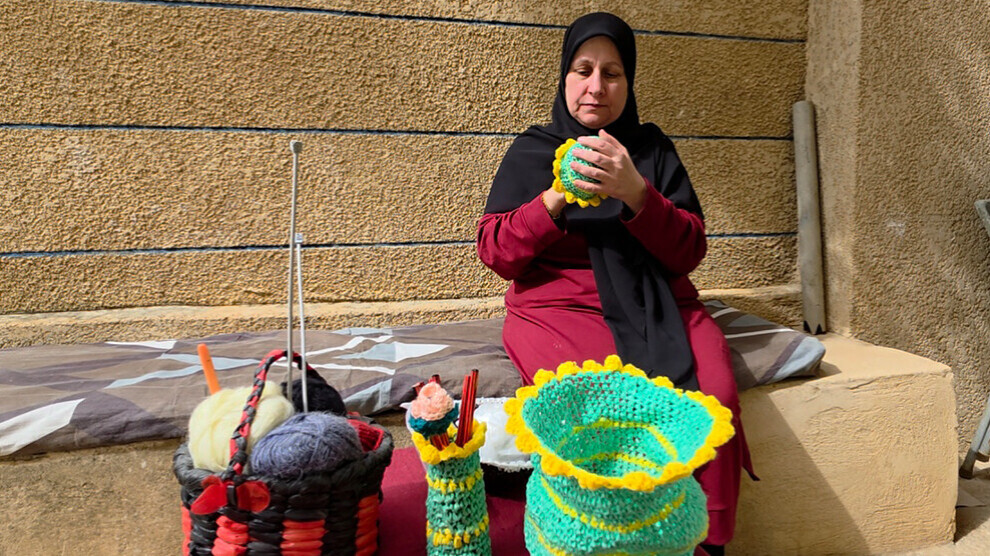
LEBANON_ The southern town of Chaqra faces a new border reality and has come to be on the direct line of contact with escalating humanitarian and economic crises. At the heart of this scene, Rana Al-Amine and her daughter Reem encapsulate the story of the resilience of southern Lebanese women in the face of the war machine and the pressures of living, holding on to handicrafts that have turned from environmental and artistic projects into tools of confrontation and survival.
From the Waste Crisis to the Craft of Resilience
Years ago, Rana Al-Amine devised an environmentally friendly solution and an economic resource for her family; she began collecting nylon bags that take long years to decompose, cutting them and knitting them with a crochet hook to transform them into carpets and household items.
This project, which began to confront the intractable waste crisis in Lebanon, has today become her companion on the path in peace and attacks. Despite the raids and shelling adjacent to her town, the crochet hook has not left her hand, so that her craft remains "a spot of light amid the noise of war."
Rana Al-Amine's story comes at a time when the economic losses from the recent attacks on southern Lebanon have exceeded billions of dollars, as factories, workshops, and crafts were destroyed and turned into rubble. Rana was not spared from these damages; her workshop suffered severe damage that toppled the fatigue of months of work, crochet, and ready-made carpets.
She confirms bitterly that the attacks stole everything and people have other priorities, in light of the complete absence of any syndicate or official support that protects craftspeople in Lebanon, which forces her to start her journey from scratch again.
A Brush over Pottery to Forget the Shelling
On the balcony of the house overlooking the neighboring towns, young Reem Al-Amine (20 years old) sits next to her mother, turning silent pottery pieces into paintings pulsing with dreams and wishes. Reem, who relied on her small studio to secure her livelihood before the war, describes her work today as "the art of war that does not die."
Drawing has become her only outlet to forget the sounds of raids and continuous shelling, and her ambition has expanded to include caricature drawings that mimic the reality of her society and its hopes.
Amid the challenges of repeated displacement and fear of the unknown, Rana Al-Amine and Reem live the details of war and peace together, as their clothes remain inside bags ready for any emergency displacement. Despite the stumbling of environmental solutions to the nylon crisis in the country, and the continuation of security threats and harsh living conditions, determination remains the title of the women of the South; which Rana Al-Amine summarizes decisively: "The living situation is very difficult, but we do not break and we continue working."