
Between Preserving Heritage and Banning Concerts... Fears of Restrictions on Art in the "New Syria"
Amıd Syria’s heritage debate, the song ‘Mahboub Qalbak’ renews discussion of Sweida’s cultural specificity, alongside growing fears over banning Damascus concerts.
ROCHELLE JUNIOR
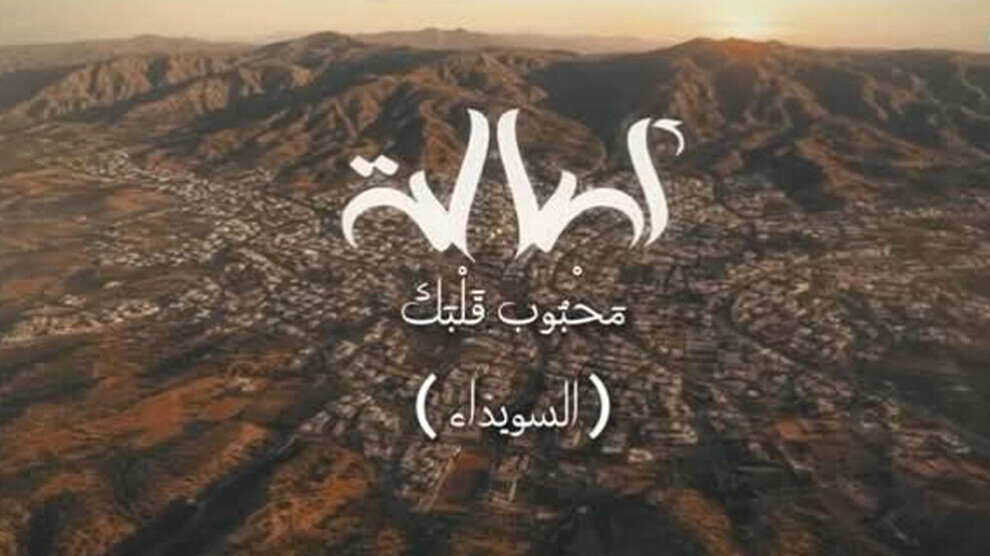
Sweida — Artist Asala's re‑performance of the traditional song "Mahboub Qalbak" opens a door for discussion about the presence of local heritage, and how a song can transcend its original environment to reach a broader audience, carrying with it something of the place's memory, identity, and cultural specificity.
In another context, the file of calls to ban artistic concerts in the Syrian capital, Damascus, stands out, along with the debate it raises about the future of art and public freedoms in the "new Syria," particularly women's presence in cultural and artistic life.
A Song That Reveals a Human Aspect of Sweida's Heritage
Singer and actress Amani Abu Assaf believes that Asala's re‑performance of "Mahboub Qalbak" is not merely a re‑presentation of a traditional song but sheds light on the region's aesthetic identity and affirms its cultural and emotional presence.
She notes that Sweida is known for a singing character carrying something of solidity and enthusiasm, but "Mahboub Qalbak" specifically reveals a human, gentle, and emotional aspect of this heritage, through its linguistic intelligence based on complete paronomasia, where the same word is repeated but with a different meaning each time.
She affirms that the traditional song anywhere is important to reach a broader audience, as a means of proving its people's presence and cultural identity.
She explains that there is a clear difference between singing the song within its nurturing environment and moving it to a broader audience. The local community listens to it without needing explanation of vocabulary or social context, and performance in its original environment is more spontaneous and improvisational.
In this case, the song becomes "a shard story, collective consciousness, and a single feeling" among community members. But when it moves to a broader audience, such as Asala's audience, it transforms into a broader artistic, cultural, and auditory document, especially since human experience can travel through art, even if its roots are tied to a specific environment.
Amani Abu Assaf considers that Asala made a beautiful gesture toward the people of Sweida by re‑performing the song and contributing to spreading this heritage more widely. However, she believes the artist did not fully succeed in performing the dialect, considering that the feeling presented by someone from the original environment remains different from the performance of an artist coming from outside it, no matter their artistic ability.
She believes that preserving the dialect, feeling, and original context of the work remains an essential part of transmitting heritage, even when the song moves to a new audience.
Calls to Ban Concerts Are "An Extremely Dangerous Matter"
In a separate file, journalist from Sweida Farah Al‑Aqel believes that calls to ban artistic concerts in Damascus are not a simple matter but considers them extremely dangerous, because they go beyond criticism and expression of opinion to an attempt to impose a certain approach on the shape of public life in the "new Syria."
She explains that the issue is not about a specific concert or artist but about what she considers a feeling among some parties that they have the right to fully own public space and impose their vision and approach on the shape of public life.
She believes such attempts may begin with small details and stories, then gradually extend to public spaces, making it, in her view, an issue that transcends the boundaries of art itself.
Farah Al‑Aqel notes that what increases the danger of these calls is giving them a religious character, citing what she describes as calls spreading on social media containing phrases such as "It will be banned, God willing."
She explains that giving a social or artistic issue a religious character moves it to a more sensitive dimension, as it transforms from a matter related to public life and art into a religious matter, which can influence the audience more in societies that rely heavily on religious beliefs in shaping their positions.
From a Passing Call to a Change in Society's Structure
Farah Al‑Aqel warns that attempts at banning, if not seriously halted and controlled, may over time become normal and accepted within society. She believes the danger lies in the fact that the impact will not remain confined to the artistic field but can extend to the cultural and social structure, and later to other details of public life.
As Farah Al‑Aqel mentioned, the matter is not related to concerts alone but to the shape of the society intended to be formed, and to the space that will remain available for culture, arts, difference, and diversity. She notes that the approach of social and religious strictness, if it continues, will not stop at a certain limit, and that women will be among the first groups affected by it.
She notes that women are often the first line of defense for the public spaces they have forcefully seized in past years, considering that shrinking this space will be dangerous and will not reflect on women only but on society as a whole.
She believes that the development of this approach to the point of restricting education and public participation represents a path that should be dealt with seriously before it becomes a reality difficult to reverse.
Returning to the song "Mahboub Qalbak," Farah Al‑Aqel says the work was not visually successful, considering that the traditional costume and the ruins used in the video do not sufficiently express Sweida.
She believes that the tense relationship between Sweida and the Syrian Interim Government has long transcended the limits of political disagreement to reach deeper differences with intellectual, cultural, social, and doctrinal dimensions.
Farah Al‑Aqel warns of what she considers an attempt to penetrate the details of society's daily life and transform it from a civilized society open to culture, art, and festivals into a society of one color and more religiously and socially strict.